 Pin this
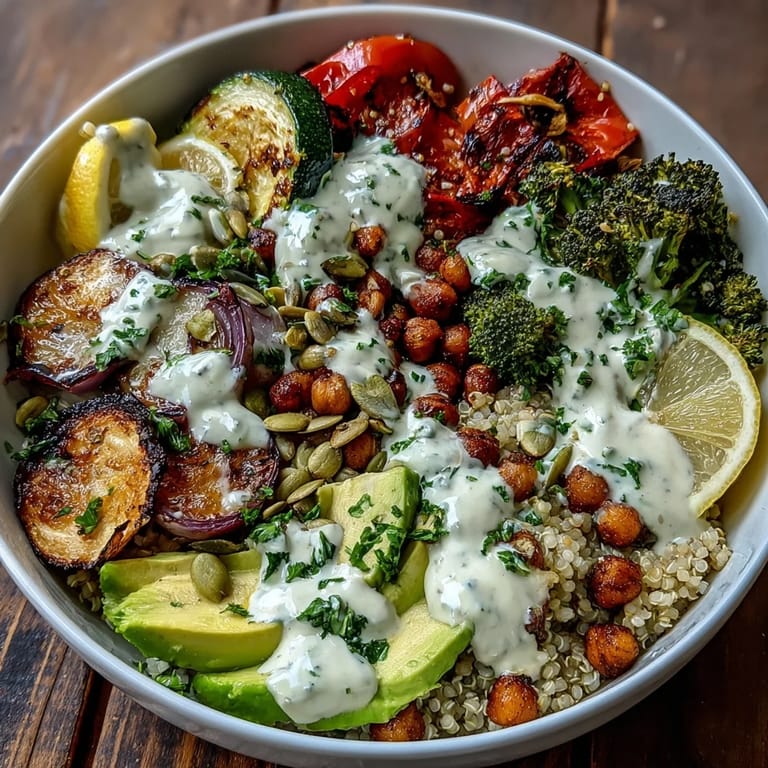
 Last Tuesday, I stood in my kitchen staring at a half-empty fridge, wondering how to turn scattered vegetables and a forgotten can of chickpeas into something that felt intentional rather than desperate. What emerged was this bowl—colorful, satisfying, and honest. It's become my go-to when I want to eat well without overthinking it, a dish that somehow tastes better when you're not stressed about getting it perfect.
I made this for a friend who'd just started eating more plant-based, and watching her face light up when she tasted how the smoked paprika brought out something almost smoky in the roasted peppers—that's when I realized this wasn't just a bowl, it was proof that vegetables could be genuinely craveable. She asked for the recipe before finishing her first bite.
Ingredients
- Quinoa, brown rice, or farro (1 cup): Pick your grain based on texture preference—quinoa is fluffy and quick, rice is forgiving, farro has a satisfying chew that makes the whole bowl feel more substantial.
- Water or vegetable broth (2 cups): Broth adds flavor without effort, but water works fine if that's what you have.
- Salt (1/2 tsp for grains): Don't skip this; it seasons the grain from the inside.
- Cooked chickpeas (1 cup): Canned is perfectly fine—just rinse them well to remove excess sodium and that metallic taste.
- Cooked lentils, green or brown (1 cup): These hold their shape better than red lentils and add an earthy backbone to the bowl.
- Red bell pepper, zucchini, red onion, cherry tomatoes, broccoli florets: These are suggestions, not rules—swap in whatever's in season or calling to you from the produce section.
- Olive oil (2 tbsp): Don't use the fancy stuff here; regular olive oil browns the vegetables better and costs less.
- Smoked paprika and ground cumin (1 tsp and 1/2 tsp): These two spices do the heavy lifting, transforming plain roasted vegetables into something with actual character.
- Fresh parsley, avocado, toasted pumpkin seeds: These aren't just garnish—they add freshness, creaminess, and crunch in a way that makes the bowl feel complete.
- Tahini (2 tbsp): This is the dressing that matters; it's nutty, creamy, and ties everything together.
- Lemon juice (1 tbsp): Fresh lemon is non-negotiable here—bottled just won't have the same brightness.
Tired of Takeout? 🥡
Get 10 meals you can make faster than delivery arrives. Seriously.
One email. No spam. Unsubscribe anytime.
Instructions
- Heat your oven and gather your thoughts:
- Set the oven to 425°F and take a moment to actually read through the vegetable prep, because there's nothing worse than realizing halfway through roasting that you forgot to chop something. Get your baking sheet ready.
- Start the grains first:
- Bring water or broth to a boil in a saucepan, add salt, then your grain of choice. Reduce heat, cover, and let it simmer—quinoa needs about 15 minutes, brown rice needs 40, farro about 25. While it cooks, you can focus on everything else.
- Prep and season the vegetables:
- Cut everything into roughly similar-sized pieces so it all roasts evenly. Toss it all with olive oil, smoked paprika, cumin, salt, and pepper in a large bowl, then spread it on the baking sheet in a single layer—crowding the pan means steam instead of char.
- Roast until the edges are dark:
- Put the vegetables in the oven for 20 to 25 minutes, stirring halfway through. You're looking for bits of brown and char, which is where the flavor lives. The broccoli will crisp up, the zucchini will soften, and the bell pepper will develop this almost sweet, caramelized edge.
- Warm your legumes gently:
- While the vegetables roast, heat the chickpeas and lentils in a small pan with a splash of olive oil, salt, and pepper. This step is optional if you like them cold, but warming them makes them taste less canned and more intentional.
- Make a dressing that actually tastes like something:
- Whisk tahini, lemon juice, minced garlic, salt, and pepper together. The mixture will be thick at first, so add water gradually until it reaches a drizzling consistency—you want it to coat a spoon but still flow.
- Build your bowl like you mean it:
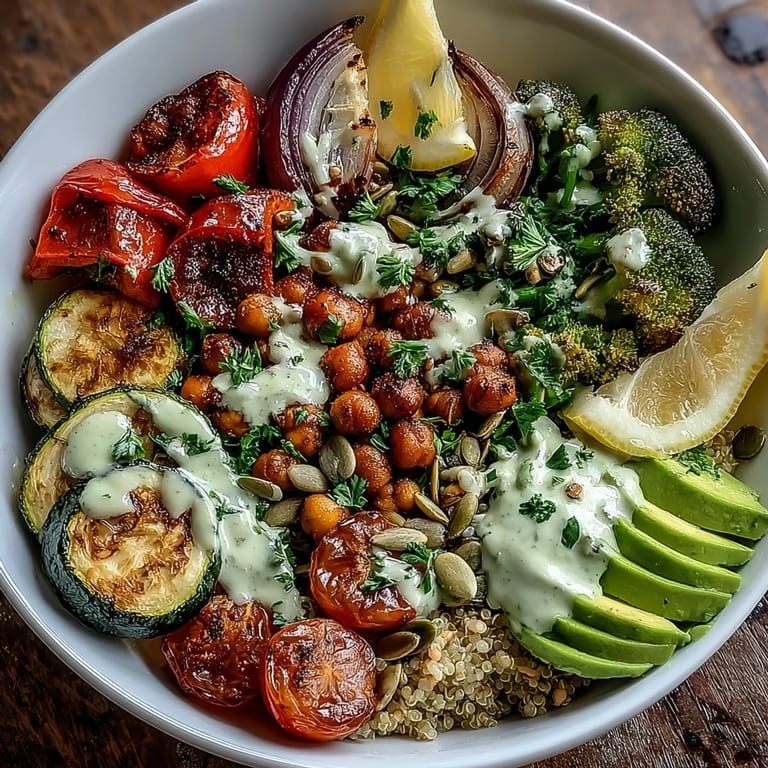
- Divide the cooked grain among four bowls, then top each with roasted vegetables and legumes. Drizzle the tahini dressing across everything in a way that looks intentional, not accidental.
- Finish with the things that matter:
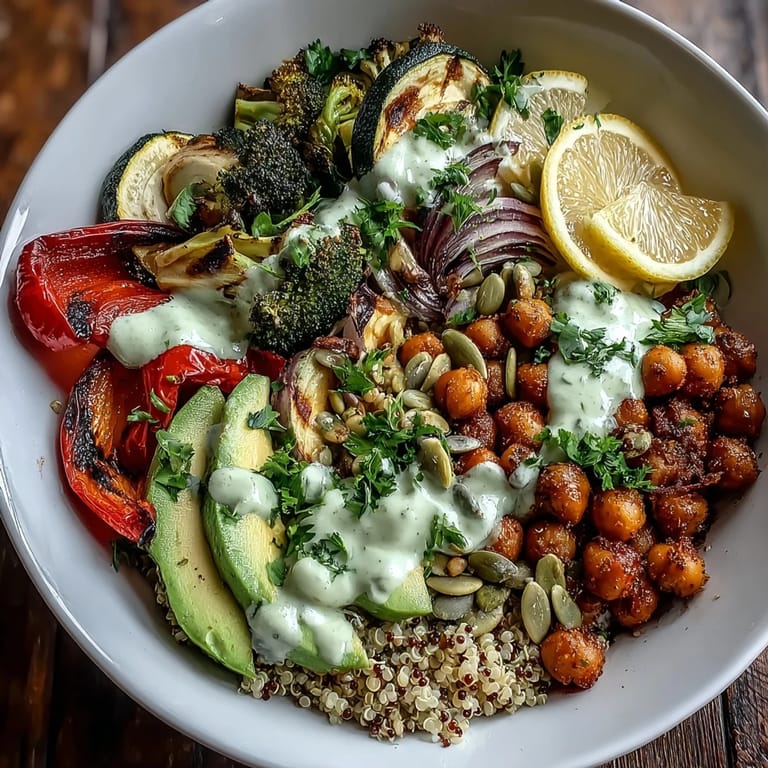
- Scatter fresh parsley, add avocado slices, sprinkle pumpkin seeds, and set lemon wedges on the side so people can adjust the brightness to their preference.
 Pin this
 There's something grounding about assembling a bowl where every component is there because it earned its place, not because you felt obligated to add it. The first time someone told me they'd made it three times in a single week, I understood why—it's nourishing in a way that doesn't demand anything from you except time and intention.
Why Seasonal Vegetables Actually Matter Here
I've made this bowl in summer with peak tomatoes and zucchini, and again in autumn when I swapped in roasted sweet potato and cauliflower. The recipe doesn't change, but the experience does—each season brings its own flavor. The vegetables that are in season right now are the ones that were meant to be roasted this way, so pay attention to what's actually good at your market instead of forcing the recipe to match your memory of it.
The Tahini Dressing Is Everything
I used to make this bowl with a simple lemon vinaigrette, and it was fine. Then I added tahini, and suddenly the whole thing transformed into something richer and more satisfying. The tahini coats your mouth in a creamy way that makes the vegetables taste better, makes you feel fuller longer, and honestly makes you want to lick the bowl clean. If you don't have tahini on hand, don't skip it—get some. It's one of those staples that quietly improves everything it touches.
Making It Your Own
This recipe is a framework, not a prescription. I've made it with black lentils when green weren't available, swapped farro for millet, roasted Brussels sprouts instead of broccoli. The magic isn't in the exact vegetables—it's in the combination of something crunchy, something creamy, something earthy, and something bright. As long as you hit those notes, you're golden.
- Add crumbled feta or goat cheese if you're not committed to vegan, and suddenly it tastes like a different meal entirely.
- Make a double batch of dressing and keep it in the fridge for salads, grain bowls, or even as a dip for raw vegetables when you're pretending to snack mindfully.
- Toast your own pumpkin seeds if you have time—they taste infinitely better than store-bought and the whole kitchen smells like nutty autumn.
 Pin this
 This bowl exists in that sweet spot where eating well doesn't feel like punishment, and feeding yourself becomes something you look forward to instead of something you check off a list. Make it, and come back to it whenever you need proof that simple food can be genuinely satisfying.
Recipe FAQs
- → Can I make this bowl ahead of time?
Absolutely. The roasted vegetables, cooked grains, and legumes store well in separate airtight containers for up to 4 days. Reheat vegetables and grains gently, then assemble fresh with tahini dressing and garnishes when ready to serve.
- → What other grains work well in this bowl?
Beyond quinoa, brown rice, and farro, try barley for a nutty chew, millet for a lighter texture, or buckwheat for a gluten-free option. Couscous cooks quickly but isn't whole grain. Adjust cooking times according to package directions.
- → Can I use different vegetables?
This bowl adapts beautifully to any seasonal vegetables. Try sweet potato cubes, cauliflower florets, sliced carrots, Brussels sprouts, or eggplant. Root vegetables may need slightly longer roasting time, while delicate vegetables like asparagus cook faster.
- → Is this bowl freezer-friendly?
Yes. Freeze the cooked grains, roasted vegetables, and legumes separately in freezer-safe bags for up to 3 months. Thaw overnight in the refrigerator and reheat before assembling. Add fresh garnishes and dressing after reheating.
- → What protein alternatives can I use?
Beyond chickpeas and lentils, try black beans, cannellini beans, or roasted edamame. For non-vegetarian versions, add grilled chicken, shrimp, or falafel. The grains and tahini also provide substantial protein on their own.
- → How can I make the tahini dressing creamier?
Add warm water gradually while whisking vigorously until the dressing reaches your desired consistency. For extra creaminess, blend in a tablespoon of Greek yogurt or coconut cream. The dressing naturally thickens when chilled.