 Pin this
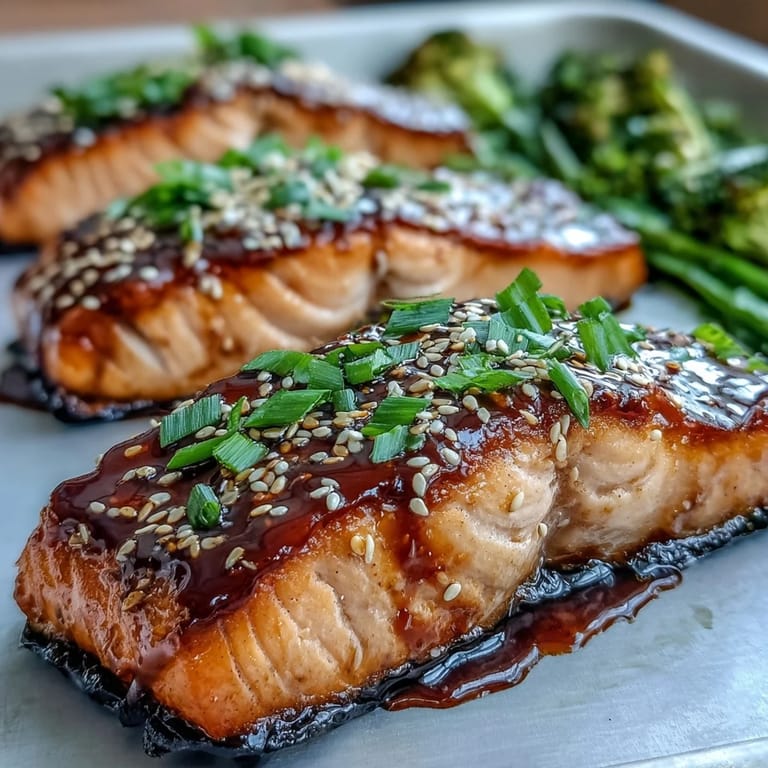
 There's something about the smell of teriyaki sauce reducing on the stove that makes me stop whatever I'm doing and just breathe it in. My partner walked into the kitchen one Tuesday evening, caught that aroma, and asked what magic I was making—so I threw together salmon, broccoli, and snap peas on a sheet pan, glazed everything in that glossy sauce, and twenty minutes later we were eating something that tasted like we'd ordered takeout, except it was better and somehow easier. This recipe became my answer to those nights when I want something that feels special but doesn't demand hours of attention.
I remember making this for friends who were skeptical about eating salmon at home—they'd always ordered it from restaurants, convinced homemade versions would be dry or bland. When that sheet pan came out of the oven and I slid it onto the table, their faces changed. The salmon was glistening, the vegetables had just enough char, and suddenly they were asking for the recipe before they'd even finished their first bites. That's when I knew this one was a keeper.
Ingredients
- Salmon fillets (4 pieces, 5–6 oz each, skin-on): Skin-on keeps the fish moist and gives you something crispy to bite into; I always make sure they're the same thickness so everything cooks evenly.
- Broccoli florets (2 cups): Cut them small enough to roast quickly but large enough that they don't disappear into nothing.
- Sugar snap peas (2 cups, trimmed): These stay sweet and snappy when you don't overcook them, which is exactly why they belong on this pan.
- Red bell pepper (1, sliced, optional): Adds color and sweetness, but honestly, the recipe shines without it too.
- Low-sodium soy sauce (1/4 cup): Low-sodium lets you taste the dish instead of just the salt.
- Honey or maple syrup (3 tbsp): This is what makes the sauce glossy and slightly caramelized; don't skip it for a substitute.
- Rice vinegar (1 tbsp): Cuts through the sweetness with a gentle tang that keeps the sauce balanced.
- Sesame oil (1 tbsp): A little goes a long way—this is what makes people ask if you used restaurant-quality ingredients.
- Garlic (2 cloves, minced): Adds depth without overpowering; fresh is non-negotiable here.
- Fresh ginger (1 tsp, grated): Grate it yourself right before cooking so you get those bright, spicy notes.
- Cornstarch slurry (1 tsp cornstarch mixed with 2 tsp water): This thickens the sauce into something that clings to the salmon instead of pooling at the bottom of the pan.
- Sesame seeds, scallions, and lime wedges (for garnish): These final touches turn a good dish into one people remember.
Tired of Takeout? 🥡
Get 10 meals you can make faster than delivery arrives. Seriously.
One email. No spam. Unsubscribe anytime.
Instructions
- Get your oven ready:
- Preheat to 400°F and line a large sheet pan with parchment paper or foil. This step matters more than it sounds—the parchment paper keeps everything from sticking and makes you feel like you actually have your life together.
- Make the teriyaki magic:
- In a small saucepan over medium heat, combine soy sauce, honey, rice vinegar, sesame oil, garlic, and ginger. Let it come to a gentle simmer, then stir in your cornstarch slurry and whisk until it thickens into something glossy and dark, about one to two minutes. This is when your kitchen will smell absolutely incredible.
- Arrange your salmon:
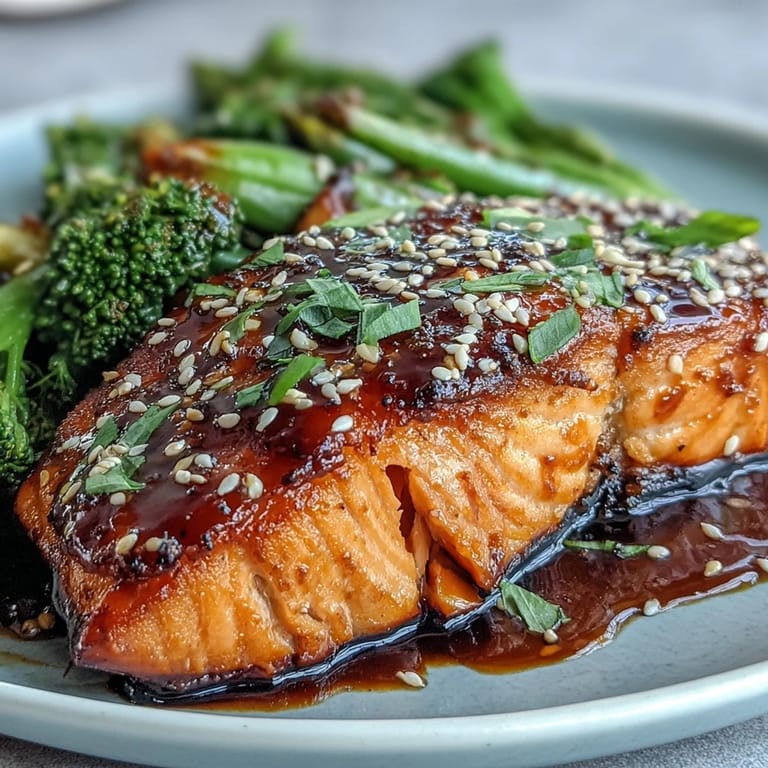
- Place salmon fillets on one side of the sheet pan, skin-side down. Brush each one generously with teriyaki sauce, saving some for the vegetables. The salmon should look like it's been coated in liquid gold.
- Prep and position the vegetables:
- Toss broccoli, snap peas, and bell pepper in a bowl with a light drizzle of olive oil and about a tablespoon of teriyaki sauce. Spread them in a single layer beside the salmon, making sure nothing overlaps—overcrowding means steaming instead of roasting.
- Roast everything together:
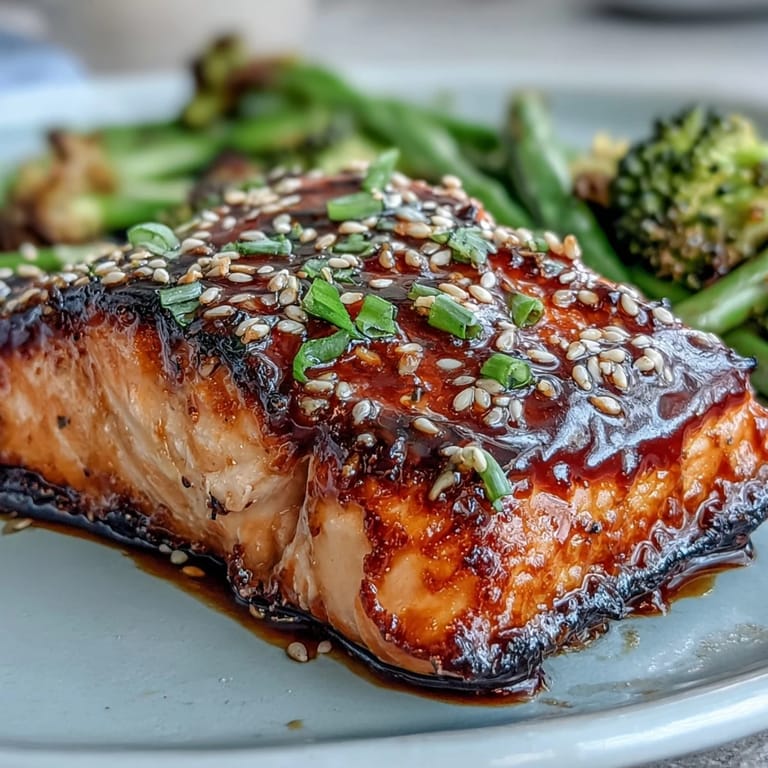
- Slide the sheet pan into the oven for fifteen to eighteen minutes, until the salmon flakes easily with a fork and the vegetables are tender but still have a little bite to them. You'll know it's done when the broccoli edges start to brown.
- Optional caramelization step:
- If you're feeling fancy, broil everything for one to two minutes at the end. Watch it carefully because this happens fast—you want color, not char.
- Finish and serve:
- Drizzle any remaining teriyaki sauce over the salmon and vegetables. Scatter sesame seeds and sliced scallions on top, squeeze lime over everything, and serve right away while it's still warm and the vegetables are at their crispest.
 Pin this
 There was an evening when my mom came over and I made this for her, and she sat there quietly for a moment after her first bite, then looked at me and said she'd been ordering this exact dish from a Japanese restaurant for years without realizing I could make it at home. That moment felt like winning something.
Why This Works as a Weeknight Dinner
The beauty of sheet pan cooking is that you're not juggling multiple pots or constantly checking on different components. Everything roasts together, which means the vegetables pick up flavor from the salmon's natural oils while the sauce caramelizes slightly on everything. Once you get comfortable with the timing, you can make this with your eyes closed—though I'd recommend keeping them open so you don't miss how good it looks coming out of the oven.
Customizing for Your Pantry
If you don't have rice vinegar, apple cider vinegar works in a pinch, though the flavor shifts slightly toward brightness rather than subtlety. Maple syrup swaps in seamlessly for honey, and some nights I use a mix of both. The vegetables are completely flexible too—asparagus, green beans, and bok choy all roast beautifully alongside the salmon, so use whatever looks fresh at your market or whatever you actually have in your refrigerator.
Making It Your Own
One night I added a half teaspoon of red pepper flakes to the sauce and suddenly had something with a subtle heat that my partner couldn't stop eating. Another time I scattered toasted cashews over everything at the last second, which added a textural element that surprised me in the best way. The foundation here is solid enough that you can play with it and make it exactly what you're craving.
- For a gluten-free version, swap tamari in place of regular soy sauce and check your sesame oil bottle.
- Serve this over jasmine rice or brown rice if you want something heartier to soak up all that sauce.
- Leftovers keep beautifully in airtight containers for two days, making this excellent for meal prep if you're thinking ahead.
 Pin this
 This dish taught me that good cooking doesn't require complexity, just intention and fresh ingredients treated with respect. It's become the recipe I reach for when I want to feel proud of what I've made without spending the whole evening in the kitchen.
Recipe FAQs
- → How do I make the teriyaki glaze thick and shiny?
Whisk cornstarch mixed with water into the simmering soy sauce, honey, vinegar, sesame oil, garlic, and ginger mixture. Cook until it thickens to a glossy sauce.
- → Can I use other vegetables instead of broccoli and snap peas?
Yes, green beans, asparagus, or bell peppers work well and can be roasted with the salmon for similar textures and flavors.
- → What is the best way to prevent the salmon from drying out?
Brush salmon generously with teriyaki sauce and avoid overcooking. Roast until the salmon flakes easily, about 15-18 minutes, then optionally broil briefly for caramelization.
- → Is it possible to make this gluten-free?
Absolutely. Substitute tamari for soy sauce to keep the glaze gluten-free without sacrificing flavor.
- → How can I store leftovers to keep freshness?
Cool completely then store portions in airtight containers in the refrigerator for up to two days for best taste and texture.