 Pin this
 There's something about the steam rising from a bowl of curry ramen that stops me mid-thought, even on days when I'm rushing through the kitchen. My friend Asha brought over a takeout container one evening, and the aroma hit before the door was even closed—coconut, turmeric, something alive and warm. That night, I decided I'd figure out how to make it at home, vegan and real, without relying on restaurants. What started as chasing that one smell became this bowl, and now it's the first thing I reach for when I want to feel grounded.
I made this for my parents on a rainy Sunday, nervous because my dad has always been skeptical of vegan cooking. He took one spoonful, paused, and asked for seconds without saying much. That quiet approval meant more than any compliment—it's the ramen I make now when I want to show someone that plant-based food can be genuinely delicious, not a compromise.
Ingredients
- Coconut oil: This is your flavor foundation—use full-fat for richness that regular oil can't match.
- Yellow onion, garlic, and fresh ginger: These three create the aromatic base that makes people stop and ask what you're cooking.
- Red curry paste: This is where the soul lives; make sure it's labeled vegan, as some brands sneak in fish sauce.
- Ground turmeric: A teaspoon adds earthiness and that golden color that makes the bowl look alive.
- Vegetable broth: Use the best quality you can find—it's the foundation of everything.
- Coconut milk (full-fat): This creates the creamy texture that makes the bowl feel indulgent without any dairy.
- Soy sauce or tamari: A tablespoon adds umami depth; tamari works if you're avoiding gluten.
- Maple syrup: Just a touch balances the spice and saltiness with subtle sweetness.
- Sesame oil: A finishing touch that adds nuttiness and complexity.
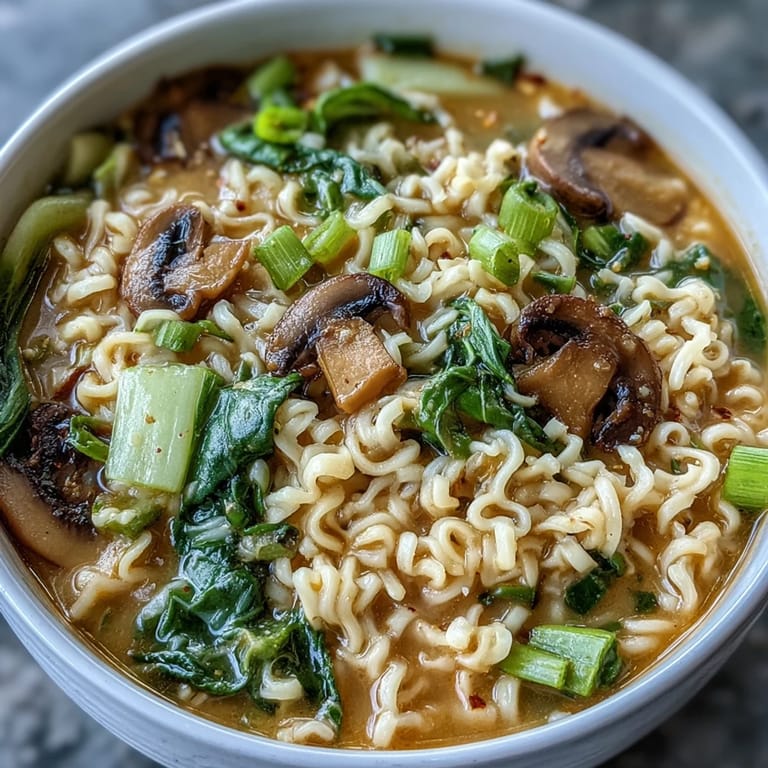
- Cremini or shiitake mushrooms: These absorb the broth and become meaty and tender when simmered.
- Baby bok choy: Stays crisp-tender and adds a mild, pleasant bitterness that complements the curry.
- Ramen noodles: Check that they're vegan; fresh noodles cook faster if you're short on time.
- Carrot, scallions, sesame seeds, and chili: These garnishes add texture, freshness, and visual appeal.
Tired of Takeout? 🥡
Get 10 meals you can make faster than delivery arrives. Seriously.
One email. No spam. Unsubscribe anytime.
Instructions
- Build the aromatic base:
- Heat coconut oil in a large pot over medium heat and add the chopped onion, letting it soften and turn translucent over 3 to 4 minutes. This slow start matters—you're not rushing; you're coaxing out the natural sweetness that makes the whole broth taste better. Once it's soft, add minced garlic and ginger, cooking just until the kitchen smells like something special, about a minute.
- Toast the spices:
- Stir in the red curry paste and turmeric, stirring constantly for about a minute to wake up the spices and deepen their flavors. You'll notice the paste coating the oil and onion—that's exactly what you want, as it prevents the spices from becoming harsh in the liquid.
- Build the broth:
- Pour in the vegetable broth and coconut milk slowly, stirring as you go to incorporate them smoothly. Add the soy sauce, maple syrup, and sesame oil, then bring everything to a gentle simmer—not a rolling boil, which can make the coconut milk separate.
- Simmer the mushrooms:
- Add the sliced mushrooms and let them cook for 8 to 10 minutes until they're tender and have darkened slightly from absorbing the broth. This is when you can start cooking your ramen noodles according to package directions in a separate pot.
- Wilt the greens:
- Stir the bok choy and carrots into the simmering broth and cook for just 2 to 3 minutes—you want them tender but still bright and alive, not soft. Taste the broth now and adjust seasoning with salt, pepper, and more curry paste if you like it spicier.
- Bring it together:
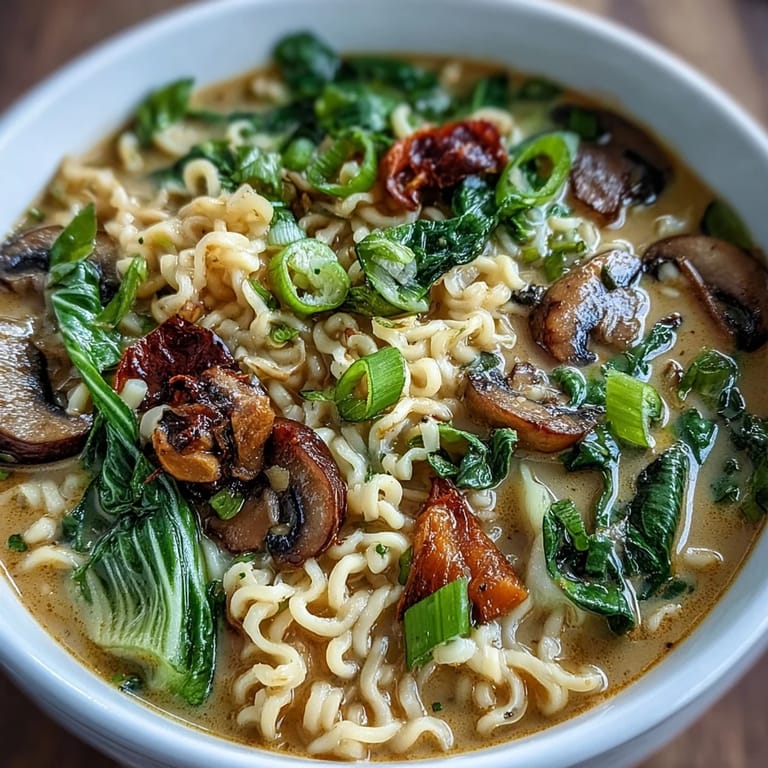
- Divide the cooked, drained noodles among serving bowls and ladle the hot broth with vegetables over top. Garnish generously with scallions, sesame seeds, fresh cilantro, sliced chili if using, and squeeze of lime right before serving.
 Pin this
 There was a moment when my roommate came home from a difficult shift and didn't say hello, just smelled the pot and asked if it was ready. We ate standing at the counter, not talking much, and something shifted—the kind of meal that says I'm here and I care without needing words. That's when this ramen stopped being a recipe and became something I make for people I want to comfort.
Why the Aromatics Matter So Much
The first few minutes of cooking this broth are where you're building flavor, not just heating ingredients. When you sauté the onion slowly, you're allowing its natural sugars to caramelize slightly, which creates a sweetness that balances the spice later. Fresh ginger and garlic added at the right moment become fragrant rather than sharp or overpowering. This patience at the beginning is what separates a broth that tastes like spiced water from one that tastes like it's been tended to with care.
The Magic of Finishing Touches
The lime wedge and fresh cilantro aren't optional extras—they're what wake up your palate with each spoonful and keep the bowl from feeling heavy or one-note. The sesame seeds add a subtle crunch and nuttiness that you don't realize you need until you taste it. Even the scallions matter; their mild onion flavor and bright color give the bowl visual life and prevent it from looking like a monotone curry puddle.
Adapting This to What You Have
I've made this when baby bok choy sold out, swapping in fresh spinach instead, and it worked beautifully—though it wilts faster, so add it in the last minute. Tofu, edamame, or even crispy chickpeas work for extra protein if you want the bowl to feel more substantial. If you can't find fresh ginger, powdered works in a pinch, though the broth will taste slightly different and less lively.
- Substitute spinach or kale for bok choy if needed, but add them even later so they don't disappear into the broth.
- Extra protein like cubed tofu or edamame makes this filling enough for lunch the next day.
- Adjust curry paste and chili flakes to your heat preference; there's no judgment in making it milder or spicier.
 Pin this
 This bowl has become my version of chicken soup—something I make when the weather turns cold, when someone needs comfort, or when I just want to remind myself that real food doesn't need to be complicated to be meaningful. Every time I make it, it tastes like care.
Recipe FAQs
- → What type of mushrooms work best for this dish?
Cremini or shiitake mushrooms bring a deep, earthy flavor that complements the creamy coconut curry beautifully.
- → Can I substitute the bok choy with other greens?
Yes, spinach or kale can be used as alternatives for bok choy to maintain the dish’s fresh green texture.
- → How can I adjust the spice level?
Modify the amount of red curry paste and add sliced red chili to reach your preferred heat level.
- → What’s the best way to cook the ramen noodles?
Cook noodles according to package instructions until tender, then drain and set aside before combining with the broth and vegetables.
- → Are there any allergen considerations in this dish?
The dish contains soy from soy sauce; tamari can be used for gluten-free needs. Also, check noodles for gluten if necessary.
- → Can I add extra protein to the bowl?
Adding cubed tofu or cooked edamame makes a delicious protein boost while keeping the dish vegan and balanced.