 Pin this
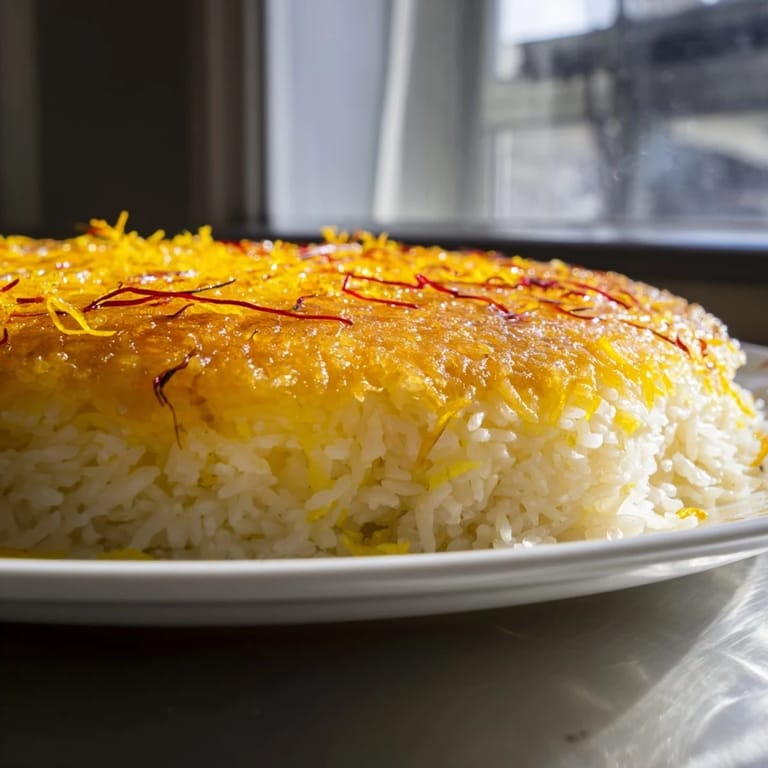
 The first time I made tahdig, my kitchen filled with this impossibly complex smell—toasted rice and butter meeting something almost caramelized, like the edges of a memory I couldn't quite place. My grandmother had described it in fragments over the years, always ending with that knowing smile about the crispy gold bottom that everyone fights over. I thought I'd imagined how good it could be until that moment when I flipped the pot and heard that satisfying crack.
I remember cooking this for a dinner party where someone had just moved into the neighborhood, and halfway through the recipe, I realized I'd never actually flipped it successfully before. My hands were shaking a little as I turned that pot upside down onto the platter, but when that golden disk slid out intact, the whole table went quiet for just a second before everyone leaned in.
Ingredients
- Basmati rice (2 cups): This variety's length and delicate structure matter more than you'd think—it stays separate and elegant, never mushy, which is the whole point here.
- Saffron threads (1/4 teaspoon): A little goes so far; steep it properly and those threads unlock an earthy warmth that transforms the whole dish without screaming spice.
- Greek yogurt (4 tablespoons): The secret weapon for the tahdig—it creates a creamy, slightly tangy base that crisps up beautifully and holds the bottom layer together.
- Vegetable oil and unsalted butter (2 tablespoons each): The combination matters; butter brings flavor while oil raises the smoke point, so you get richness without burning.
- Ground turmeric (1/2 teaspoon, optional): If you use it, you'll get a warmer golden hue and a subtle earthiness that deepens everything else.
Tired of Takeout? 🥡
Get 10 meals you can make faster than delivery arrives. Seriously.
One email. No spam. Unsubscribe anytime.
Instructions
- Rinse and soak your rice:
- Run the basmati under cold water, stirring gently with your fingers until the water runs clear—this removes excess starch that would make the rice stick together. Soak it in salted water for 30 minutes; this matters because it helps the grains cook evenly and absorb seasoning.
- Parboil with intention:
- Boil the drained rice in a large pot of salted water for just 5–6 minutes—you're aiming for a texture that's tender on the outside but still has a slight firmness in the center, almost like it wants to finish cooking. Drain it well and set aside.
- Awaken the saffron:
- Grind those threads gently in a mortar and pestle to release their color and flavor, then steep in hot water for 10 minutes until the liquid turns deep amber. Don't skip this step; the steeping unlocks everything saffron promises.
- Build the tahdig base:
- Mix Greek yogurt with a tablespoon of your saffron water, the turmeric if using, and about 1 cup of the parboiled rice in a bowl. Stir until it's well combined and looks almost like a thick, luxurious rice porridge; this becomes the crispy foundation everyone loves.
- Heat your stage:
- Warm the oil and melted butter together in your heavy pot over medium heat until you can feel the warmth rising and maybe catch the faintest butter aroma. Let it heat for just a minute so everything comes together.
- Spread the foundation:
- Pour that yogurt-rice mixture evenly across the bottom of the pot, spreading it with a spatula until it covers the whole base in a thin, even layer. This is what becomes your crispy gold treasure.
- Layer with care:
- Gently spoon the remaining rice over the yogurt layer, mounding it slightly toward the center so it looks almost like a gentle hill. Drizzle the rest of your saffron water over the top, then poke a few small holes with a wooden spoon handle so steam can escape—this prevents the rice from becoming dense.
- Steam and transform:
- Wrap your pot lid in a clean kitchen towel (this catches condensation so it doesn't drip back onto the rice), cover tightly, and cook over medium heat for 10 minutes until you hear gentle steam sounds. Then lower the heat to low and cook for 35–40 minutes undisturbed; the magic happens in this quiet time as the tahdig forms its golden crust.
- The final moment:
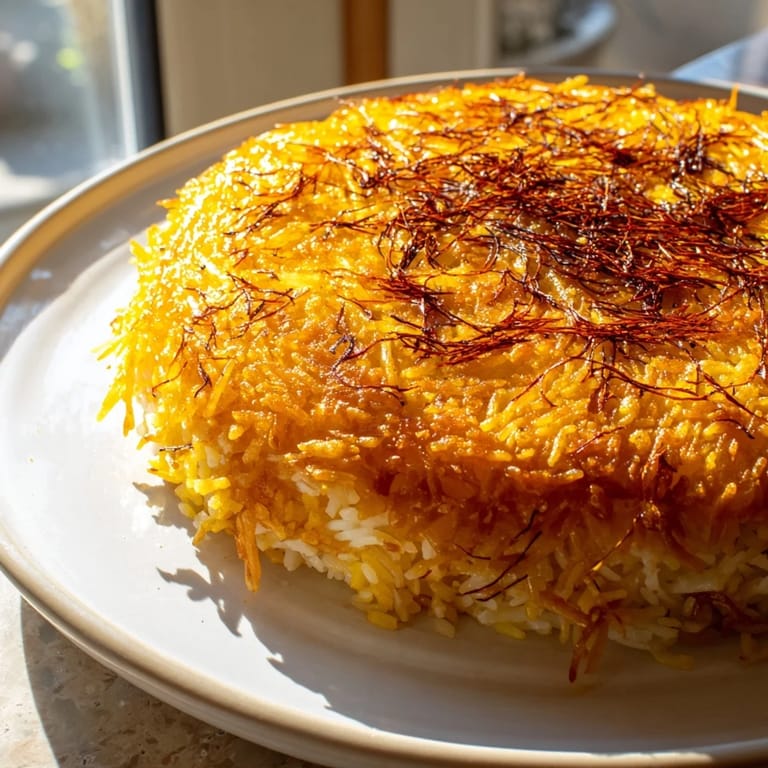
- Remove the pot from heat and let it rest for 5 minutes—this helps everything settle and makes the tahdig less likely to break. Then carefully place your serving platter over the pot, take a breath, and flip it upside down in one confident motion so that crispy golden disk slides out on top.
 Pin this
 There's a moment in this recipe that feels almost ceremonial—that second right before you flip the pot when you can hear the rice crackling slightly against the bottom, and you know something beautiful is happening that you can't quite see yet. When that tahdig finally slides onto the platter whole and glistening, it stops being just dinner and becomes the thing your guests talk about for months.
Why Heavy-Bottomed Pots Matter Here
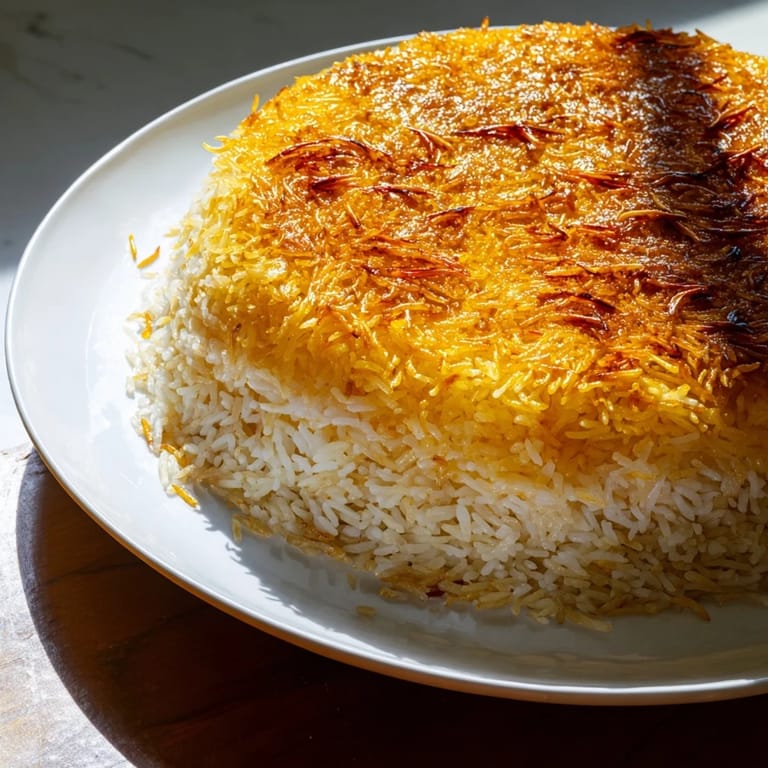
A cheap pot will scorch your tahdig unevenly, leaving some spots burnt and others pale. A heavy-bottomed pot distributes heat so evenly that the crust develops in that maddening, beautiful caramelized shade all over, almost like it's been toasted rather than burned. The first time I used the right pot for this, I understood why Persian cooks are so particular about their equipment.
The Art of the Flip
Everyone gets nervous about this part, and honestly, the first time you should have a platter that's at least as wide as your pot and practice the motion once while everything's cold. The goal is one confident, smooth flip—hesitation creates gaps where the tahdig wants to stick. I learned this by flipping too slowly on my third attempt and watching half the crust stay behind.
Variations and Customizations
Once you've mastered the basic tahdig, you can swap the yogurt-rice layer for thinly sliced potatoes that crisp up almost like chips, or even use thin pieces of lavash flatbread that turn golden and delicate. The aromatics are yours to play with too—a cinnamon stick or a few cardamom pods in the boiling water add whispers of complexity that feel like a secret ingredient no one can quite identify.
- Scatter pomegranate seeds or dried barberries over the rice before steaming for brightness and a subtle tartness that cuts through the richness.
- Fresh herbs like dill, parsley, or cilantro stirred into the rice just before serving bring color and freshness that makes the whole dish feel lighter.
- A pinch of ground cardamom mixed into the saffron water adds an almost floral note that elevates everything without overwhelming it.
 Pin this
 Tahdig is the kind of dish that feels like you're showing someone something precious, something that took time and attention to get right. Once you nail it, you'll find yourself making it again and again, each time discovering something new about those few minutes when heat and patience transform rice into something unforgettable.
Recipe FAQs
- → How is the crispy tahdig layer created?
The tahdig forms by cooking a saffron-yogurt and rice mixture at the bottom of the pot with oil and butter, creating a golden caramelized crust.
- → Can I use different ingredients to make tahdig?
Yes, thinly sliced potatoes or flatbread can replace the yogurt-rice mixture for alternative crispy layers.
- → What role does saffron play in the dish?
Saffron adds a unique aroma and vibrant color, infusing the crust and rice with a fragrant, golden hue.
- → Is soaking the rice important?
Soaking removes excess starch and helps achieve fluffy, separate grains after cooking.
- → How do I prevent the tahdig from sticking too much to the pot?
Using a heavy-bottomed nonstick pot and sufficient oil or butter helps release the crust easily after cooking.
- → Can this dish accommodate dietary restrictions?
It's vegetarian and gluten-free, but because of dairy in yogurt and butter, it's unsuitable for dairy-free diets.