 Pin this
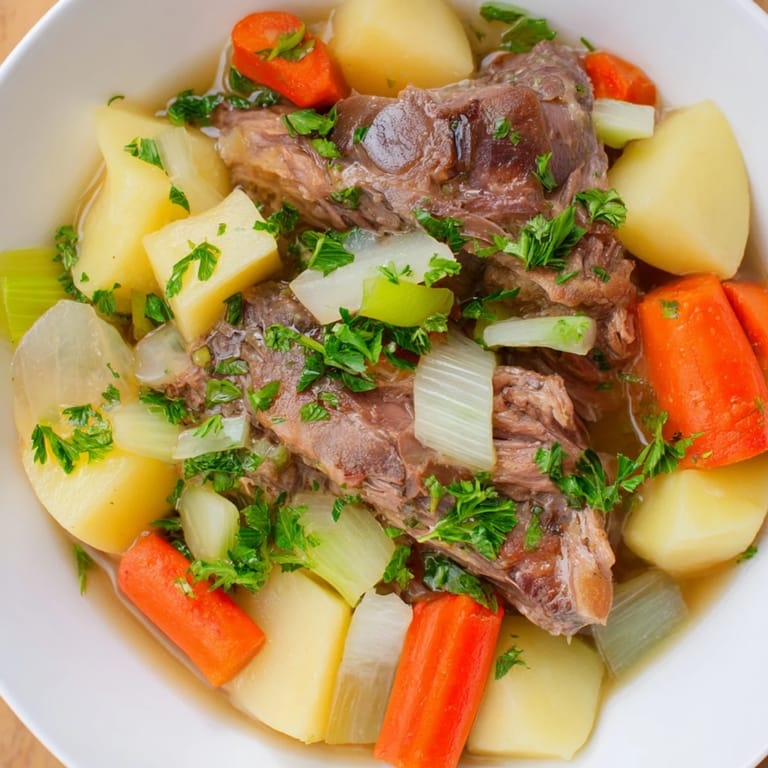
 My first proper cawl came from my grandmother's kitchen on a December afternoon when the wind was doing that Welsh thing where it cuts right through you. She'd left the pot simmering while we sat by the fire, and when she lifted the lid, the steam rose up and fogged her glasses—she laughed and said that was how you knew it was working. The lamb had practically dissolved into the broth, the vegetables had softened into something almost sweet, and the whole house smelled like home in a way I couldn't quite name until years later when I made it myself and understood it was patience.
I made this for my sister during her first winter living alone in the valleys, and she called me after the first spoonful to say she understood why Mum had always insisted on having it in the freezer. There's something about a bowl of cawl that settles you, especially when you're sitting in a kitchen that doesn't quite feel like yours yet.
Ingredients
- Lamb shoulder (1 kg, bone-in preferred): The bone adds depth to the broth that you won't get any other way—ask your butcher for chunks with the bone still attached, and don't shy away from the bits that look a little rough.
- Carrots (2 large, sliced): They'll dissolve slightly at the edges if your heat is right, which is exactly what you want.
- Parsnips (2 medium, sliced): These bring an almost sweet earthiness that stops the stew from feeling too heavy.
- Potatoes (2 medium, diced): They'll thicken the broth naturally without needing any help, so don't peel them too thin.
- Swede (1 small, diced): If you've never cooked with swede before, this is the dish to start with—it softens beautifully and adds a subtle sweetness.
- Leeks (2, cleaned and sliced): Split them lengthwise and rinse between the layers where soil hides; add half now and half at the end so you get both melted and fresh flavors.
- Onion (1 medium, diced): It disappears into the broth, which is the point.
- Stock (1.5 liters): Use lamb if you can find it, but chicken works just fine—taste it first though, as some brands are saltier than others.
- Bay leaves (2): Just two; they're strong and easy to overdo.
- Fresh parsley (1 small bunch, chopped): Save most of it for the end so it stays bright green and fresh-tasting.
- Salt and pepper: Taste as you go rather than seasoning at the start.
Tired of Takeout? 🥡
Get 10 meals you can make faster than delivery arrives. Seriously.
One email. No spam. Unsubscribe anytime.
Instructions
- Start with the lamb:
- Put your lamb chunks in a large pot and cover them with the stock, then crank the heat up until it's rolling. You'll see gray foam rise to the top—that's impurities, and skimming it off takes just a minute but makes the broth clearer and cleaner-tasting.
- Let it breathe:
- Once you've skimmed, add your bay leaves, drop the heat low, and cover the pot. Let it simmer gently for a full hour—you want a occasional bubble, not a rolling boil.
- Build your base:
- After the hour, throw in the carrots, parsnips, potatoes, swede, onion, and most of the leeks (keep a small handful back). Season with salt and pepper, stir it around, and settle in for another 45 minutes with the lid on.
- Finish strong:
- The vegetables should be completely tender and the lamb should fall apart when you nudge it with a spoon. Add your reserved leeks and the fresh parsley, give it all a gentle stir, and let it simmer uncovered for 10 minutes so the leeks barely soften and the parsley stays green.
- Taste and adjust:
- Fish out the bay leaves, taste the broth, and add more salt and pepper if it needs it—cawl should taste like the vegetables and lamb have been friends for hours.
 Pin this
 My neighbor brought me a container of her cawl years ago when I was nursing a broken wrist, and I remember sitting at my kitchen table at eleven at night, eating it straight from the pot while standing up because my sling made sitting down awkward. That stew kept me fed for three days, and every time I make it now, I think about how food like this is how people take care of each other.
Why This Stew Works
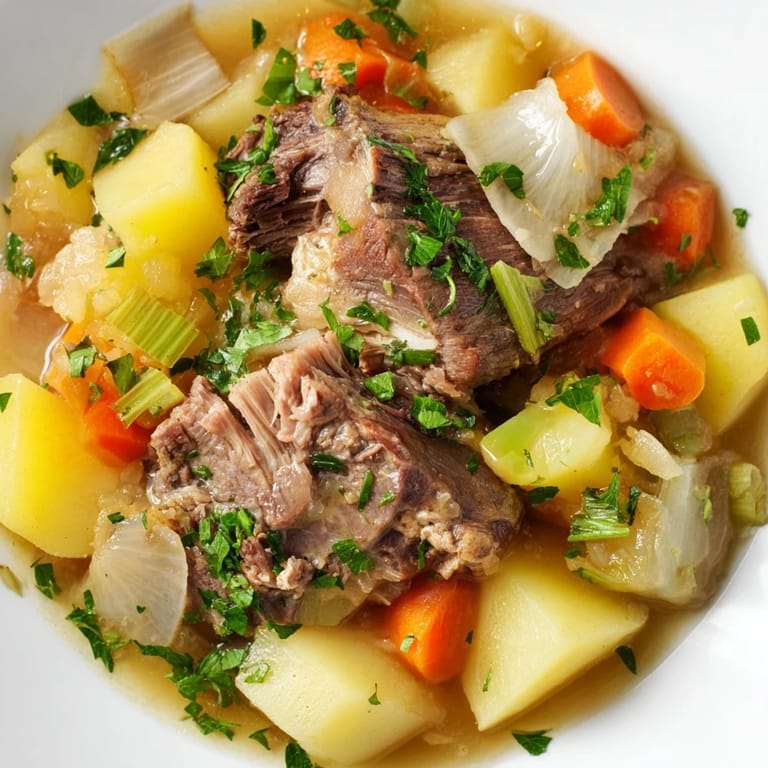
Cawl exists because Welsh kitchens have always been about making something nourishing from what's available—lamb, root vegetables, time, and not much else. There's no cream, no flour for thickening, no tricks; the magic happens because you let the ingredients do what they do naturally. The vegetables break down just enough to thicken the broth while staying whole enough that you can taste each one.
Serving and Pairing
Traditionally this is served with crusty bread and a wedge of Welsh cheese like Caerphilly, which is crumbly and salty and softens slightly into the warm broth. You can also serve it with just bread, or skip the bread entirely if you prefer—the stew is thick enough to be almost a main course on its own.
Storing and Reheating
Cawl is one of those stews that actually tastes better the next day once all the flavors have gotten to know each other in the fridge. Reheat it gently over a low flame, stirring occasionally, and it'll come back to life like it was just made.
- Let it cool completely before covering and refrigerating so it doesn't steam itself into mushiness.
- It keeps for three days in the fridge and freezes beautifully for up to three months.
- If it's been frozen, thaw it overnight in the fridge and reheat low and slow.
 Pin this
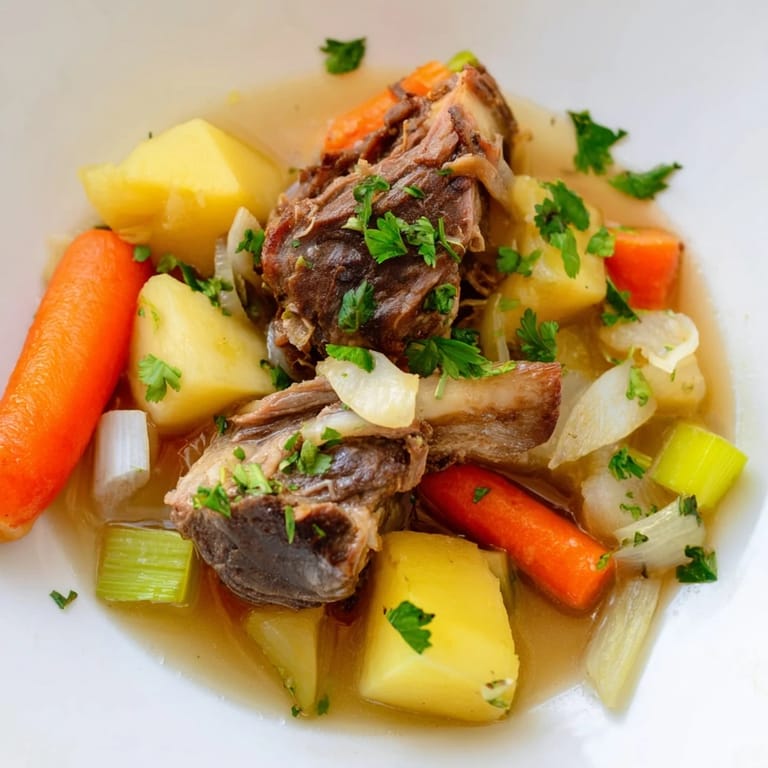
 This is the kind of stew that reminds you why people gather around tables on cold evenings—it's warm, it's honest, and it tastes like someone cared enough to spend two hours with a pot.
Recipe FAQs
- → What cut of lamb is best for Welsh cawl?
Lamb shoulder with bone-in is preferred for its rich flavor and tenderness after slow simmering.
- → Can I make this dish gluten-free?
Yes, simply omit bread and cheese on the side to keep it gluten-free.
- → How long should the stew simmer?
Simmer gently for about 2 hours, allowing the lamb and vegetables to become tender and flavorful.
- → Are there suitable substitutions for lamb?
Beef or chicken can be used as alternatives, though cooking times may vary slightly.
- → What side dishes complement Welsh cawl?
Traditional sides include crusty bread and Welsh cheese such as Caerphilly, enhancing the rustic flavors.