 Pin this
 My grandmother kept a container in her freezer that I thought was just full of garbage until I watched her transform it into the most incredible soup base. Now I have my own scrap bag in the freezer door, and watching it fill up feels like saving little treasures for later.
During a particularly tight month in culinary school, our instructor challenged us to create something delicious from nothing but kitchen scraps. This recipe came out of that week, and I have never thrown away vegetable peels since.
Ingredients
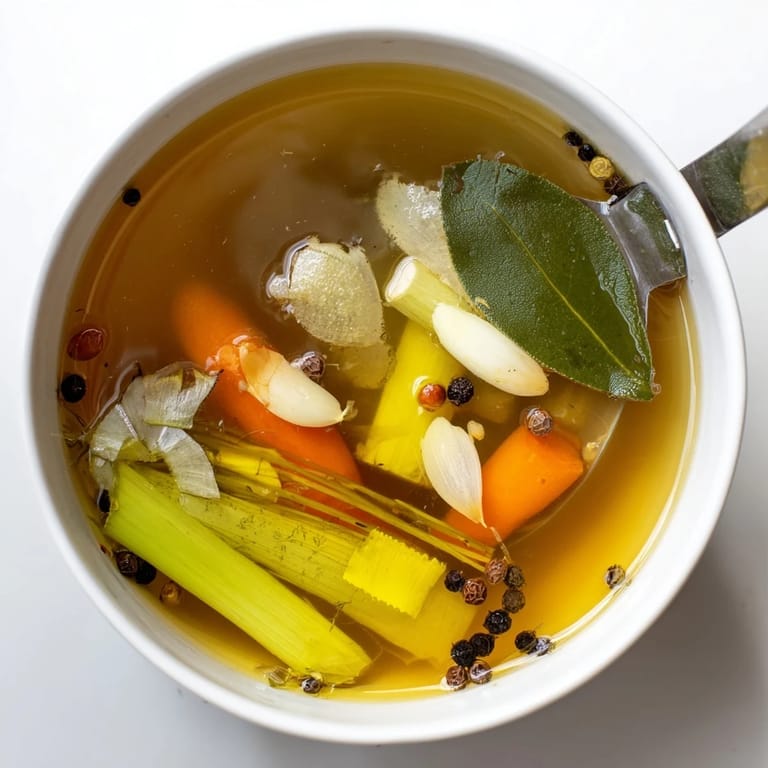
- Vegetable Scraps: 5 to 6 cups of carrot peels, onion skins, celery ends, leek tops, mushroom stems, garlic skins and parsley stems create a balanced flavor foundation
- Bay Leaves: 2 whole leaves add an earthy aromatic depth
- Black Peppercorns: 8 to 10 whole peppercorns provide gentle warmth
- Garlic: 2 smashed cloves are optional but add wonderful depth
- Fresh Herbs: A small handful of parsley or thyme sprigs brightens the broth
- Salt: 1 to 2 teaspoons to taste
- Cold Water: 2 liters or 8 cups creates the right concentration
Tired of Takeout? 🥡
Get 10 meals you can make faster than delivery arrives. Seriously.
One email. No spam. Unsubscribe anytime.
Instructions
- Gather Your Scraps:
- Collect fresh vegetable trimmings and avoid bitter vegetables like broccoli or Brussels sprouts that can overpower the broth
- Combine Everything:
- Place the scraps, bay leaves, peppercorns, garlic, herbs and salt in a large stockpot then pour in the cold water
- Bring to a Gentle Boil:
- Heat the pot over medium-high heat until you see bubbles forming then immediately reduce to a gentle simmer
- Simmer Slowly:
- Cook uncovered for 1 hour and occasionally skim off any foam that rises to the surface
- Season to Taste:
- Taste the broth and add more salt if needed
- Strain Carefully:
- Pour the broth through a fine-mesh sieve or cheesecloth to remove all the solids
- Cool and Store:
- Let the broth cool then store in airtight containers in the refrigerator for up to 5 days or freeze for up to 3 months
 Pin this
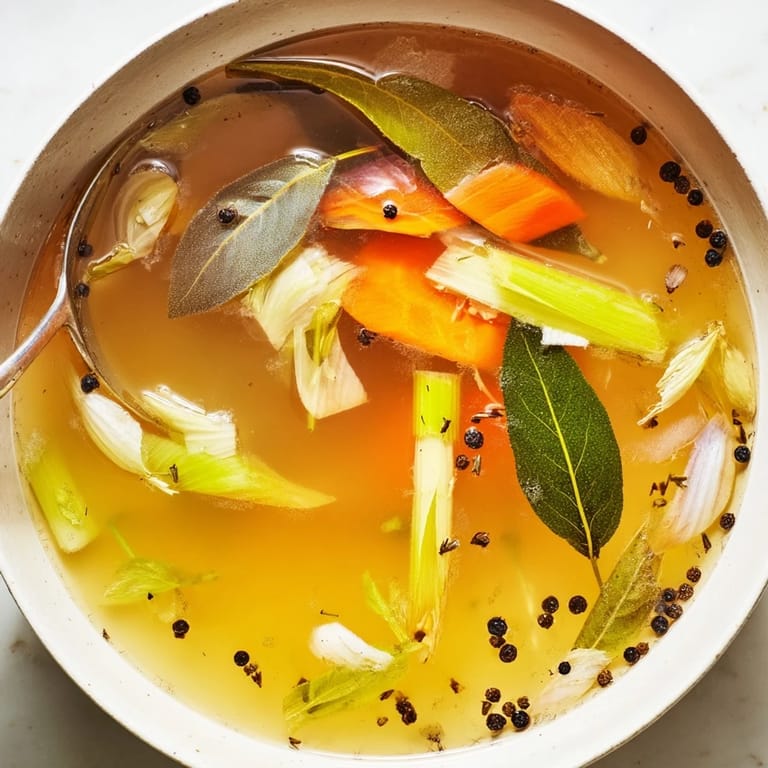
 The first time I served this broth to my family they refused to believe it was made entirely from things they had seen me toss in the trash just days before. That moment changed how I think about food forever.
Building Your Scrap Collection
Keep a large resealable bag in your freezer and add vegetable trimmings as you cook throughout the week. Carrot peels, onion skins, celery ends and herb stems work beautifully together.
Knowing What to Skip
Some vegetables turn bitter or muddy when simmered for long periods. Cruciferous vegetables and strongly flavored scraps like beet peels can overwhelm the delicate balance of your broth.
Making It Yours
Experiment with adding dried mushrooms, a piece of kombu seaweed or even a Parmesan rind if you are not strictly vegan for extra depth of flavor.
- Roast your vegetable scraps first for a richer darker broth
- Add a splash of soy sauce or miso paste for umami
- Freeze broth in ice cube trays for easy portioning
 Pin this
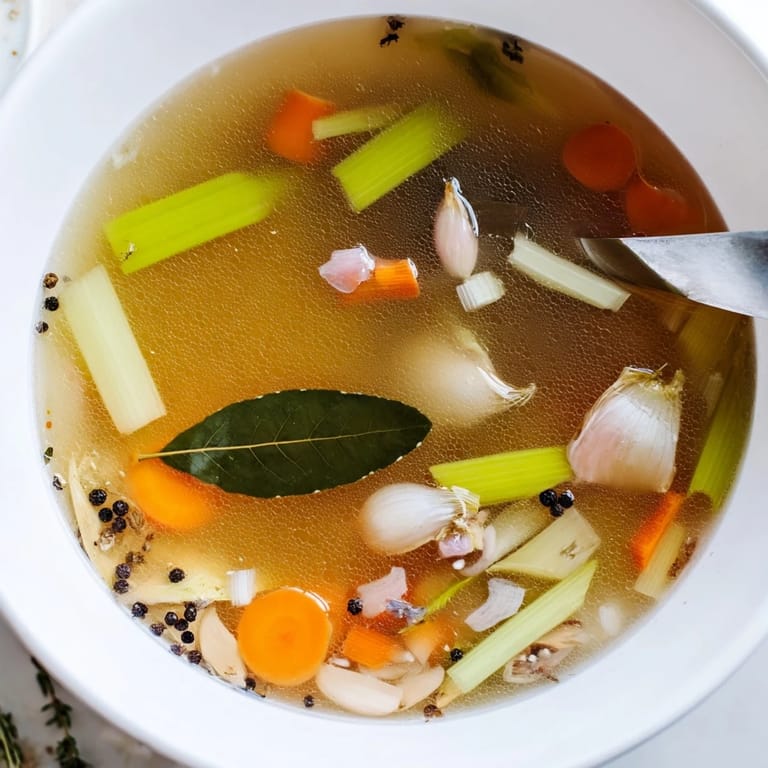
 Every batch of this broth will be slightly different based on what scraps you have collected, and that is exactly what makes it so special.
Recipe FAQs
- → What vegetables should I avoid putting in broth?
Skip cruciferous vegetables like broccoli, cauliflower, Brussels sprouts, and cabbage. These can make your broth bitter and overpowering. Stick with aromatic scraps like onions, carrots, celery, leeks, garlic, and herbs for the cleanest flavor.
- → How long does homemade broth last in the refrigerator?
Your broth will stay fresh in the refrigerator for up to 5 days when stored in airtight containers. For longer storage, freeze in portion-sized containers or freezer bags for up to 3 months.
- → Can I freeze vegetable scraps until I have enough?
Absolutely! Keep a large freezer bag and add your vegetable trimmings as you cook. Once you've collected 5-6 cups of scraps, you're ready to make a batch of broth. This is an excellent way to reduce waste and always have materials ready.
- → What gives vegetable broth a deeper, richer flavor?
Roasting your vegetable scraps before simmering adds depth and caramelization. You can also add umami boosters like dried shiitake mushrooms, kombu seaweed, or a splash of soy sauce for a more complex, savory profile.
- → Do I need to peel vegetables before adding scraps?
No need to peel! Just give vegetables a good wash before trimming, and those peels go right into your scrap bag. Well-scrubbed carrots and potatoes contribute excellent flavor and color to the broth.
- → What's the difference between broth and stock?
Technically, stock is made primarily from bones while broth is made from vegetables and meat. This vegetable-based creation is properly called broth since it relies entirely on vegetable trimmings and aromatics for its flavor.