 Pin this
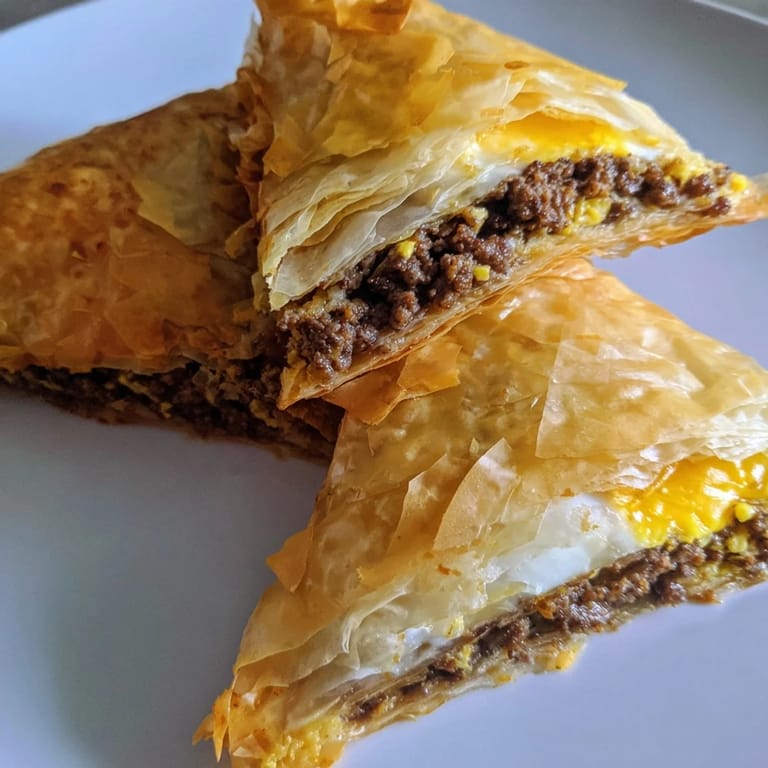
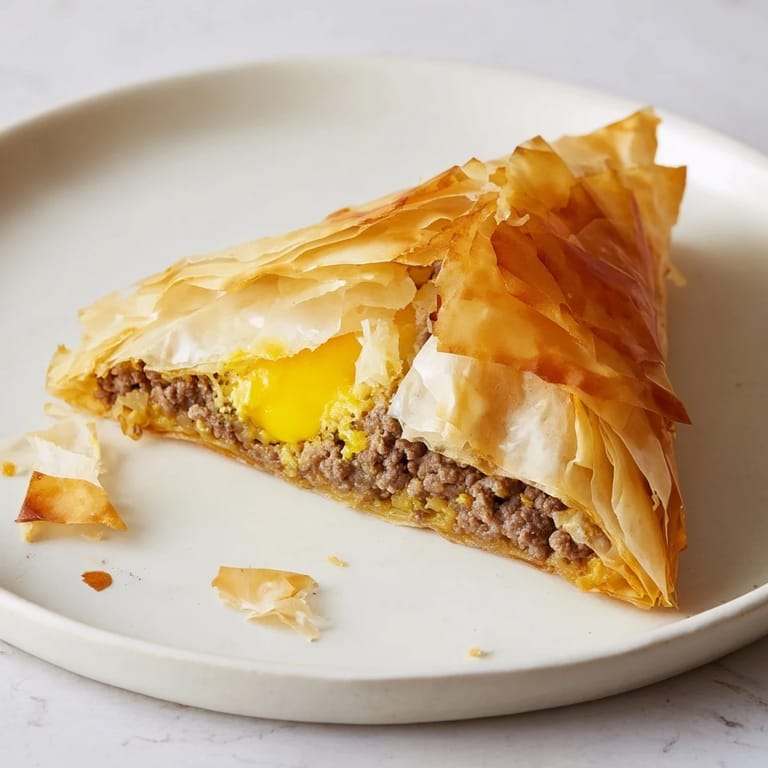
 The first time I bit into a brik, I was standing at a narrow food stall in Tunis, oil splattering onto the white paper wrapping as the vendor pulled it from the fryer. The crispy exterior shattered between my teeth, giving way to warm, spiced meat and a runny yolk that had me closing my eyes. I couldn't stop thinking about how something so simple—phyllo, an egg, some ground meat—could be so impossibly good. Years later, I finally understood why: it's all about the balance between the delicate pastry and that moment when the yolk breaks into the warm filling.
I made these for friends on a Tuesday night, and the kitchen filled with that particular kind of chaos I love—oil sizzling, phyllo sheets rattling around, someone asking if the egg was supposed to be that runny. My friend Ahmed, who'd grown up eating briks from street vendors, took one bite and went quiet, then nodded slowly. That's when I knew I'd gotten it right.
Ingredients
- Ground beef or lamb (120 g): The soul of the filling; lamb carries more flavor if you can find it, but beef works beautifully too and costs less.
- Small onion, finely chopped: Soft onions create a binding texture in the filling—don't skip the sauté step or they'll stay harsh.
- Fresh parsley, chopped (1 tbsp): Not just garnish; it brightens everything and keeps the filling from feeling too heavy.
- Ground cumin (1 tsp): This is the spice that makes people ask what that warmth is in their mouth.
- Ground coriander (1/2 tsp): A whisper of citrus underneath the cumin, subtle but essential.
- Salt (1/2 tsp) and black pepper (1/4 tsp): Season the filling generously; it needs to taste good on its own before the egg arrives.
- Phyllo pastry sheets (4 large): Handle them like they're precious—they tear if you look at them wrong, but that's part of their charm.
- Large eggs (4): The surprise that makes each bite different; room temperature eggs slide in more easily than cold ones.
- Gruyère or mozzarella cheese (4 tbsp grated, optional): Adds richness and a slight tang, though traditionalists skip it.
- Sunflower or vegetable oil for frying: You'll need about 3–4 cm depth; don't skimp here or they'll absorb too much oil.
Tired of Takeout? 🥡
Get 10 meals you can make faster than delivery arrives. Seriously.
One email. No spam. Unsubscribe anytime.
Instructions
- Build your flavors:
- Heat a skillet over medium heat and sauté the onion in a little oil until it turns translucent and soft, about 3 minutes. Add the ground meat, breaking it apart with a wooden spoon, then sprinkle in the cumin, coriander, salt, and pepper. The kitchen will fill with this warm, spicy aroma that already tells you you're heading somewhere good. Cook until the meat is browned through and no pink remains, then stir in the parsley and let it cool for a few minutes—hot filling will cook the egg yolk, which is the opposite of what we want.
- Wrap with intention:
- Lay a phyllo sheet on your work surface and spoon 2–3 tablespoons of meat filling into the center. Make a small well in the filling with the back of your spoon, then carefully crack an egg into it, letting the yolk nestle into that little pocket. If using cheese, sprinkle it around the yolk now.
- Seal it shut:
- Fold the phyllo over the filling to form a triangle or rectangle, whatever shape feels natural—it doesn't have to be perfect. Use a little water on your fingertip to seal the edges; this is your insurance against it bursting open in the oil.
- Fry until golden:
- Heat 3–4 cm of oil in a large frying pan over medium-high heat until it shimmers and a small piece of phyllo dropped in sizzles immediately. Slide the filled pastry into the hot oil carefully—the oil will pop a little, and that's normal. Fry for 2–3 minutes on each side until the pastry is deep golden and crispy, then lift it out with a slotted spoon and place it on paper towels to drain.
 Pin this
 There's something deeply satisfying about watching someone's face when they bite into a brik for the first time—that moment when they realize the yolk is still soft, when the flavors suddenly click into place. It stopped being just a snack for me and became a small gift I could give people in under 30 minutes.
The Phyllo Question
Phyllo sheets come in different thicknesses, and it took me several tries to figure out that thinner sheets need double-layering to hold up to hot oil without tearing. If your sheets feel papery and translucent, use two; if they're thicker and more opaque, one is fine. Either way, keep the stack you're not using covered with a damp cloth—phyllo dries out faster than you'd think, becoming brittle and prone to cracking.
Oil Temperature Matters More Than You Think
I learned this the hard way after making briks that came out soggy and oil-logged instead of crispy. The oil needs to be hot enough that phyllo sizzles immediately, but not so hot that the outside burns before the inside cooks through. Medium-high heat is the sweet spot; if you have a thermometer, aim for around 350°F (175°C). Trust your instincts too—if the oil is quiet when the pastry hits it, wait a bit longer before frying the next batch.
Variations Worth Trying
Once you've made these a few times and feel confident with the folding, you can play with the filling. Tuna mixed with capers and a squeeze of lemon makes a lighter version; mashed potato with caramelized onions works beautifully for vegetarians; some people add a pinch of harissa or chili flakes to the meat for extra heat. The phyllo and egg method stays the same—it's forgiving that way.
- Harissa or chili flakes add a sharp heat that cuts through the richness of the egg yolk.
- Serve them immediately with lemon wedges and a simple green salad to keep everything from feeling too heavy.
- Leftover meat filling keeps for three days in the fridge, so you can make fresh briks whenever the craving hits.
 Pin this
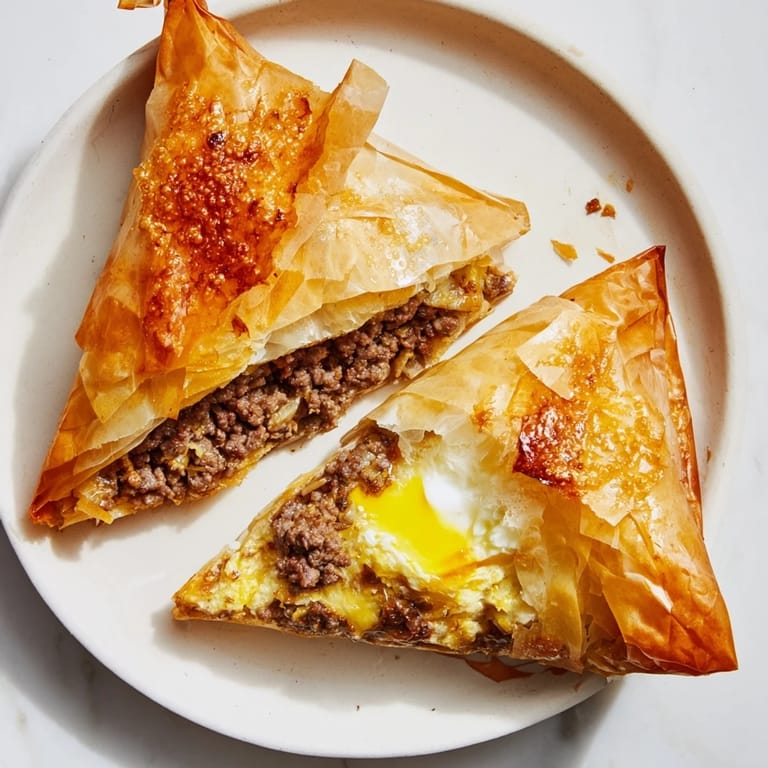
 These briks remind me that the best food doesn't need to be complicated—just honest ingredients cooked with attention and a little care. Every time I make them, someone tells me it's the best thing they've eaten in months.
Recipe FAQs
- → What type of meat works best for the filling?
Ground beef or lamb provide a rich, savory flavor that complements the spices and pastry well.
- → Can cheese be added to the filling?
Yes, grated Gruyère or mozzarella can be included for a creamy texture and subtle richness.
- → How should I handle the phyllo pastry to prevent tearing?
Keep the sheets covered with a damp towel while working and be gentle when folding. Using two sheets stacked can add strength.
- → What oil is best for frying?
Sunflower or vegetable oil with a high smoke point works well for achieving a crisp, golden crust.
- → Are there common spice variations used in the filling?
Adding harissa or chili flakes introduces heat, while adjusting cumin and coriander levels can tailor the aromatic profile.
- → Can this dish be made without meat?
Yes, alternatives like tuna or potato can be used to create different filling textures and flavors.