 Pin this
 The first time I actually made haggis, I was terrified. Not of the offal itself—I'd cooked with organ meats before—but of the weight of tradition, this ancient Scottish dish that seemed to demand respect and knowledge I wasn't sure I had. My grandmother had mentioned it in passing years ago, always with a knowing smile, and when I finally decided to attempt it, I realized she'd left me no recipe, just a challenge. What started as nervous chopping in my kitchen became something entirely unexpected: a meditation on flavor, a conversation with history, and proof that the most intimidating dishes are often the most forgiving.
I made this for friends who were skeptical, convinced themselves they wouldn't eat it, but then found themselves asking for seconds. Watching them taste it for the first time—that moment of surprise followed by genuine pleasure—made me understand why haggis has survived centuries in Scottish culture. It's not a novelty; it's honest food.
Ingredients
- Sheep's heart, liver, and lungs (500 g): These organ meats are the soul of haggis; they provide a deep, savory richness you can't replicate with regular mince. If you can't find them, a mix of lamb and beef liver works, though the flavor will be milder.
- Beef or lamb suet (200 g): This rendered fat keeps the haggis moist and tender during the long simmer, adding a subtle richness that melts on your tongue.
- Steel-cut oats (150 g): Toasting them first brings out a nutty depth and prevents the haggis from becoming mushy; it's the textural anchor of the entire dish.
- Onions (2 medium, finely chopped): They soften and mellow during cooking, becoming almost sweet and binding all the flavors together.
- Beef stock (250 ml): This keeps everything moist and adds savory depth; don't skip it or substitute with water.
- Spices (black pepper, coriander, nutmeg, allspice): These aren't garnish; they're essential to the character of haggis, warming and complex without overpowering the meat.
- Sheep's stomach or sausage casing: A real casing gives haggis its authentic texture and presentation, but a pudding basin works beautifully if you can't source one.
- Potatoes and turnips (500 g each): These simple sides become their own comfort when mashed with butter, balancing the intensity of the haggis.
Tired of Takeout? 🥡
Get 10 meals you can make faster than delivery arrives. Seriously.
One email. No spam. Unsubscribe anytime.
Instructions
- Simmer the offal:
- Place the heart, liver, and lungs in a pot of cold water and bring slowly to a boil—this coaxes out impurities gently. Let them simmer for 1–2 hours until completely tender; you'll know they're done when a knife slides through without resistance. The cooking water adds depth to your haggis if you reserve it.
- Build the mixture:
- Mince the cooled offal finely (a food processor makes this easier), then combine it with the suet, toasted oats, finely chopped onions, and optional mince in a large bowl. The texture should feel almost like a dense porridge before you add the liquid.
- Season generously:
- Add your beef stock and spices, stirring until everything is evenly distributed and the mixture is moist but not wet—if you squeeze a handful, it should hold together without dripping. Taste and adjust the seasoning; don't be timid here.
- Fill the casing:
- If using a sheep's stomach, rinse it thoroughly under cool water, then carefully spoon in the mixture, leaving about a finger's width at the top for expansion. Tie off the ends securely with kitchen twine, or if using a pudding basin, spoon the mixture in and cover tightly with foil.
- Simmer gently:
- Place your haggis in a large pot of simmering water—the water should come about three-quarters up the side, never covering the top. Simmer gently for 2 hours, checking that the water doesn't boil away; you want a gentle, steady heat.
- Prepare the sides:
- While the haggis cooks, boil your potatoes and turnips separately (they cook at slightly different rates) until completely tender, about 20–25 minutes. Drain them well, then mash each with butter, salt, and pepper until smooth and creamy.
- Rest and serve:
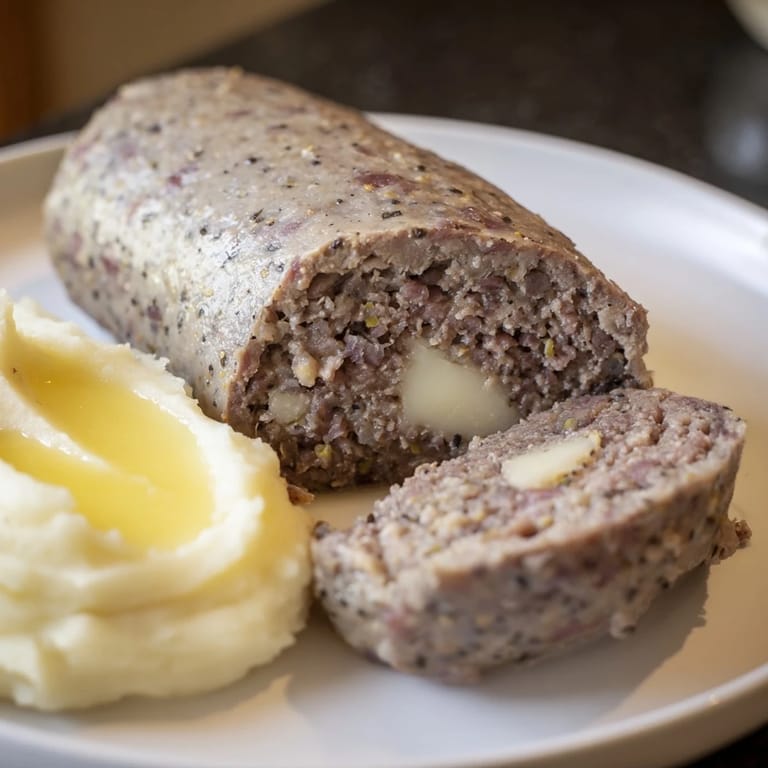
- Remove the haggis carefully and let it rest for a few minutes before carefully cutting it open and plating. Serve it hot, the neeps and tatties on the side, and watch the magic happen.
 Pin this
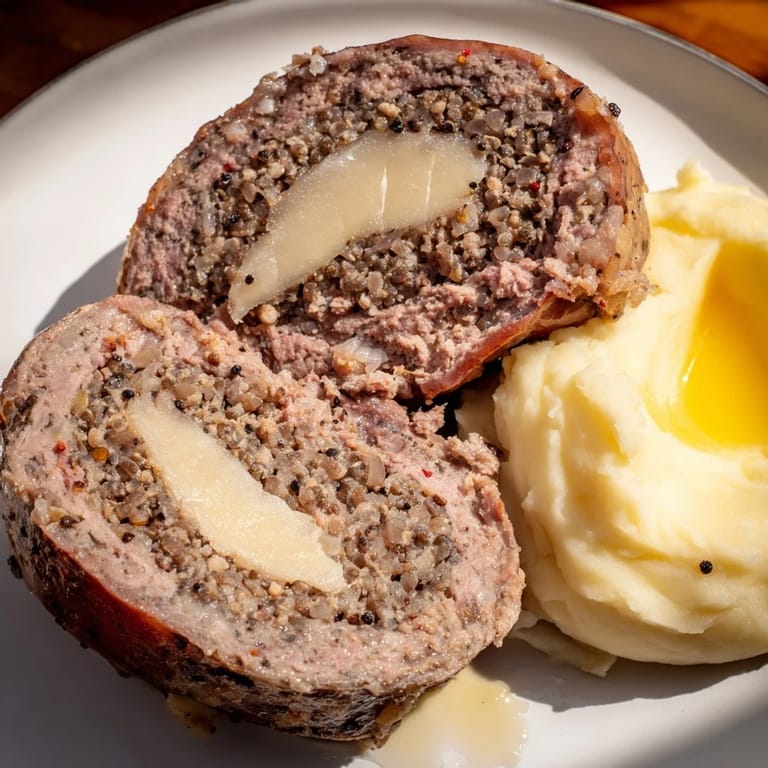
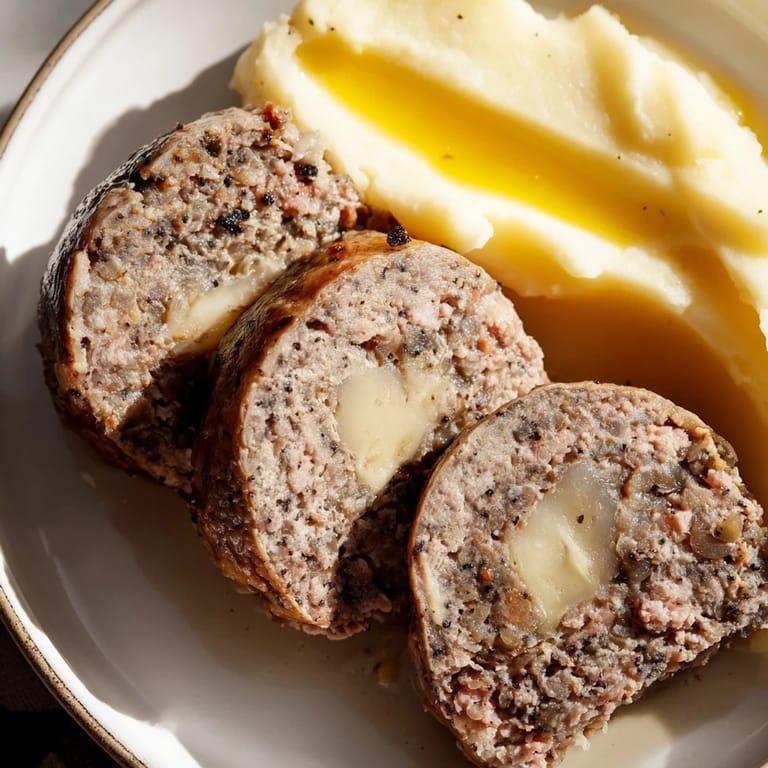
 There's something deeply satisfying about plating haggis that you've made yourself, the cream-colored mash of neeps and tatties next to this honest, rustic dish that your hands guided into existence. In that moment, you're not just eating; you're part of a story that stretches back centuries in the Scottish Highlands.
Why This Dish Endures
Haggis has survived because it represents something essential about Scottish cooking: resourcefulness, respect for the animal, and an understanding that simplicity often yields the most interesting flavors. Every part of the sheep finds a purpose, and the result is something that tastes far more refined than the sum of its utilitarian origins. When you taste it, you realize it was never about shock value—it was always about nourishment, tradition, and unexpected deliciousness.
Building Flavor Without Apology
The spices in haggis are bold because they need to be, cutting through the richness of the suet and the depth of the organ meats. Nutmeg, coriander, and allspice together create something warm and almost aromatic, while black pepper adds a gentle heat. This isn't subtle cooking; it's confident and unapologetic, which is perhaps the most Scottish thing about it. If you've ever wondered why haggis tastes the way it does, it's because every seasoning choice was made with intention, over generations.
Making It Your Own
Once you've made it once, you'll find yourself adjusting small things—maybe adding a touch more coriander, or using a splash of whisky in the mixture for depth. The beauty of haggis is that it's flexible enough to adapt while remaining fundamentally itself. Some cooks add a hint of garlic, others prefer their neeps sweeter or their tatties looser. These small variations don't diminish tradition; they show you understand it well enough to make it personal.
- A whisky cream sauce is the classic accompaniment—just deglaze your pan with a splash of Scotch, add cream and a touch of wholegrain mustard, and you've elevated everything.
- Leftover haggis can be crumbled and fried until crispy on the edges, served at breakfast with a fried egg on top.
- If you're nervous about the offal, start with a blend that's half regular mince and half organ meat; your palate will adjust, and you'll move toward a more traditional ratio once you understand the flavors.
 Pin this
 Making haggis transformed how I think about cooking traditional foods; it taught me that fear often disguises respect. Once you've done it, the dish stops being foreign and becomes part of your repertoire, proof that you're brave enough to try what others shy away from.
Recipe FAQs
- → What is the main ingredient in Scottish haggis?
The primary components include spiced sheeps offal such as heart, liver, and lungs, combined with toasted oats and onions.
- → How should the haggis casing be prepared?
If using a sheeps stomach, it must be thoroughly cleaned before filling. Alternatively, a pudding basin covered with foil can be used.
- → What side dishes accompany haggis traditionally?
Haggis is commonly served with mashed neeps (turnips) and tatties (potatoes), seasoned with butter and salt.
- → Can the texture of haggis be modified?
Yes, adding minced lamb or beef to the mix can create a varied, more textured filling.
- → How long is the cooking time for haggis?
It simmers gently for about two hours until the filling is fully cooked and flavors meld.