 Pin this
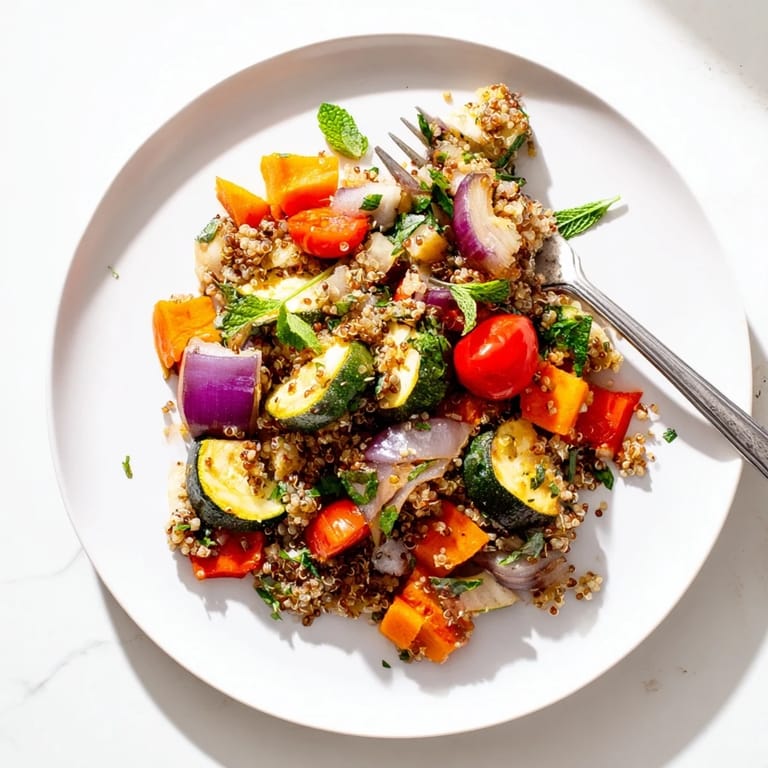
 The first time I made quinoa, I treated it like rice and ended up with a gummy, disappointing mess that stuck to the bottom of the pot. It took me years to learn that the secret lies in that crucial resting period after cooking, when the steam finishes the work. Now this pilaf has become my go-to for those nights when I want something satisfying but not heavy, when I'm craving textures that crunch and flavors that pop.
Last summer, my sister came over and we ate this straight from the skillet while standing at the counter, talking about everything and nothing. The tomatoes had burst in the oven, creating little pockets of juice, and the mint made the whole dish feel bright and alive. She asked for the recipe before she even left, and now it's become her family's Wednesday staple.
Ingredients
- Quinoa: Rinsing thoroughly removes the natural coating called saponin, which can make quinoa taste bitter
- Vegetable broth: Use a good quality broth for depth of flavor, though water works if you're in a pinch
- Red bell pepper: Adds sweetness and gorgeous color that holds up beautifully during roasting
- Zucchini: Dice uniformly so it roasts evenly alongside the other vegetables
- Carrot: Provides a subtle sweetness and satisfying crunch
- Red onion: Mellow and sweet when roasted, unlike raw onion's sharp bite
- Cherry tomatoes: They burst in the oven, creating little pockets of concentrated flavor
- Olive oil: Essential for helping the vegetables caramelize and develop those golden edges
- Garlic: Add it to the skillet when you toast the spices so it perfumes the oil without burning
- Ground cumin: Earthy and warm, it gives the dish its backbone
- Dried thyme: Adds a subtle herbal note that ties everything together
- Smoked paprika: Just a half teaspoon brings a whisper of smokiness that makes people ask what's in it
- Fresh parsley: Bright and grassy, it cuts through the roasted richness
- Fresh mint: Optional but highly recommended, it makes the whole dish feel unexpectedly fresh
- Lemon juice: The acid at the end wakes up all the flavors and brings everything into focus
Tired of Takeout? 🥡
Get 10 meals you can make faster than delivery arrives. Seriously.
One email. No spam. Unsubscribe anytime.
Instructions
- Preheat the oven:
- Get your oven to 425°F (220°C) while you prep the vegetables, so it's ready to go.
- Roast the vegetables:
- Toss the bell pepper, zucchini, carrot, red onion, and cherry tomatoes with olive oil, salt, and pepper on a large baking sheet, then roast for 20 to 25 minutes until golden and tender, stirring once halfway through.
- Cook the quinoa:
- Combine the rinsed quinoa and vegetable broth in a medium saucepan, bring to a boil, then reduce heat to low, cover, and simmer for 15 minutes until the liquid is absorbed, then let it stand covered for 5 minutes.
- Toast the aromatics:
- Heat a drizzle of olive oil in a large skillet over medium heat, add the garlic and sauté until fragrant, about 30 seconds, then stir in the cumin, thyme, and smoked paprika.
- Combine and serve:
- Add the cooked quinoa and roasted vegetables to the skillet, toss gently to combine and warm through, then remove from heat and add the parsley, mint if using, and lemon juice.
 Pin this
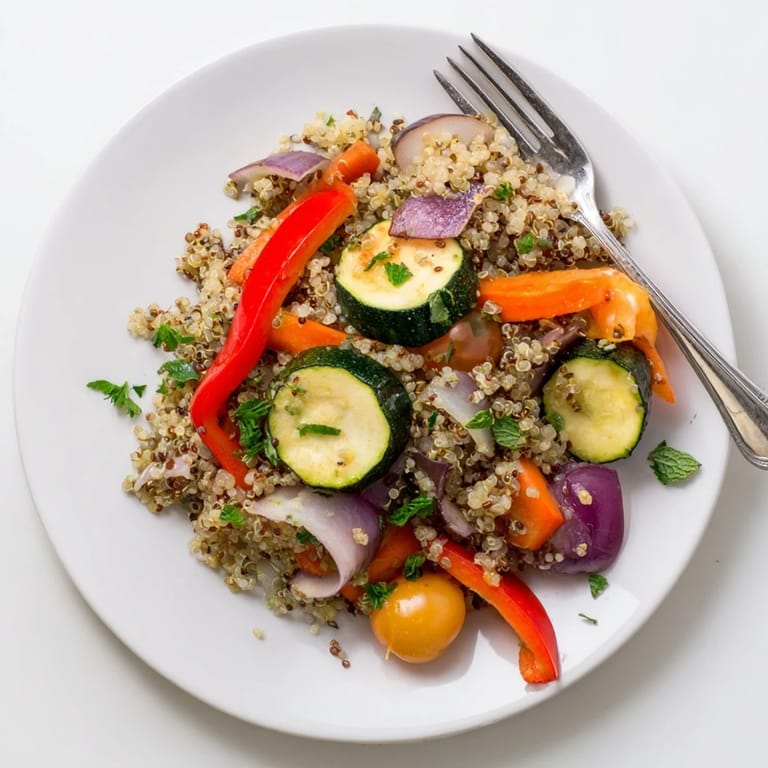
 This pilaf has become the dish I bring to friends who need a meal, the one I make when I want to feel nourished from the inside out. There's something about the combination of warm, spiced grains and bright, fresh herbs that feels like being hugged.
Making It Your Own
The beauty of this recipe is that it's incredibly forgiving and adaptable. I've made it with whatever vegetables were languishing in my crisper drawer, from butternut squash to broccoli to eggplant, and it never fails.
Perfecting The Texture
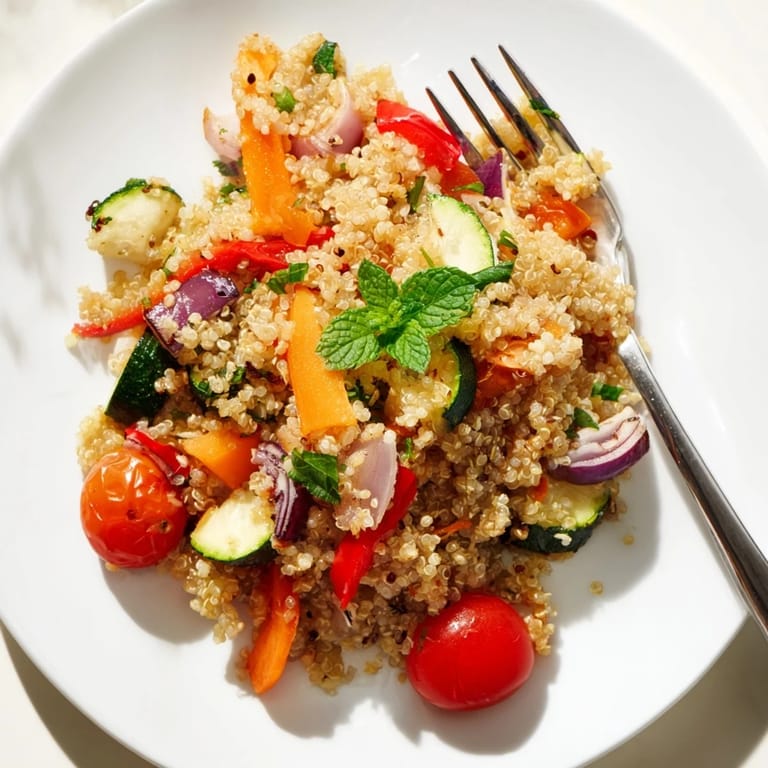
The contrast between fluffy quinoa and tender roasted vegetables is what makes this pilaf sing. Be sure to fluff the quinoa thoroughly with a fork before combining, so each grain is separate and ready to absorb those spiced oils.
Serving Suggestions
This pilaf works beautifully as a main dish or a substantial side. I love serving it alongside simply grilled fish or roasted chicken, but it's substantial enough to stand alone as a vegetarian main with a green salad.
- Add a drained can of chickpeas when you combine everything for extra protein
- Crumble feta over the top if you eat dairy, it adds a creamy, salty element
- Make it ahead and serve at room temperature, the flavors only get better
 Pin this
 I hope this pilaf becomes a staple in your kitchen the way it has in mine. There's something deeply satisfying about a dish that's both good for you and genuinely delicious.
Recipe FAQs
- → Can I use other vegetables in this pilaf?
Absolutely! This dish adapts well to whatever seasonal vegetables you have available. Try adding squash, eggplant, broccoli, or even frozen vegetables when fresh produce isn't available. Just adjust roasting times accordingly.
- → How do I store leftover pilaf?
Store cooled pilaf in an airtight container in the refrigerator for up to 4 days. Reheat gently in a skillet with a splash of water or broth, or enjoy cold as a grain salad. It also freezes well for up to 2 months.
- → Can I make this protein-rich?
Certainly! Add a can of drained chickpeas during the final toss, stir in crumbled feta cheese if not vegan, or serve alongside grilled chicken, fish, or tofu. The quinoa already provides 7g of protein per serving.
- → Do I need to rinse quinoa before cooking?
Yes, rinsing quinoa removes saponins, natural compounds that can make the grain taste bitter. Place quinoa in a fine-mesh sieve and rinse thoroughly under cold water before adding to the saucepan.
- → Can I cook the vegetables differently?
While roasting brings out sweetness and depth, you can sauté the vegetables on the stovetop if preferred. Cook them in stages, starting with harder vegetables like carrots and onions, then add softer ones like zucchini and tomatoes.