 Pin this
 I'll never forget the dinner party where a friend casually arranged a cheese board with such artful precision that guests stood mesmerized before touching a single morsel. That night, I realized a board wasn't just about the food—it was about creating a moment of beauty and abundance on the table. When pomegranate season arrived the following autumn, those jewel-like arils felt like the perfect way to capture that same magic. Now, whenever I arrange this cascading board, I'm transported back to that gathering, and I watch the same enchantment unfold on my guests' faces.
I made this board for a winter celebration, and watching my mother-in-law lean in to admire it before realizing it was meant to be eaten made my heart sing. She carefully selected a piece of goat cheese crowned with a pomegranate aril, and I saw her close her eyes in that way people do when something delights all their senses at once.
Ingredients
- Creamy goat cheese, 100 g sliced: This is your silky foundation—look for a fresh, spreadable variety that slices cleanly when chilled. It anchors the board with tangy elegance.
- Aged Manchego, 100 g sliced: This Spanish gem brings a nutty, slightly sharp character that refuses to be overlooked. Its firm texture holds up beautifully when sliced.
- Blue cheese, 100 g crumbled: A little goes a long way here; its pungent boldness creates intrigue and invites people to take a bite of adventure. Choose one you genuinely enjoy, as it's assertive.
- Prosciutto, 80 g thinly sliced: Ask for it sliced tissue-thin at the counter if possible; it should drape like silk. The saltiness plays beautifully against creamy cheeses.
- Spicy salami, 80 g thinly sliced: This adds a peppery wake-up call. Look for one with visible spice seeds for visual interest and genuine heat.
- Pomegranate, 1 large, arils only: These are your edible jewels—the entire soul of this board. Remove them gently by cutting the fruit in half and releasing the arils into water, then draining. They burst with tart sweetness and add visual drama.
- Red grapes, 1 small bunch, halved: Their natural sweetness and juiciness offer relief against rich cheeses. The ruby color deepens the jewel-like effect.
- Pear, 1 ripe, thinly sliced: Choose one that yields slightly to pressure but isn't mushy. Slice just before serving and consider a light brush of lemon juice to prevent browning.
- Apple, 1 small, thinly sliced: The tartness and crisp texture contrast beautifully with soft cheeses. Again, a tiny squeeze of lemon keeps it pristine.
- Dried apricots, 50 g, halved: Their concentrated sweetness and chewy texture become comfort in every bite. Look for ones without added sugar if you prefer.
- Dried figs, 40 g, sliced: These bring an earthy, almost honey-like sweetness that makes guests pause. Their deep purple-brown color adds richness to the visual cascade.
- Toasted pistachios, 40 g: The green color is stunning, and the buttery flavor with a hint of salt feels luxurious. Buy them roasted and salted—they're worth the splurge.
- Roasted almonds, 40 g: These add subtle sweetness and important textural crunch. They ground the board and satisfy that need for something substantial.
- Honeycomb, 1 small piece: This is optional but magical—it brings floral sweetness and an unexpected textural element. Serve it in a small bowl so people can spoon it onto cheese.
- Fig jam, 1 small jar: Choose one made with real figs and minimal added sugar. This becomes the bridge between savory and sweet, the unexpected accomplice to creamy cheese.
- Crusty baguette, 1 small, sliced: Toast the slices lightly if serving later, or serve fresh if serving immediately. The bread should be sturdy enough to hold toppings.
- Artisan crackers, 80 g: These are the canvas for your creations. Choose ones you genuinely like eating plain; they're important.
- Fresh mint leaves: These are your finishing touch—they add brightness and aroma that awakens the senses as people lean in.
Tired of Takeout? 🥡
Get 10 meals you can make faster than delivery arrives. Seriously.
One email. No spam. Unsubscribe anytime.
Instructions
- Envision Your Cascade:
- Imagine a diagonal line flowing from the top left corner of your board to the bottom right, like light streaming across a stage. This becomes your anchor for every placement. Some boards feel chaotic; yours will feel like a carefully choreographed dance.
- Lay Your Cheese Foundation:
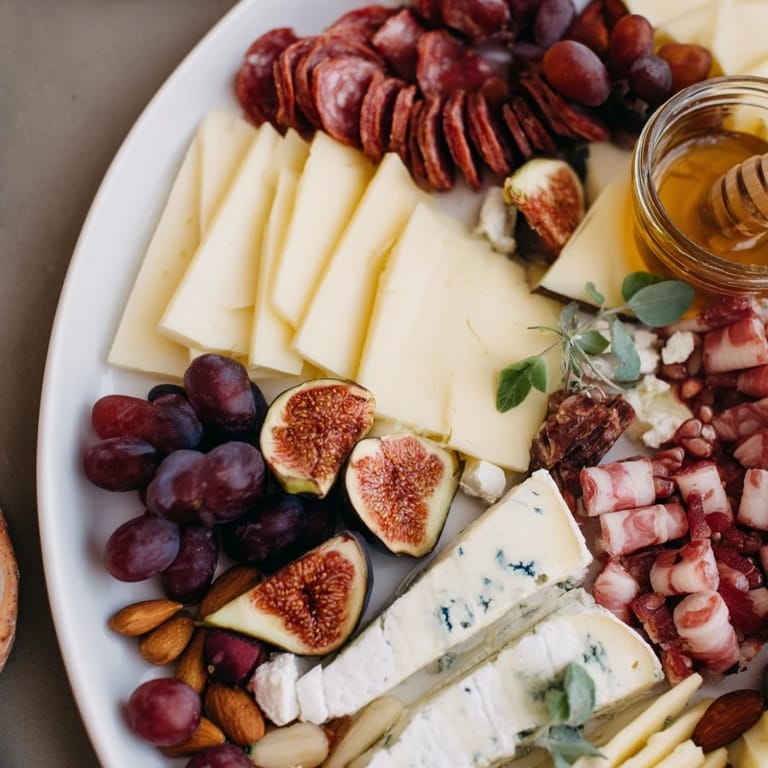
- Start by arranging your cheese slices and crumbles along this diagonal line, alternating between goat cheese, Manchego, and blue cheese. Let the slices overlap slightly, creating natural valleys where other ingredients will nestle. The white, golden, and blue colors should tell a story as your eye travels down the line.
- Introduce the Cured Meats:
- Gently fold the prosciutto and salami into loose, ruched shapes between the cheese sections. Don't lay them flat and stiff—let them have dimension and air. These folds catch light beautifully and invite hands to carefully pluck them away.
- Weave In the Fresh Fruits:
- Now place your pear and apple slices, halved grapes, and any fresh elements along the cascading line, keeping the flow in mind. These should look like they're falling or floating along the diagonal, not scattered randomly. Step back frequently to assess the balance.
- Create the Jewel Effect:
- This is the moment your board transforms into something extraordinary. Generously sprinkle pomegranate arils across the entire diagonal, concentrating them in clusters that catch light. Watch how they make the board glow like nothing else can. Don't be shy—these are your stars.
- Add Texture and Crunch:
- Tuck toasted pistachios and roasted almonds into gaps and along the cascade. They nestle naturally between fruits and cheeses, adding flecks of green and golden color while their crunch becomes a delightful surprise in every bite.
- Position Your Sweet Condiments:
- Place the honeycomb and fig jam in small bowls at either end of the cascade, where they become little destinations for exploration. They should feel precious and intentional, not afterthoughts.
- Frame with Bread and Crackers:
- Fan out your baguette slices and crackers along both sides of the board in loose, overlapping arrangements. These are the vehicles for everything else, so make sure they're accessible without requiring acrobatic reaching.
- Garnish with Mint and Presence:
- Tuck fresh mint leaves throughout, particularly near the pomegranate clusters where their green complements the ruby red. As you do this final step, take a moment to appreciate what you've created. Your board is ready.
- Serve in the Right Moment:
- Bring the board to the table at room temperature—chilled cheese loses its creaminess, and room-temperature fruit has more flavor. Serve immediately so the apple and pear remain pristine and the pomegranate arils glisten with freshness.
 Pin this
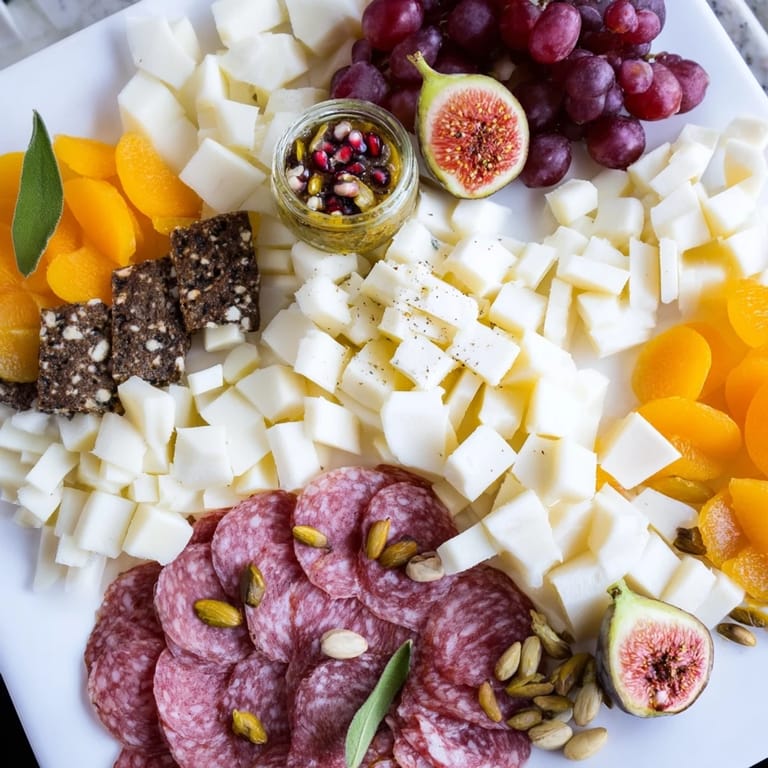
 The most magical moment came when a shy guest who'd said she was "not a cheese person" found a piece of goat cheese topped with fig jam, pomegranate, and a single pistachio. She tasted it, and her eyes opened wide. She looked at me and said, "I didn't know food could taste like this." That's when I truly understood that this board isn't about impressing people with complexity—it's about creating a platform for flavors to meet in ways they never have before.
Building a Board That Tells a Story
Every element on this board serves a purpose beyond taste. The pomegranate arils are obvious stars, but they work because they're surrounded by supporting players—creamy, salty, sweet, bitter, crunchy, soft. When you arrange a board, you're orchestrating a conversation between ingredients. The goat cheese whispers to the fig jam. The prosciutto dances with the pear. The blue cheese challenges and intrigues. This is why the diagonal cascade matters more than random placement; it creates a path that guides guests through this conversation, ensuring they encounter combinations they might not choose on their own. Every journey along your diagonal teaches the palate something new.
Adapting This Board to Your Pantry and Season
The skeleton of this board is flexible, and that's its greatest strength. In summer, when stone fruits are at their peak, swap the apple and pear for sliced peaches and nectarines. In winter, lean harder into dried fruits and add candied citrus peel. Don't have pomegranate? Pomegranate molasses drizzled lightly across the board creates a similar jewel-like effect and adds a tart undertone. Vegetarian friends? Remove the cured meats and add roasted chickpeas, marinated olives, or candied walnuts—they become just as compelling. The blue cheese too intense for your crowd? Replace it with a soft, spreadable cheese like Boursin. The board remains stunning because its beauty comes from the principle of the arrangement, not the specific ingredients.
The Psychology of Presentation and Why It Matters
Food eaten from a beautiful board tastes better—not because the ingredients are different, but because the eyes signal to the brain that something special is happening. A cascade of jewel-like pomegranate arils tells your guests that you've thought about their experience, that you see gathering as an art form. This board transforms a simple appetizer into a moment of theater. When people photograph it before eating it, when they pause to appreciate it, when they tell you later that it was the most beautiful thing on your table—that's not vanity. That's the power of intentional beauty. Your presentation says, 'You are worth this care. Your experience matters.'
- Odd numbers of different cheeses and meats feel more visually interesting than even numbers, so don't feel you need to be perfectly balanced in quantity—visual balance comes from color and placement, not mathematics.
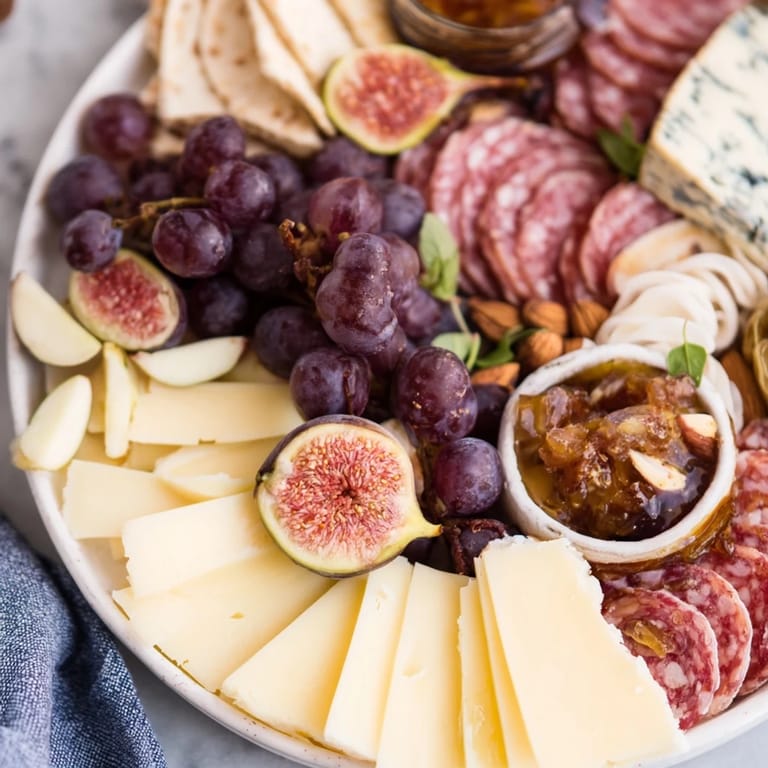
- The diagonal cascade works because it moves the eye naturally and creates a visual anchor point that prevents the board from feeling cluttered or overwhelming, even when it's generously filled.
- Leaving some negative space—small gaps between clusters of ingredients—gives the eye rest and makes every element feel more intentional rather than fighting for attention.
 Pin this
 This board is proof that the simplest ingredients, arranged with intention and a touch of thoughtfulness, become something unforgettable. Serve it, watch the reactions, and let the pomegranate arils do what they do best—make everything feel like a celebration.
Recipe FAQs
- → How do I create the diagonal cascade effect?
Arrange cheeses, meats, and fruits in diagonal lines from top left to bottom right, layering ingredients to maintain a flowing visual rhythm.
- → Can I make this board vegetarian-friendly?
Omit cured meats and increase nuts or roasted vegetables to maintain texture and flavor variety.
- → What cheeses work best for this board?
Creamy goat cheese, aged Manchego, and blue cheese provide contrasting textures and flavors, but Brie or aged Cheddar are good alternatives.
- → How should I serve the accompaniments?
Place honeycomb and fig jam in small bowls at each end of the board for easy access and complementary sweetness.
- → What drinks pair well with this arrangement?
A crisp rosé, sparkling wine, or a pomegranate spritzer complement the vibrant flavors beautifully.