 Pin this
 I'll never forget the first time I decided to create an entirely edible stage production for a holiday gathering. Inspired by attending The Nutcracker Suite ballet, I found myself standing in my kitchen on a cold December evening, imagining how Clara's magical world could translate onto a grazing board. It started as a simple thought—wouldn't it be magical to arrange cheeses and chocolates the way a set designer would arrange dancers? That evening marked the beginning of something that would become my signature entertaining moment, a board so visually stunning that guests hesitated before disturbing it, as if it were too beautiful to eat.
The first time I served this to my book club, I watched a woman who normally rushed through appetizers stand there for five full minutes, just studying each section. She later told me it reminded her of visiting Nutcracker performances as a child, and suddenly this board became less about the ingredients and more about memory itself. That's when I realized I'd created something that does more than feed people—it transports them.
Ingredients
- Brie: This is your star player in the white block—choose one that's ripe but still holds its shape, because you want it creamy but not weeping. The soft elegance of brie anchors your entire board.
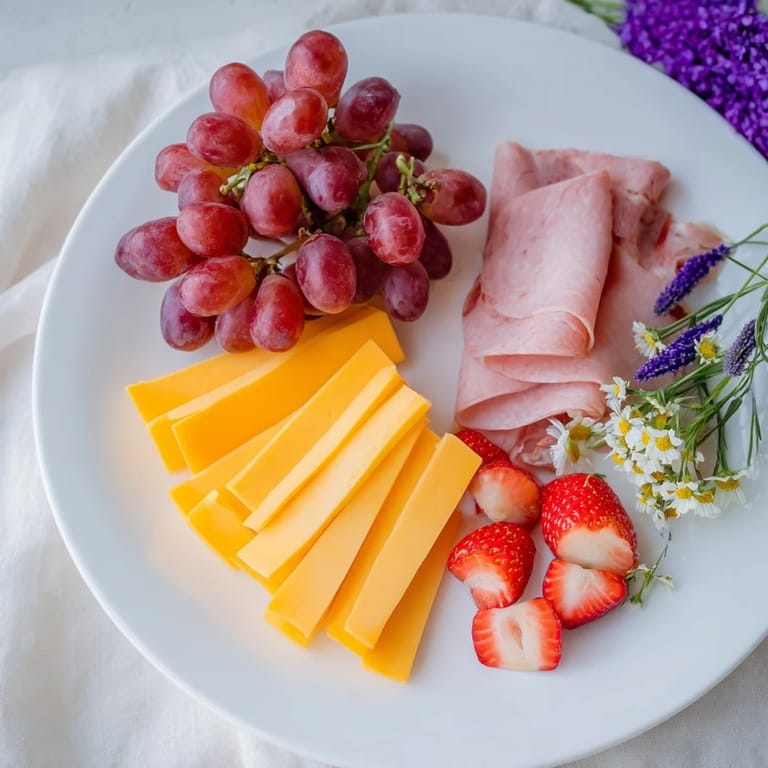
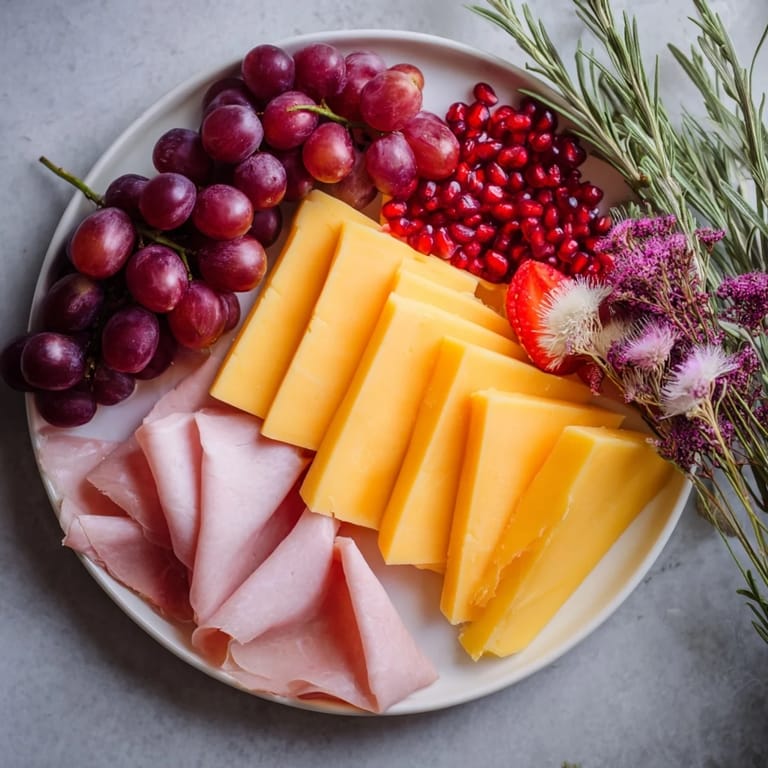
- Aged Cheddar: The sharp, crystalline quality of aged cheddar gives your yellow section real personality and texture. Cut some into thin shards to catch the light.
- Blue Cheese: I learned the hard way that blue cheese steals attention, so use it boldly but not overwhelmingly. Its dramatic color is half the appeal.
- Gouda: This bridges the gap between mild and bold beautifully. The orange hue is naturally warm and welcoming.
- Cranberry Goat Cheese: This is the surprise that people reach for repeatedly. The tartness against the creamy base creates a moment of delight.
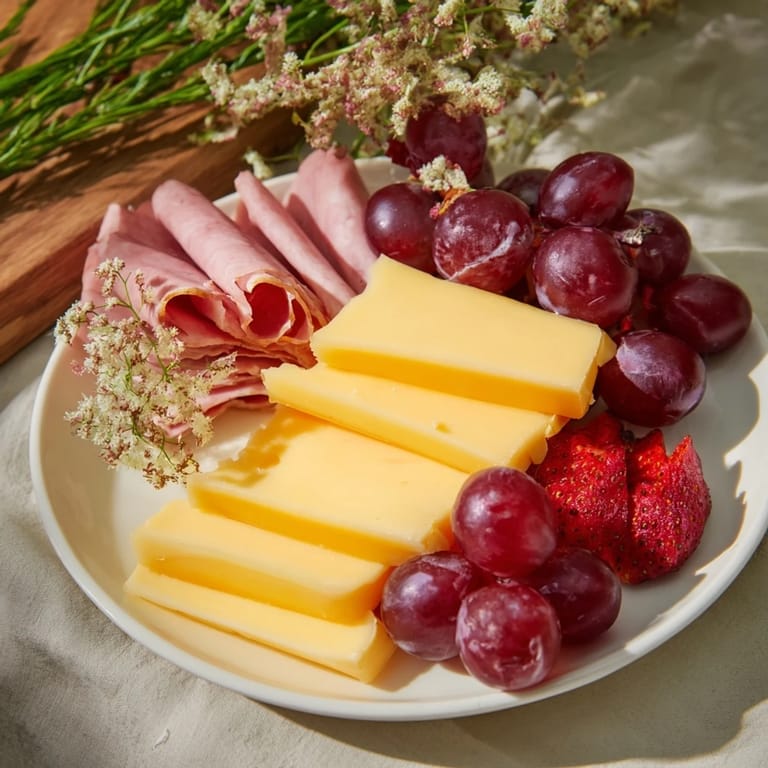
- Prosciutto: Buy it sliced fresh, not packaged. The difference in how it drapes is remarkable and worth the extra effort.
- Salami and Soppressata: These create the deep red statement. Stack them slightly overlapping for drama and visual interest.
- Red and Green Grapes: Freeze them for 30 minutes before serving—they stay perfectly crisp and guests always comment on the refreshing temperature contrast.
- Blueberries: These are tiny flavor bombs and visual jewels. They roll around, so nestle them gently into clusters.
- Strawberries: Slice some lengthwise to show off their beautiful interior and create visual rhythm in your red section.
- Dried Apricots: These chewy gems provide textural contrast and their concentrated sweetness is sophisticated against salty elements.
- Pomegranate Seeds: Handle these like the edible jewels they are. Their pop of ruby is irreplaceable for that Nutcracker magic.
- Marcona Almonds: These buttery Spanish nuts are worth seeking out. They're less aggressive than regular almonds and taste like a culinary secret.
- Pistachios: Their natural green is essential for your color palette. Toast them lightly if they seem pale.
- Candied Pecans: Make these yourself if you can—store-bought versions are often overly sweet. A hint of salt on candied pecans changes everything.
- Mixed Olives: Choose a good variety. The briny, earthy presence of olives grounds the sweetness and richness around them.
- Crackers: Select at least two types—one neutral and sturdy, one with character. I prefer thin, crisp crackers that don't overpower the toppings.
- Baguette: Slice it just before assembly. Slightly toasted slices hold up better and develop deeper flavor.
- White Chocolate Bark: Look for quality chocolate with cocoa butter, not vegetable oil. It melts more elegantly on the tongue.
- Dark Chocolate: Choose 70% cacao minimum. This deepness against lighter elements creates visual drama and flavor sophistication.
- Macarons: These are your color accent pieces. Choose jewel tones that complement your board's overall palette.
- Petit Fours: These delicate pastries are the final flourish—they signal that this isn't just food, it's an occasion.
- Fresh Rosemary: The piney fragrance of fresh rosemary adds an unexpected sensory element. Brush off any dust and let people smell them as they eat.
- Edible Flowers: Pansies and violas add unexpected elegance and that undeniable theatrical touch.
Tired of Takeout? 🥡
Get 10 meals you can make faster than delivery arrives. Seriously.
One email. No spam. Unsubscribe anytime.
Instructions
- Build Your Foundation:
- Start with your largest, sturdiest board or platter as your base. If you're going multi-tiered, gather your cake stands and pedestals now and arrange them so they're stable and create natural height variation. This is where you're setting the stage—think like a set designer creating depth and dimension. Test everything for wobbling before you add food.
- Establish Your Base Layer:
- Begin with your neutral elements: crackers, baguette slices, and mixed nuts. Arrange these as a foundation that creates pockets and levels for what comes next. Don't fill everything—you want spaces that feel intentional, not crowded. This is like laying down the stage floor before bringing out the dancers.
- Color-Block Your Cheeses:
- Now comes the moment where the magic truly begins. Place each cheese type into its own distinct section, thinking about where the eye naturally travels. Cut some cheeses into wedges or thin slices to reveal their interior beauty and create textural interest. The brie is your white elegance, the aged cheddar your golden warmth, the blue cheese your dramatic jewel, the gouda your sunset glow, and the cranberry goat cheese your subtle surprise. Leave space between each block—negative space matters as much as the food itself.
- Arrange Your Charcuterie:
- This is where you get theatrical. Drape the prosciutto so it catches light and creates soft folds. Stand some salami pieces on edge so you see their rich, deep color. Tuck soppressata beside or between the cheese blocks, maintaining those clear color boundaries. Each meat should feel placed with intention, not just scattered. You're choreographing every element.
- Layer Your Fruits with Purpose:
- Fill the spaces between cheeses with fruits that echo their colors. The red grapes nestle near the prosciutto and cranberry cheese, creating a color conversation. Green grapes cluster with pistachios and gouda. Blueberries settle near the blue cheese like they belong in a family portrait. Strawberry slices create visual texture. Dried apricots sit in their own warm corner. Pomegranate seeds are scattered like edible confetti in the ruby sections. Use your hands to cluster and arrange—precision matters here.
- Add Nuts and Olives with Strategy:
- Place nuts in small clusters that support and complement nearby cheeses and fruits. Marcona almonds near white chocolate and brie. Pistachios with green grapes and gouda. Candied pecans creating their own sweet territory. Mixed olives in a designated area where their brininess can be appreciated without overwhelming other flavors. Nothing should look random—every placement is a brushstroke.
- Position Your Sweets Deliberately:
- This is the moment where luxury and whimsy come together. White chocolate bark catches light beautifully—place it where it glows. Dark chocolate provides visual weight and drama. Arrange macarons like precious jewels, their colors complementing the surrounding blocks. Petit fours are your final flourish—place these where they seem both indulgent and delicate, perhaps on a higher tier if you're doing multiple levels.
- Garnish with Intention:
- Tuck fresh rosemary sprigs into spaces, creating green accents that tie the board together. The fragrance will greet people before they even taste anything. Scatter edible flowers in strategic spots—they're not just pretty, they're the final signal that this is an occasion worthy of celebration. Step back and look at the entire composition. Does it feel balanced? Does the eye move pleasingly across it?
- Final Check and Serve:
- Make sure everything is stable, all tiers are secure, and each section is easily accessible. You want guests to feel confident reaching for anything without destabilizing the whole composition. Serve immediately so everything is at its peak—cheeses still cool, crackers still crisp, fruits still fresh. This is your moment of triumph.
 Pin this
 I remember a moment during a dinner party where someone's teenage daughter, usually glued to her phone, spent twenty minutes studying this board before eating anything. She asked me questions about the colors, about why I arranged things the way I did, about whether the rosemary was edible. In that conversation, a grazing board became a gateway to talking about composition, color theory, and the care that goes into creating something beautiful. That's when I understood that these boards do something beyond nourishing the body—they nourish the soul and spark genuine human connection.
The Art of Color Theory on a Plate
Creating a color-blocked board taught me something I never expected: you're essentially using culinary elements as a painter would use pigments. When I stand back and look at a finished board, I'm not just seeing food anymore—I'm seeing composition. The way the white block of brie anchors one corner, the way the jewel tones of blueberries and pomegranate seeds create focal points, the way warm golds and oranges create visual movement across the board. Understanding complementary colors makes everything more intentional. Cool blues and purples sit opposite warm oranges and reds on the color wheel, and when you arrange them with this principle in mind, the board practically sings. This knowledge came from failure—from boards that looked flat and uninspiring until I learned to think in color families and contrasts. Now when I arrange, I'm thinking like a designer, and it shows.
Building Abundance Without Chaos
There's a fine line between a board that feels generous and one that feels overwhelming. I discovered this line through trial and error, watching which boards guests lingered over versus which ones they moved past quickly. The secret isn't more food—it's strategic placement and clear sections. When someone looks at this board, they should feel excitement but not paralysis. Each section should feel complete but not crowded. There should be room to see the beauty of each element without it fighting for attention against neighbors. I think of it like orchestration: every instrument is heard, but none overwhelms the whole. The negative space matters as much as the food itself. This realization changed not just how I build boards, but how I think about presentation in general.
Creating Moments That Last Beyond the Meal
The true magic of this board isn't just in eating it—it's in the moments it creates. A board like this says to your guests, 'You matter enough for me to spend time thinking about beauty and care.' It transforms a simple gathering into an event. People take photos, they linger, they have conversations they wouldn't have had otherwise. I've watched strangers become friends over the experience of discovering a new cheese or sharing a particular combination. The board becomes a conversation starter, a centerpiece for connection, a memory that lasts long after the last cracker is gone.
- Don't stress about achieving perfection—some of the most beautiful boards are the ones that feel slightly organic and imperfectly arranged
- Choose quality over quantity in every category, because people remember exceptional taste far longer than they remember abundance
- Think about your guests and their preferences—this board is versatile enough to accommodate dietary restrictions while still feeling luxurious and thoughtful
 Pin this
 Every time I create this board, I'm transported back to that first evening when I realized that food could be art, that feeding people could be a form of love and creativity expressed simultaneously. This Nutcracker Suite board has become my answer to 'what do I serve when I want everything to feel special without spending all day in the kitchen.' It's become my signature, my way of saying welcome, my way of creating magic.
Recipe FAQs
- → How do I create the color-blocked arrangement?
Group ingredients by color—cheeses, charcuterie, fruits, and sweets—in distinct sections to achieve a vibrant, layered effect.
- → Can this board be made vegetarian-friendly?
Yes, omit all meats and increase cheeses, marinated vegetables, or roasted nuts to maintain abundance and variety.
- → What tools help assemble multi-tiered boards?
Use sturdy wooden boards, cake stands, pedestals, and small bowls to add height and organize components neatly.
- → How should I garnish the display for extra flair?
Fresh rosemary sprigs and edible flowers add festive color contrasts and fresh aroma.
- → What pairings complement this grazing board?
Consider sparkling wines, light reds, or herbal teas to enhance the diverse flavors presented.
- → How long does it take to prepare this board?
Plan about 45 minutes for assembling all tiers and arranging the components with care.