 Pin this
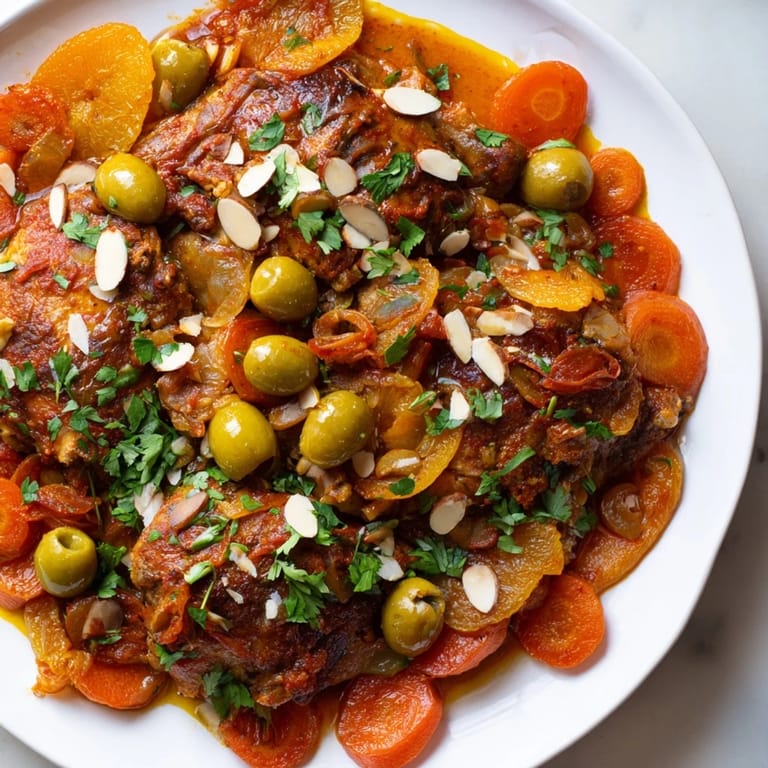
 A friend returned from Marrakech with stories of steaming tagines and spice-filled markets, and the way she described the interplay of sweet apricots against savory olives stuck with me for weeks. I finally attempted it on a gray Sunday afternoon when the kitchen felt too quiet, and within minutes the cumin and cinnamon transformed everything—suddenly my small apartment smelled like I'd traveled somewhere warm. That first bite, with the tender chicken falling from the bone and the sauce coating each piece, made me understand why she'd been so enchanted. Since then, this dish has become my answer to when I want comfort that feels a little exotic, familiar yet surprising.
The first time I made this for my partner's family, I was nervous about the preserved lemon—would it be too strange, too funky? As the tagine simmered, his mother wandered into the kitchen drawn by the smell, and by the time we sat down, she was already asking for the recipe. There's something about a dish that makes people lean in and pay attention that changes how you feel about cooking it.
Ingredients
- Bone-in, skin-on chicken thighs (1.5 lbs): They're more forgiving than breast meat and develop a deeper, richer flavor as they simmer in the sauce for over an hour.
- Onion and carrot (1 large onion, 1 large carrot sliced): These form the aromatic base and soften into the sauce, adding natural sweetness that balances the spices.
- Fresh ginger and garlic (1-inch piece ginger grated, 3 cloves minced): They brighten everything and prevent the warm spices from feeling one-dimensional or heavy.
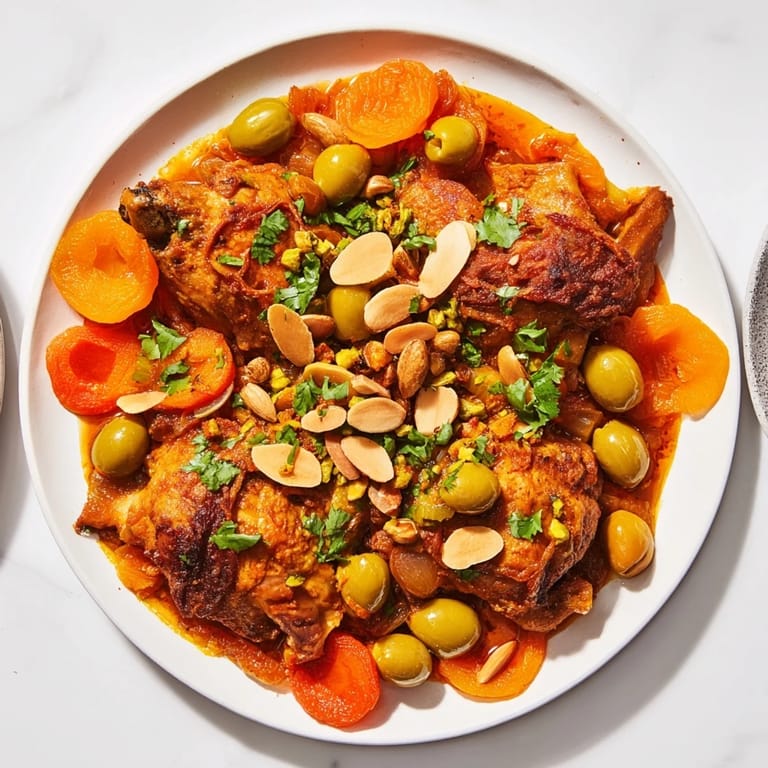
- Dried apricots (1 cup halved): These plump up beautifully and create little pockets of sweetness; avoid the super-soft ones as they'll dissolve into mush.
- Spice blend (cumin, coriander, cinnamon, paprika, turmeric, cayenne): Toast them together in the pan so they wake up and marry properly rather than staying separate and dusty.
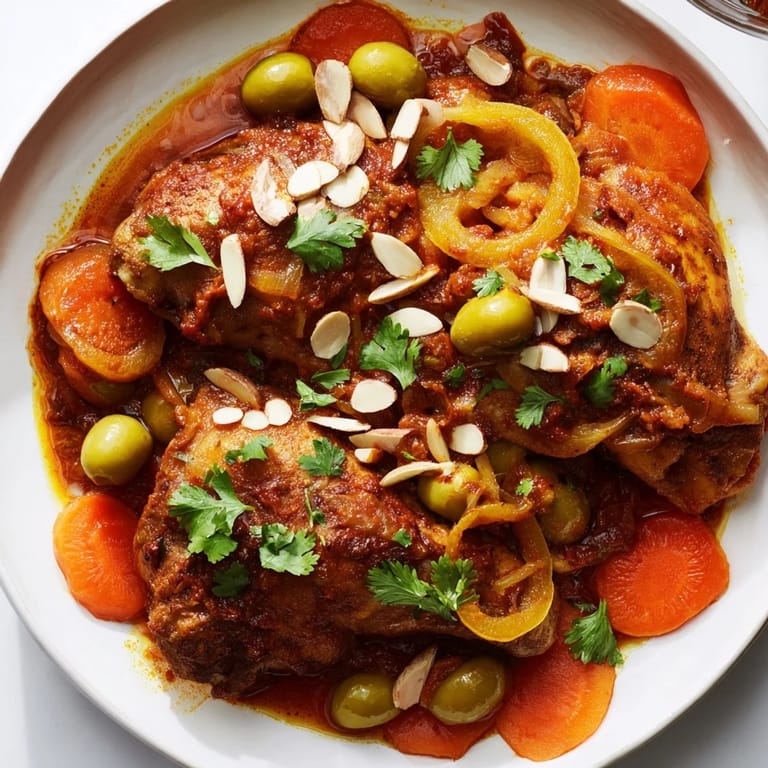
- Preserved lemon rind (1 lemon, pulp removed, thinly sliced): This is the secret that tastes like nothing else—funky, salty, and utterly essential to the authentic taste, though the dish works fine without it if you can't find it.
- Green olives (½ cup halved and pitted): They add brine and a slight earthiness that keeps the sweet apricots from dominating; taste them first to judge their saltiness.
- Chicken broth and diced tomatoes (1 cup broth, 1 can tomatoes drained): The tomatoes add acidity that brightens the whole pot, while the broth keeps everything moist without diluting the flavors.
- Toasted slivered almonds and cilantro (for garnish): These finish the dish with crunch and freshness that makes it feel intentional rather than heavy.
Tired of Takeout? 🥡
Get 10 meals you can make faster than delivery arrives. Seriously.
One email. No spam. Unsubscribe anytime.
Instructions
- Dry and season your chicken:
- Pat each thigh completely dry with paper towels—this little step is what gives you that golden, caramelized exterior rather than steamed chicken. Season generously with salt and pepper and let them sit while you prep everything else so the seasonings can begin their work.
- Brown the chicken deeply:
- Heat your oil until it shimmers, then lay the chicken skin-side down and don't touch it for 3-4 minutes—you want that crackling, mahogany-colored skin. Flip and brown the other side, then remove to a plate; this browned layer is flavor you're building on.
- Build your aromatics:
- In the same pot, add onion and carrot with a pinch of salt and let them soften and begin to caramelize for about 5 minutes. This takes the raw sharpness out of the onion and lets the natural sugars emerge.
- Bloom the spices:
- Add your minced garlic, grated ginger, and all the dry spices, stirring constantly for about 1 minute until the kitchen fills with warm fragrance. This short cooking time wakes them up without burning them, which would make them bitter.
- Deglaze and add tomatoes:
- Pour in your tomatoes and scrape the bottom of the pot with a wooden spoon to loosen all those golden, caramelized bits—that's pure flavor. Let it bubble for 2 minutes so the tomatoes begin to break down.
- Return the chicken and add the sweet elements:
- Nestle the chicken back into the pot, then scatter in your apricots and preserved lemon rind if using, and pour in the broth. Bring everything to a gentle simmer, then cover and lower the heat—this is where patience becomes the main ingredient.
- Cook low and slow:
- Let it simmer covered for 45 minutes, stirring every 15 minutes or so to ensure even cooking and flavor distribution. You'll know it's ready when the chicken is tender enough to pull apart with a wooden spoon and the apricots have plumped and softened.
- Finish with olives and reduction:
- Add your olives and simmer uncovered for about 10 minutes to let some liquid evaporate and the flavors concentrate. Taste and adjust salt and spices—sometimes a pinch more cinnamon or a squeeze of lemon juice is exactly what it needs.
 Pin this
 The first winter I made this regularly, it became my go-to when friends were going through rough patches—something about a warm tagine, the way it fills a kitchen with hope and spice, felt like the right language when words weren't enough. There's a reason this dish has lasted centuries in its home region: it soothes and nourishes in equal measure.
Why This Dish Travels Well
One of my favorite discoveries was that this tagine tastes even better the next day, once the chicken has absorbed more of the sauce and the spices have mellowed and deepened together. It reheats gently on the stove or in a low oven without drying out, making it perfect for batch cooking when you want something ready in your fridge that feels like a restaurant meal. I've also learned that it freezes beautifully for up to three months, which means you can make it whenever the craving strikes and have comfort waiting for you later.
What to Serve Alongside
Couscous is the traditional companion—it's light enough not to compete and absorbs the sauce in the most satisfying way, though rice or warm flatbread work equally well depending on what you have on hand. A simple green salad with lemon dressing cuts through the richness beautifully, and some of my best meals have included both, letting people build their own plate. If you want to stretch this further, roasted root vegetables tossed into the tagine in the last few minutes of cooking add substance without overwhelming the spices.
Variations and Swaps
I've made this with lamb shoulder when I wanted something even richer, and the longer cooking time only deepened the flavors—if you go that route, add an extra 20 minutes to the simmer. For a vegetarian version, chickpeas and chunks of sweet potato or butternut squash mimic the texture and absorb the sauce beautifully, though reduce the cooking time to about 35 minutes so they don't fall apart. A whisper of harissa stirred in at the end brings heat without changing the character of the dish, and some people swear by a small drizzle of honey if they find the balance needs adjustment.
- For extra tang, add a squeeze of fresh lemon juice or a splash of red wine vinegar just before serving.
- If you can't find preserved lemon, substitute with the zest and juice of one regular lemon, though the flavor will be brighter and less complex.
- Toasted pine nuts or sesame seeds make excellent substitutes for almonds if you have allergies or prefer something different.
 Pin this
 This tagine taught me that the best dishes are the ones that make you feel a little bit somewhere else while sitting at your own table. Once you've made it once, it becomes something you reach for again and again.
Recipe FAQs
- → What makes the dish distinctly Moroccan?
The blend of warm spices such as cumin, coriander, cinnamon, and paprika, combined with dried apricots and preserved lemon, brings authentic North African flavors to the dish.
- → Can I substitute chicken thighs with another protein?
Yes, chicken breasts or chickpeas can be used, but cooking times may vary to ensure tenderness and flavor absorption.
- → How do the apricots affect the taste?
Dried apricots impart a natural sweetness that balances the savory spices and salty olives, creating a harmonious flavor profile.
- → What sides pair well with this dish?
Steamed couscous, fluffy rice, or warm flatbread complement the rich sauce and tender chicken perfectly.
- → Is preserved lemon essential to the flavor?
Preserved lemon adds a bright, tangy note that enhances the dish’s complexity, but it can be omitted if unavailable without losing too much flavor.