 Pin this
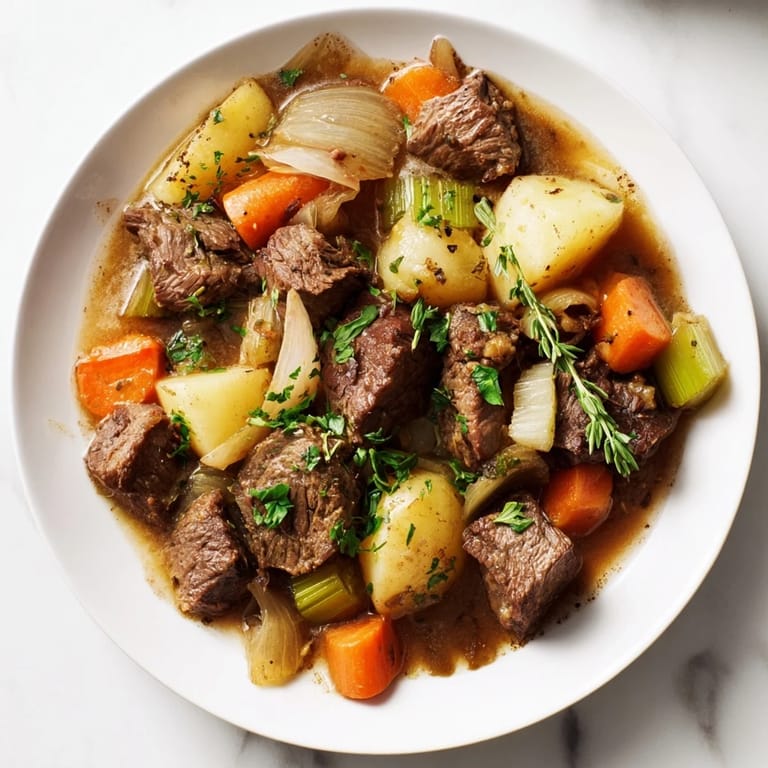
 There's something about the smell of beef browning in a hot pot that makes you feel like you're doing something right in the kitchen. My uncle used to make this stew every November, and the whole house would fill with this warm, meaty aroma that just made you want to sit at the table. I didn't understand back then why he'd spend three hours simmering something when you could eat sooner, but the first spoonful taught me patience. The meat falls apart without effort, the potatoes have soaked up every bit of that savory broth, and somehow the whole thing tastes like comfort itself. Now I make it the same way, and I finally get why he smiled while stirring the pot.
I made this for my partner on a rainy Sunday when neither of us wanted to go out, and I watched their face when they tasted it—that moment when someone realizes you've made something really good, not fancy, just good. We ended up having seconds and talking through most of the afternoon, and the stew just kept improving as it sat there, the flavors getting deeper. Sometimes the best meals aren't about impressing anyone; they're about being present while something worthwhile happens slowly in front of you.
Ingredients
- Beef chuck (1.5 kg / 3.3 lbs), cut into 2-inch cubes: Chuck is where the magic happens—it's got enough fat and connective tissue to break down into gelatin, which gives your stew that silky, rich mouthfeel. Don't use lean cuts; they'll turn stringy.
- Potatoes (4 large), peeled and chunked: Starchy potatoes like russets work best because they'll partially dissolve and thicken the broth while staying tender.
- Carrots (4 large), peeled and sliced: Cut them thicker than you think—they shrink more than you'd expect, and thin slices disappear into the broth.
- Onions (2 large), chopped: They're your flavor foundation, so don't skip them or rush the caramelizing step.
- Celery (2 stalks), sliced: This adds depth without announcing itself, which is exactly what you want.
- Garlic (3 cloves), minced: Add it after the onions have softened so it doesn't burn and turn bitter.
- Beef stock (1.2 liters / 5 cups): Use homemade if you have it, but good store-bought works fine—the long cooking time means the meat and vegetables do most of the flavor work anyway.
- Guinness or dark beer (330 ml / 1 bottle), optional: This adds a subtle earthiness and depth; if you skip it, the stew is still excellent, just a touch lighter.
- Tomato paste (2 tbsp): This is a flavor concentrator, so don't skip it or substitute it with ketchup.
- Worcestershire sauce (2 tbsp): A small amount goes a long way—it adds umami without tasting like Worcestershire sauce.
- Bay leaves (2), dried thyme (1 tsp), dried rosemary (1 tsp): These herbs are subtle enough not to overpower, but together they create that classic, recognizable stew flavor.
- Salt and black pepper: Taste as you go and adjust at the end—the flavors concentrate as the stew reduces.
- Vegetable oil (3 tbsp): You need enough to get a proper sear on the beef, which means the meat browns instead of steaming.
- Fresh parsley (2 tbsp), chopped: Scatter this on top at the end for a bit of color and a fresh note that cuts through the richness.
Tired of Takeout? 🥡
Get 10 meals you can make faster than delivery arrives. Seriously.
One email. No spam. Unsubscribe anytime.
Instructions
- Dry your beef and season generously:
- Pat each cube with paper towels until they're as dry as you can get them—moisture is the enemy of browning. Sprinkle salt and pepper over everything, and let them sit for a minute so the seasoning sticks.
- Get your pot screaming hot and brown the beef in batches:
- You want a dark brown crust on each piece, not just gray. This takes patience and won't happen if you crowd the pot or if your heat isn't high enough. Listen for that sizzle when the meat hits the oil.
- Cook the aromatics until they're soft and smelling incredible:
- Once the beef is out, add onions and celery to the same pot (don't clean it, all those brown bits are flavor). Stir them around for about five minutes until they've softened and started to pick up some color. Add the garlic and let it cook for just a minute—you want it fragrant, not burnt.
- Toast the tomato paste and build your flavor base:
- Stir in the tomato paste and let it cook for about a minute, which deepens its flavor and removes that raw edge. This step seems small, but it matters.
- Deglaze with beer and let it bubble away:
- If you're using Guinness, pour it in and scrape up all those caramelized bits from the bottom of the pot with a wooden spoon. Let it simmer for a couple of minutes so the raw beer flavor mellows out. If you're skipping the beer, just skip this step.
- Return the beef and add everything else:
- Put the beef back in, add carrots, potatoes, bay leaves, thyme, rosemary, beef stock, and Worcestershire sauce. Stir everything together so the flavors start mingling.
- Bring it to a gentle boil, then drop the heat and cover:
- Once it's bubbling, turn the heat down low so it's just barely simmering—you'll see the occasional bubble breaking the surface. Cover the pot and let it do its thing for two to two-and-a-half hours. Stir it every 30 minutes or so, partly to make sure nothing's sticking to the bottom, partly because it's nice to check in on it.
- Fish out the bay leaves and taste for seasoning:
- The beef should be so tender it falls apart when you press it with a spoon. If it's not quite there yet, give it another 15 minutes. Once it's ready, remove the bay leaves and taste the broth—it might need more salt or pepper.
- Ladle into bowls and finish with fresh parsley:
- Serve it hot, with a handful of parsley scattered over the top. Crusty bread or mashed potatoes are your best friends here.
 Pin this
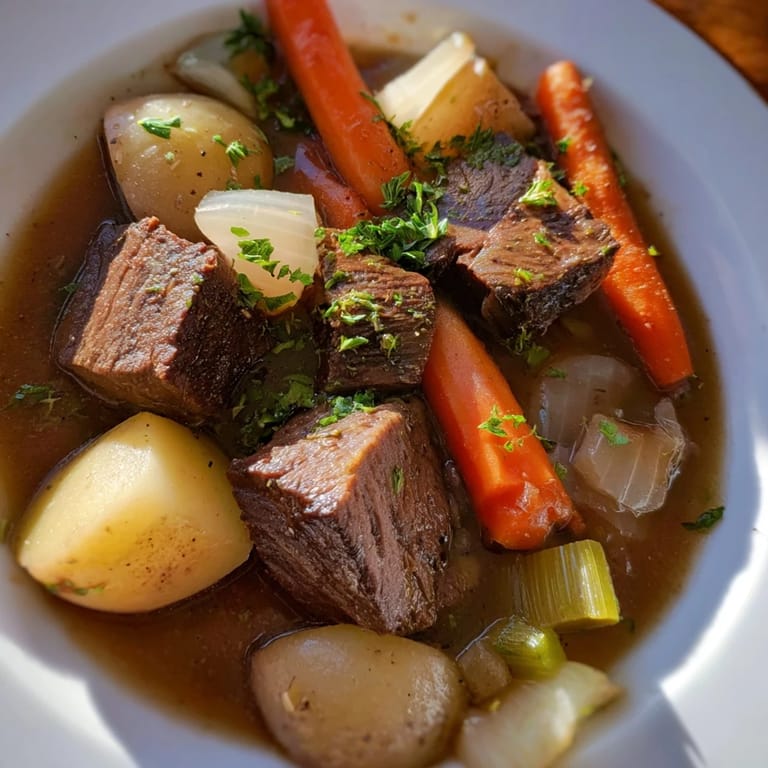
 Years ago, I brought this stew to a family dinner where I didn't know anyone except the person who invited me, and it became the thing everyone talked about—not fancy, just honest and warm. I realized that day that cooking for people, even strangers, is a way of saying you care about their comfort, and somehow a bowl of stew says that better than most things.
Why Slow Cooking Matters Here
The whole point of a stew is that time does the work for you. The low, steady heat breaks down the tough collagen in the beef into gelatin, which gives the broth that silky, almost luxurious feel on your tongue. You can't rush this, and honestly, you shouldn't want to—those two hours are when your kitchen becomes a calm, warm place, and the smell alone is worth it.
Making It Your Own
This is one of those recipes that forgives small changes. Your vegetable preferences matter less than the ratio of beef to broth, so swap carrots for parsnips if that's what you have, or add mushrooms for earthiness. Some people use lamb instead of beef, which is equally traditional and slightly lighter in flavor. The herbs are flexible too—if you don't have thyme, rosemary alone is fine.
Storage and Reheating
This stew improves overnight because the flavors have more time to meld, so make it a day ahead if your schedule allows. It keeps well in the fridge for four or five days, and it freezes beautifully for up to three months—just reheat gently on the stovetop, adding a splash of stock if it's thickened too much. There's something lovely about having this waiting for you on a difficult day.
- If you're thickening the stew with mashed potatoes, remember that it'll thicken more as it cools and sits.
- Reheat on low heat to keep the meat tender—high heat will make it tough again.
- Taste for seasoning before serving leftovers, as salt flavors can shift over time.
 Pin this
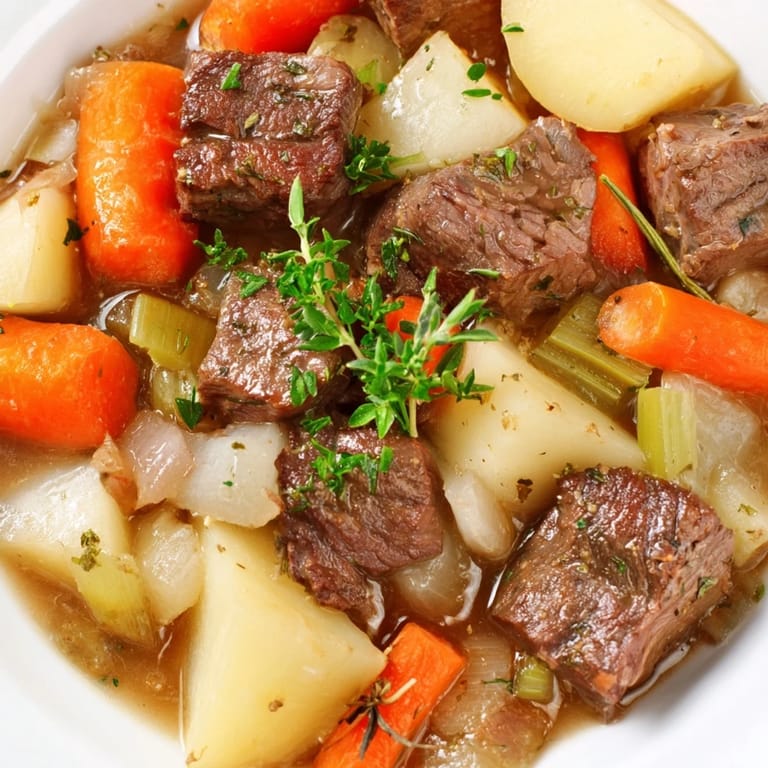
 There's an honesty to this stew that feels like home cooking should be—nothing fancy, everything purposeful. Make it when you want to slow down and remind yourself why you love being in the kitchen.
Recipe FAQs
- → What cut of beef is best for this dish?
Beef chuck is ideal due to its marbling and tenderness after slow simmering.
- → Can I omit Guinness stout?
Yes, omitting Guinness makes it suitable for gluten-free diets, while still maintaining rich flavor with stock and spices.
- → How long should it simmer for perfect tenderness?
Simmer gently for 2 to 2.5 hours until beef is fork-tender and vegetables soften.
- → What additional herbs enhance the flavor?
Dried thyme and rosemary complement the dish’s savory profile beautifully.
- → Any tips for a thicker texture?
Mash a few potato pieces against the pot side and stir in to naturally thicken the broth.