 Pin this
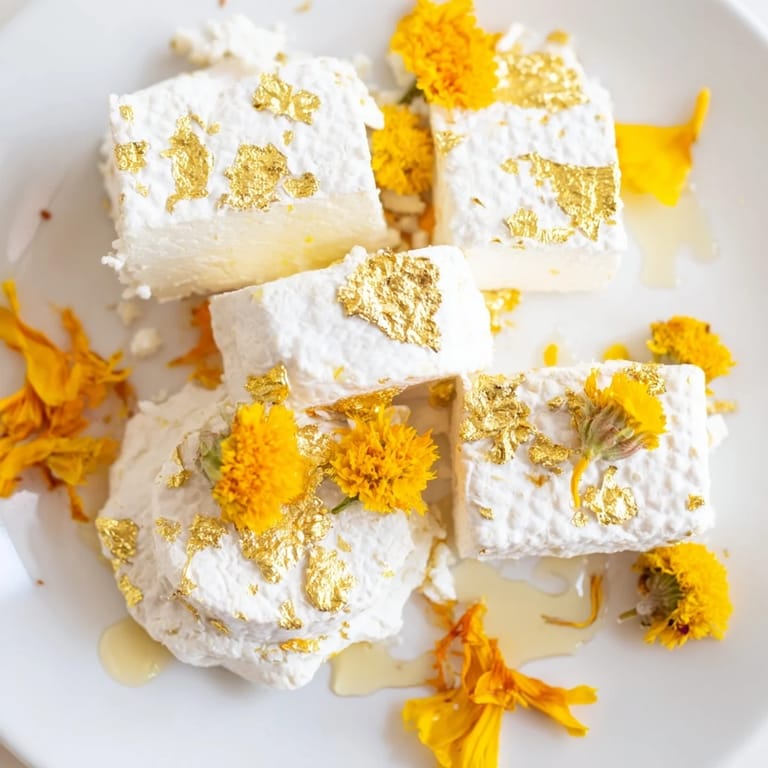
 There's a moment when you realize a cheese board doesn't have to be just sustenance—it can be theater. I was standing in a kitchen at dusk, preparing something for people I wanted to impress, and I reached for gold leaf almost as an afterthought. It felt ridiculous at first, this delicate shimmer on creamy cheese, but once those edible petals landed, everything shifted. Suddenly it wasn't about the cheese anymore; it was about the gesture, the care, the deliberate choice to make something beautiful.
I remember the quiet satisfaction of watching someone lean forward to admire the platter before they even tasted it. My friend Sarah actually paused mid-conversation, set down her glass, and just looked. Then she reached for the brie with the gold leaf and closed her eyes for a second, like she was tasting luxury itself. That's when I knew this simple arrangement had become something more than cheese and flowers.
Ingredients
- Goat cheese log (chèvre), 150 g: The tangy backbone that cuts through richness and provides a stark white canvas for your gold leaf. Choose one that's slightly firm so the gold adheres cleanly.
- Triple-cream brie, 150 g: This is the indulgent one, almost melting before it hits your tongue. Its soft surface cradles the petals beautifully.
- Fresh ricotta, 150 g: Mild and cloud-like, it offers a gentle palate cleanser between the bolder flavors. It's also the easiest cheese to apply gold leaf to because it's so forgiving.
- Feta block, 150 g, drained: The salty anchor that makes everything else shine. Buy it as a solid block rather than crumbled so you can present it with intention.
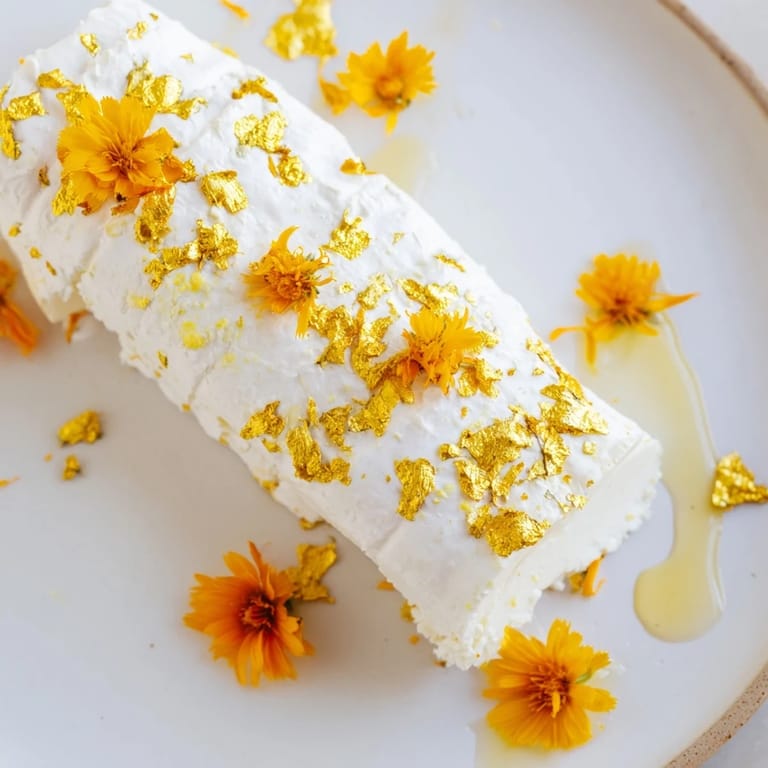
- Edible gold leaf, 1–2 sheets: The moment this touches cheese, everything becomes a celebration. Source it from culinary suppliers to ensure food safety.
- Yellow edible flower petals, 2 tbsp: Marigold and calendula are sturdy; chrysanthemum petals are delicate but more fragrant. Use only flowers from reputable edible suppliers.
- Honey, 2 tbsp: A drizzle of this ties everything together, adding a glossy finish and subtle sweetness. Warm it slightly for easier application.
- Microgreens or fresh herbs: These are your final flourish, adding height and movement to what would otherwise be a flat composition.
- Baguette, thinly sliced: Toast these lightly if you want them to hold their own against the soft cheeses, or serve at room temperature for a more elegant simplicity.
- Assorted crackers: The utility players that let every cheese shine without competing for attention.
Tired of Takeout? 🥡
Get 10 meals you can make faster than delivery arrives. Seriously.
One email. No spam. Unsubscribe anytime.
Instructions
- Choose Your Stage:
- Start with a platter that feels substantial—something that can hold the weight of beauty. White or pale stone works beautifully because it doesn't distract from what you're placing on it. The emptiness matters as much as what fills it.
- Place Each Cheese Intentionally:
- Arrange your four cheeses so they form a loose circle with breathing room between them. Think about contrast: the white log next to the pale brie, the crumbly feta opposite the smooth ricotta. Step back and look at it before you add anything else.
- Apply the Gold with Reverence:
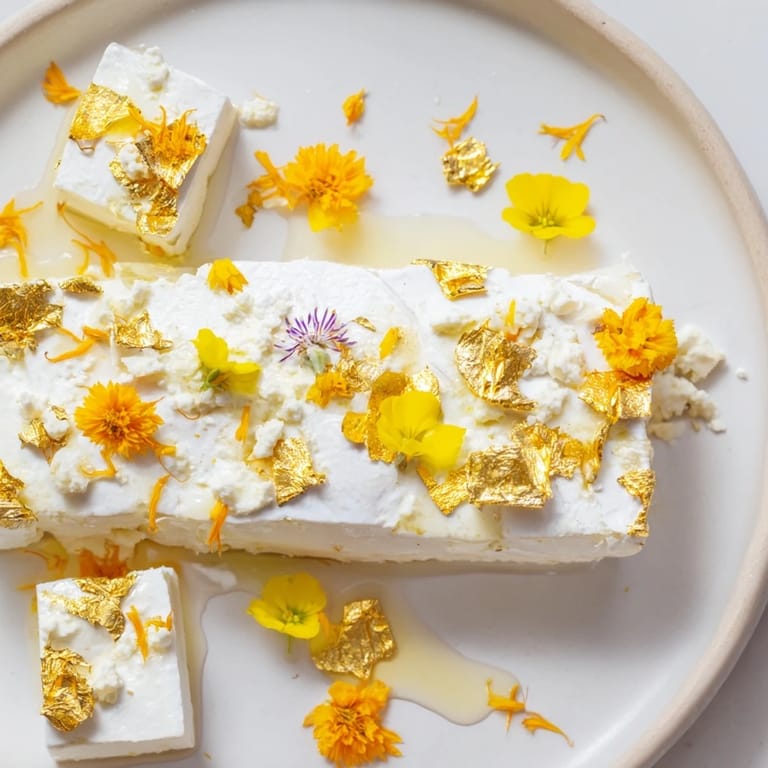
- This is where patience matters. Use clean, absolutely dry tweezers or a fine brush, and lift the gold leaf with intention. Press it gently onto each cheese so it clings without tearing. It doesn't need to be perfect; gold has an excuse to be delicate and irregular.
- Scatter the Petals Like a Secret:
- Rather than placing petals one by one, hold a few in your cupped palm and gently blow or release them over the cheeses and surrounding platter. They'll fall where they want to, and that randomness is what makes it feel less staged and more alive.
- Finish with Intention:
- A light drizzle of honey, a small handful of microgreens scattered across—these final touches are what make someone's breath catch. Serve alongside the bread and crackers, and watch people approach it like they're entering something sacred.
 Pin this
 What moves me most about this dish is that it blurs the line between food and art in the most generous way. Someone sits down expecting cheese and bread, and instead finds themselves transported by the simple act of attention to beauty. That's what the gold leaf and petals do—they say to your guests: you are worth the care.
Building Flavor Harmony
The beauty of four different white cheeses is that they're like voices in a composition. The goat cheese speaks first, sharp and clear. The brie responds with soft comfort. The ricotta hums underneath, quiet and steady. The feta grounds everything with salt and minerality. When someone tries them in sequence, they're tasting a conversation rather than just eating cheese. I learned this by accident when I watched my mother deliberately place small bites on her tongue in order, closing her eyes between each one, as if listening to music.
The Psychology of Edible Gold
Gold leaf transforms a cheese board from dinner into ceremony. There's no rational reason—gold tastes like nothing, adds nothing nutritionally—but something in us responds to it anyway. It signals that care was taken, that this meal was meant to matter. I think about how color and presentation can change the entire experience of eating. A plate of white cheeses is delicious. A plate of white cheeses with gold and flowers is an event. The difference isn't in your mouth; it's in your mind, which is really where all eating happens anyway.
Timing and Temperature
This is one of those rare recipes where timing is almost impossible to mess up, but temperature is everything. Cheeses served straight from the fridge are dense and closed off, their flavors muted and their textures waxy. Bring them to room temperature and suddenly they breathe, their edges soften, their personalities emerge. I've made this mistake and learned it hard—a cheese platter too cold is like listening to a song through a wall instead of in the same room.
- Pull your cheeses out thirty to forty minutes before serving, and taste one piece to confirm it's reached temperature before your guests arrive.
- If your kitchen is cold, place the platter in a warm spot or loosely tent it with foil to accelerate the warming process without drying anything out.
- The flowers stay freshest if applied as late as possible, but the cheeses need their full time to warm, so plan backward from your serving moment.
 Pin this
 This platter is proof that elegance doesn't require complexity. Sometimes the most luxurious moments come from choosing thoughtfully and arranging generously. It's a reminder that hospitality at its heart is just paying attention to what will make someone feel welcomed and seen.
Recipe FAQs
- → What cheeses are best for this platter?
Soft, creamy white cheeses like goat cheese, triple-cream brie, fresh ricotta, and feta provide smooth, mild flavors ideal for this platter.
- → How is the edible gold leaf applied?
Use clean tweezers or a fine brush to gently place small pieces of edible gold leaf onto the cheese surfaces to maintain delicate appearance.
- → Can I use different edible flowers?
Yes, yellow petals such as marigold, calendula, or chrysanthemum work well and add vibrant color while ensuring they're safe for consumption.
- → What accompaniments pair well with this spread?
Sliced baguette and assorted crackers complement the cheese textures and provide a sturdy base for tasting.
- → Are there optional garnishes to enhance flavor?
Drizzling with honey adds subtle sweetness, and fresh microgreens or herbs contribute fresh herbal notes and visual appeal.
- → Is this suitable for gluten-free diets?
Using gluten-free bread or crackers makes this platter suitable for those avoiding gluten while maintaining its elegant presentation.