 Pin this
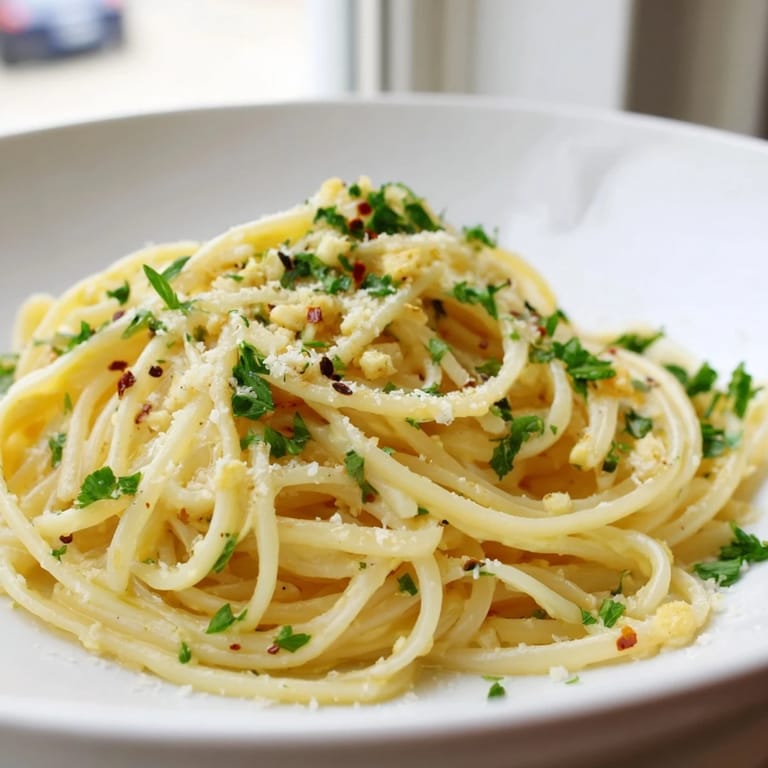
 There's something about the smell of garlic hitting hot butter that stops you mid-conversation. I discovered this dish on a weeknight when I had about twenty minutes and nothing in the pantry except pasta, half a stick of butter, and more garlic than any reasonable person keeps on hand. What emerged was so simple, so perfectly golden and fragrant, that I've made it dozens of times since—sometimes deliberately, sometimes because it's the only thing standing between me and takeout at 7 PM.
I made this for my dad on a random Tuesday, and he asked for the recipe written down because he wanted to make it for my mom. That's when I realized it wasn't the complexity that mattered—it was the warmth, the way something so straightforward could taste like real care.
Ingredients
- Linguine: 400 g (14 oz) of thin, elegant strands that catch sauce beautifully—don't reach for thick spaghetti here, the shape matters.
- Unsalted butter: 80 g (6 tbsp) is your base; it needs to be real butter, not margarine, because the flavor is the entire point.
- Garlic cloves: 6 large ones, finely minced so they distribute evenly and melt slightly into the butter instead of sitting in chunks.
- Crushed red pepper flakes: 1/4 tsp optional but recommended—a whisper of heat that makes you taste the butter more intensely.
- Lemon zest: From 1 lemon, optional but it lifts everything, cutting through richness with brightness.
- Sea salt: 1/2 tsp to season the butter sauce itself, not just the pasta water.
- Freshly ground black pepper: 1/4 tsp, freshly cracked so it has actual texture and bite.
- Fresh flat-leaf parsley: 30 g (1/2 cup) chopped fine, the final verdant touch that makes it feel intentional.
- Parmesan cheese: 40 g (1/2 cup) freshly grated if you have a microplane or box grater—pre-grated loses something in translation.
- Lemon wedges: Extra ones to serve because someone will want them.
Tired of Takeout? 🥡
Get 10 meals you can make faster than delivery arrives. Seriously.
One email. No spam. Unsubscribe anytime.
Instructions
- Boil the water and cook the pasta:
- Fill a large pot about three-quarters full with cold water and salt it generously—it should taste like the sea. Bring it to a rolling boil before you add the linguine, and stir immediately so nothing sticks. Cook according to the package instructions, tasting a minute before the time is up so you catch that sweet spot where it's tender but still has a slight resistance when you bite it. Before you drain it, scoop out about 120 ml (1/2 cup) of the starchy cooking water into a small bowl—this liquid is your secret weapon.
- Make the garlic butter:
- While the pasta does its thing, place a large skillet over medium heat and add your butter. Let it melt gently, watching it shift from solid to liquid, then add the minced garlic. This is the moment to pay attention—you want it to turn fragrant and take on a pale golden hue, but the second it starts to brown you've gone too far. Stir constantly for about a minute, maybe ninety seconds, until the kitchen smells like garlic and butter and nothing else matters.
- Build the sauce:
- Once the garlic is golden and fragrant, add your red pepper flakes and lemon zest if you're using them, stirring for just a few seconds to wake them up. Drain your pasta and add it directly to the skillet, tossing with a wooden spoon or tongs so every strand gets coated in buttery goodness. Now add your reserved pasta water slowly, a splash at a time, tossing constantly—the starch in this water emulsifies with the butter and creates something creamy and cohesive, not slick or greasy.
- Season and finish:
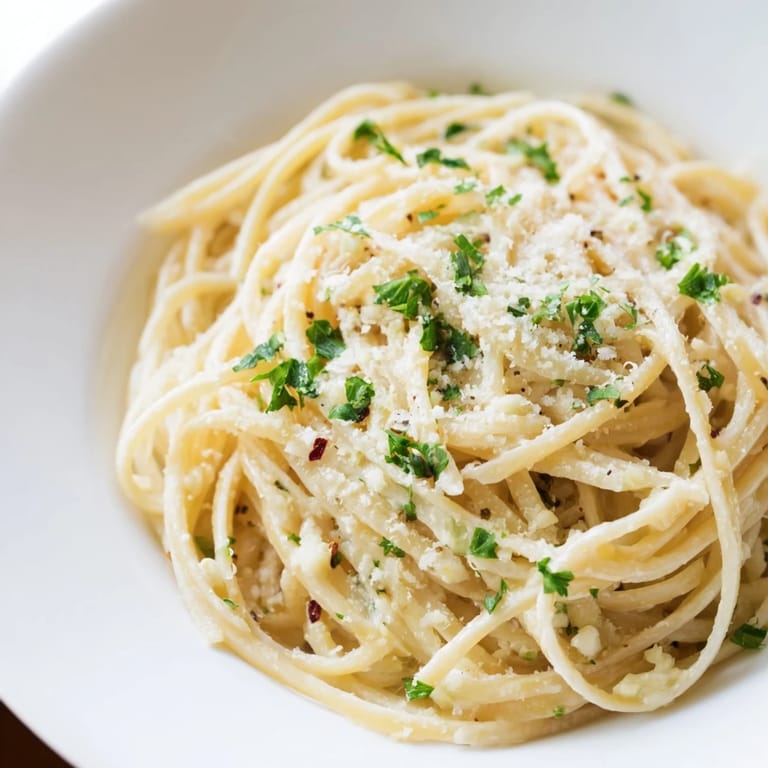
- Taste it. Season with salt and black pepper, tasting again. Stir in the chopped parsley and half the Parmesan if you're using it, tossing so everything is evenly distributed. If it feels dry, add another splash of pasta water—it should look glossy, not separated.
- Plate and serve:
- Transfer to bowls or plates immediately while everything is hot and the sauce is still clinging to the pasta. Scatter remaining Parmesan on top and set a lemon wedge on the rim so people can squeeze and taste and adjust their own bowl.
 Pin this
 I once brought this to a potluck expecting it to be boring alongside elaborate casseroles, but people came back for thirds and someone actually asked if I'd added cream. I hadn't. It was just butter, garlic, and the small miracle of starchy pasta water doing what cream wishes it could do.
Why This Works
Linguine is a narrow ribbon that moves differently than spaghetti—it has more surface area for the sauce to cling to, and it doesn't clump the way thicker pastas do. The garlic butter emulsion is light enough to coat without overwhelming, but rich enough that you feel like you're eating something indulgent. Timing is everything; the moment the pasta leaves the water and hits the warm butter is when everything transforms.
Variations That Actually Work
I've added sautéed mushrooms that have been cooked down until they're almost caramelized, crispy torn spinach that wilts into the heat, even thin slices of roasted chicken. Once I whisked an egg yolk into the pasta water before tossing it in, and it became something between carbonara and this dish—richer, almost velvety. Fresh herbs beyond parsley work beautifully too: mint if you're feeling adventurous, or a mix of basil and oregano if you want to lean Italian.
The Details That Matter
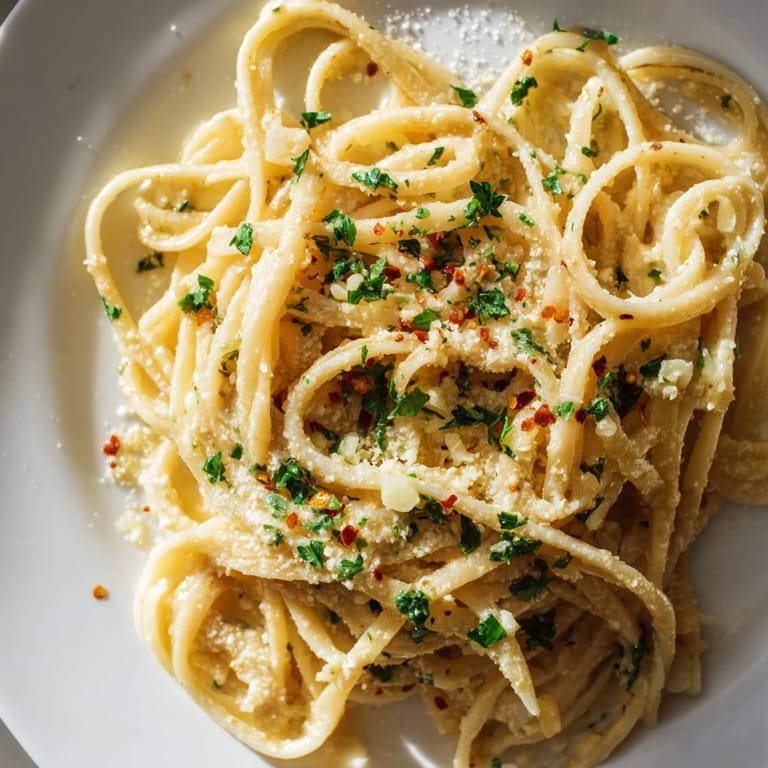
Butter quality is not a small thing here—when it's this simple, everything shows. Unsalted matters so you control the salt level. Garlic needs to be fresh and shouldn't be pre-minced because it oxidizes and loses its brightness. The moment of tossing the hot pasta with the warm butter is irreplaceable by any technique, so don't walk away once they meet.
- If your sauce breaks or looks separated, add a splash more pasta water and toss constantly until it comes back together.
- Lemon is your friend even if you skip the zest—a squeeze at the end opens up all the flavors.
- Make this for two people or four people, but don't double it in a single skillet or the ratio gets confused and something breaks.
 Pin this
 This dish taught me that simplicity isn't about lacking ambition—it's about knowing exactly what you need and nothing more. Every time you make it, you'll taste it differently depending on your butter, your garlic, your hand with the salt.
Recipe FAQs
- → What type of pasta works best for this dish?
Linguine is ideal for its flat, narrow shape that holds the garlic butter sauce well, but similar long pastas like fettuccine can also be used.
- → How can I prevent garlic from burning?
Sauté garlic over medium heat just until fragrant and lightly golden, about 1–2 minutes, stirring constantly to avoid browning.
- → What does adding reserved pasta water do?
The starchy water helps emulsify the sauce, making it cling smoothly to the pasta and enhancing the overall texture.
- → Can I customize the flavor profile?
Yes, adding lemon zest or red pepper flakes offers brightness and heat. Fresh herbs or Parmesan can be adjusted to taste.
- → What are good serving suggestions?
Serve with extra lemon wedges and a crisp white wine like Pinot Grigio. Adding sautéed mushrooms or spinach can add variety.