 Pin this
 I discovered Koshari on a sweltering Cairo afternoon, squeezed between two locals at a street vendor's cart, watching him layer rice, lentils, and pasta with the precision of someone who'd done it ten thousand times before. The steam rose up and fogged my glasses, and I couldn't tell where one ingredient ended and the next began until he poured that crimson tomato sauce over everything and crowned it with crackling fried onions that shattered between my teeth. It was messy, it was perfect, and I understood immediately why this humble dish had survived generations—it wasn't fancy, but it felt like home to everyone who ate it.
My first attempt at making Koshari at home was a mild disaster—I tried cooking everything simultaneously and ended up with cold rice and overcooked lentils, all rushed to the table at different temperatures. A friend who'd grown up eating it took one bite, laughed kindly, and showed me that the magic isn't in speed, it's in doing each component right and letting them wait patiently for their moment on the plate. Now when I make it, I move slowly, actually enjoy the process, and every bowl that comes together reminds me that sometimes the best food is the kind you can't rush.
Ingredients
- Medium-grain rice, rinsed: Don't skip the rinsing—it removes starch that makes the rice gummy, giving you those separate, fluffy grains that form the sturdy base of your bowl.
- Brown or green lentils, rinsed: These hold their shape beautifully, unlike red lentils which would turn to mush; they add earthiness and protein without falling apart.
- Small elbow macaroni or ditalini pasta: The small shape matters because it nestles into every bite without overwhelming the rice and lentils, creating a balanced texture.
- Olive oil: Use it generously in the sauce—it mellows the tomato's sharpness and carries the spices into every layer.
- Crushed tomatoes: Canned actually works better here than fresh because the acidity is consistent and the sauce thickens reliably.
- Ground cumin and coriander: These two are the soul of the sauce; they're warm without being aggressive, and they whisper rather than shout.
- Vegetable oil for frying: Keep it neutral and flavorless so the onions stay the star, and make sure it's hot enough to crisp them without absorbing too much oil.
Tired of Takeout? 🥡
Get 10 meals you can make faster than delivery arrives. Seriously.
One email. No spam. Unsubscribe anytime.
Instructions
- Simmer the lentils until just tender:
- Cover them with three cups of cold water and bring to a rolling boil, then turn the heat down so they bubble gently for 20 to 25 minutes—you want them cooked through but still holding their shape. Drain them well and let them steam dry for a moment in the pot.
- Bring the rice to a gentle steam:
- Rinsed rice with two cups of water and a pinch of salt will come to a boil quickly, then needs to be covered and left alone on low heat for 15 to 18 minutes until the water disappears. The rice will tell you it's done when you hear nothing but silence coming from under that lid.
- Cook the pasta until it still has a whisper of resistance:
- In a pot of salted boiling water, elbow macaroni takes about eight to ten minutes—taste it halfway through because pasta forgives nothing once it turns soft. Drain it quickly and set it aside so it stops cooking.
- Build the sauce layer by layer:
- Start with oil and let a finely chopped onion turn translucent and sweet over medium heat, then add garlic for just a minute before it browns. Pour in your crushed tomatoes and tomato paste, stirring in the cumin, coriander, a pinch of chili if you like heat, and just a touch of sugar to balance the acidity, then let it bubble gently for 15 to 20 minutes until it thickens and deepens in color.
- Turn onions into something irresistible:
- Toss thin-sliced onions with flour and salt until they're completely coated, then slip them into hot oil in batches—they'll sizzle and turn golden in about five to seven minutes, and you'll know they're done when they sound crispy when you move them around. Spread them on paper towels immediately so they stay crunchy.
- Whisk together the optional garlic vinegar:
- Combine white vinegar with minced garlic and chili flakes in a small bowl and let them sit for ten minutes so the flavors marry—this bright, sharp condiment is the finishing touch that makes everything sing.
- Arrange each bowl like you're composing something beautiful:
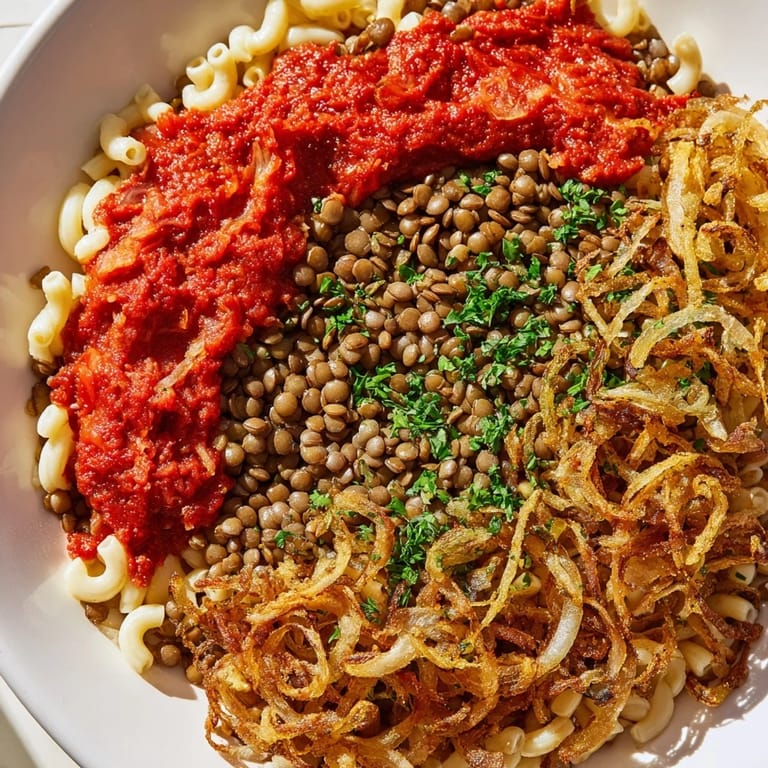
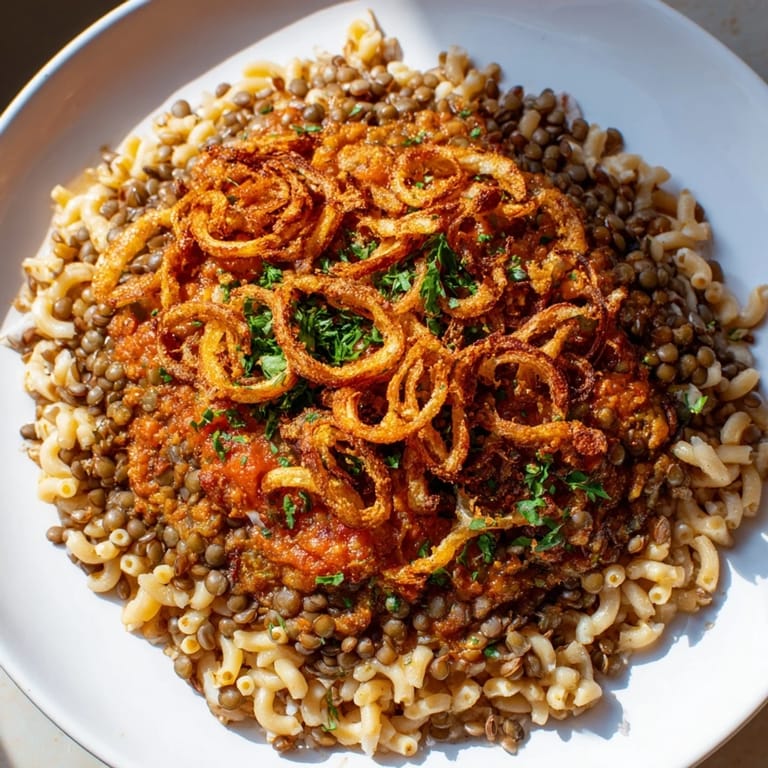
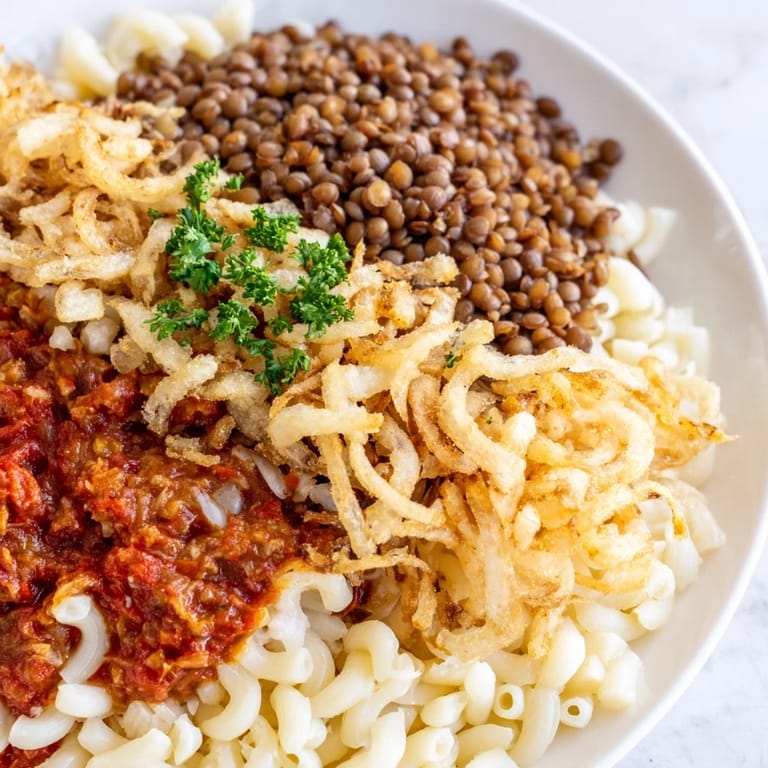
- Start with a generous bed of fluffy rice, top it with cooked lentils, scatter the pasta over everything, then ladle the warm tomato sauce across the whole thing so it seeps into every layer. Finish with a handful of crispy onions that will stay crackling even as they warm from the sauce beneath, and if you want, add a small spoonful of that garlic vinegar on top.
 Pin this
 There's a moment right before you pour the sauce over a fresh bowl of Koshari when you can smell everything individually—the nuttiness of cooked lentils, the faint sweetness of rice, the bright tomato waiting to pull it all together. Then you pour, and somehow it becomes one thing, unified and greater than the sum of its parts, and you understand why this dish has fed millions of people and made them feel taken care of.
The real secret to Koshari is that you're not trying to create something complicated—you're honoring simplicity while making sure each component tastes fully of itself. The rice should taste like rice, the lentils should taste like lentils, and the pasta like pasta, but when they meet under that tomato sauce, something shifts and they start talking to each other. The sauce is where the spices live, warm and rounded, never sharp; they should make you think of cumin and coriander but not make you say their names out loud.
Everything about Koshari is about contrast, and that's why it never gets boring even on your third or fourth bowl. Soft rice gives way to tender lentils, chewy pasta breaks the pattern, and then those crispy onions arrive and everything becomes interesting again. The sauce provides moisture and heat, but it's those onions—fried until golden, tasting almost caramelized—that make you keep eating because your mouth keeps expecting something different with each spoonful.
Koshari is deeply communal food, the kind that tastes better when you eat it standing up or sitting close to someone else, and it's almost as good as a leftover as it is fresh. If you find yourself making it for friends, set out the extra sauce and vinegar on the side because everyone will want to adjust the balance to their own preference, and there's something generous about letting people make it exactly how they want it. The pasta softens slightly as it sits, which some people prefer, so don't worry if it's not meant to be eaten immediately.
- Serve it hot and watch how quickly people come back for more.
- Koshari keeps in the refrigerator for three days, though the onions will soften; reheat gently and add fresh crispy onions if you want that crunch back.
- You can absolutely double this recipe and freeze the sauce for up to a month, so weeknight dinners become effortless.
 Pin this
 Once you've made Koshari, it becomes the dish you turn to when you want something that feels like a celebration but doesn't require celebration-level effort. It's the kind of food that reminds you why cooking matters—not because it's complicated, but because it brings people together and makes them feel recognized.
Recipe FAQs
- → What grains are used in Egyptian Koshari?
Egyptian Koshari combines medium-grain rice, brown or green lentils, and small elbow macaroni or ditalini pasta for a rich blend of textures and flavors.
- → How is the tomato sauce prepared?
The tomato sauce is made by sautéing onions and garlic in olive oil, then simmering crushed tomatoes with tomato paste, cumin, coriander, chili flakes, and sugar until thick and flavorful.
- → What is the purpose of the crispy onions?
Crispy fried onions add a golden, crunchy texture that contrasts the softness of the rice and lentils, enhancing the overall mouthfeel of the dish.
- → Can this dish be made vegan?
Yes, the combination of grains, lentils, vegetables, and oil ensures this dish is naturally vegan without needing animal products.
- → Are there any common substitutions for pasta in this dish?
Orzo or vermicelli can replace elbow macaroni if preferred, maintaining the traditional layering texture.
- → How long does it take to prepare and cook this dish?
Preparation takes around 30 minutes, with cooking time approximately 40 minutes, for a total of 1 hour and 10 minutes.