 Pin this
 The first time I tried stacking crispy rice with salmon, I was sitting at a modern sushi counter watching the chef work with such casual precision—layers of texture built right before my eyes. I went home that night thinking about how I could recreate that magic in my own kitchen, and after a few experiments with timing and heat, this became the dish I make whenever I want to feel like I've got something special up my sleeve. There's something about the contrast of that warm, golden-fried rice giving way to cool, buttery avocado and silky salmon that just works.
I made these for a dinner party once and watched my friend take that first bite, close her eyes, and just smile—no words needed. That's when I knew this recipe had something beyond technique; it had that satisfying moment where different parts of the plate come together at exactly the right temperature and texture. Now whenever someone asks what appetizer I'm making, this is my go-to answer.
Ingredients
- Sushi Rice (1 cup uncooked): Use short-grain sushi rice specifically—it has the right starch content to stick together when pressed, and the vinegar mixture will season it perfectly as it cools.
- Water (1 1/4 cups) and Rice Vinegar (2 tbsp): The ratio matters; too much water and your rice gets mushy, too little and it won't cook through. The vinegar adds brightness and helps preserve the rice.
- Sugar (1 tbsp) and Salt (1/2 tsp): These balance the vinegar's sharpness and bring out the rice's natural sweetness.
- Sushi-Grade Salmon (200 g, finely diced): Buy from a reputable fishmonger and ask specifically for sushi-grade; it's the only way to go raw with confidence.
- Toasted Sesame Oil (1 tsp): A little goes a long way—this isn't cooking oil, it's a flavor accent, so don't skip the toasted variety.
- Soy Sauce, Sriracha, and Lime Juice: These three create the salmon's marinade; together they bring umami, heat, and brightness in equal measure.
- Ripe Avocado: Wait until it yields slightly to gentle pressure, then slice it right before assembly so it doesn't brown.
- Mayonnaise and Sriracha for Spicy Mayo: The mayo acts as a cooling agent against the heat; adjust the ratio to your preference.
- Vegetable Oil (2 tbsp): Use an oil with a high smoke point—peanut or vegetable oil works; avoid olive oil as it will burn and taste bitter.
- Sesame Seeds, Chives, and Nori: These are finishing touches that add texture, color, and that authentic sushi-counter feel.
Tired of Takeout? 🥡
Get 10 meals you can make faster than delivery arrives. Seriously.
One email. No spam. Unsubscribe anytime.
Instructions
- Prepare the Rice Foundation:
- Rinse your sushi rice in cold water, stirring gently with your hand until the water runs completely clear—this removes excess starch and prevents clumping. Combine with water in a saucepan, bring to a boil uncovered, then cover and drop the heat to low for exactly 15 minutes; you'll hear it stop crackling when it's done.
- Season While Warm:
- In a small bowl, whisk together rice vinegar, sugar, and salt until the sugar dissolves completely. Gently fold this mixture into the hot rice using a wooden spatula, cutting down through the rice rather than stirring—this preserves the grains' integrity and ensures even seasoning.
- Press and Chill:
- Once the rice has cooled to room temperature, press it firmly into an 8-inch square pan lined with parchment paper, aiming for a 1/2-inch thickness. Refrigerate for at least 20 minutes so the rice compacts and holds its shape when you cut it.
- Marinate the Salmon:
- While rice chills, combine your diced salmon with soy sauce, sesame oil, optional sriracha, lime juice, and green onion in a separate bowl. Mix gently—you want to coat the salmon without breaking it apart—and let it sit in the fridge until you're ready to assemble.
- Mix Your Spicy Mayo:
- Combine mayonnaise and sriracha in a small bowl, stirring until you reach your preferred heat level. This acts as your binding sauce and adds a cooling creaminess that balances the crispy rice's intensity.
- Cut and Fry:
- Remove the chilled rice from the pan and cut it into 2-inch squares using a sharp, wet knife (wet it between cuts to prevent sticking). Heat vegetable oil in a nonstick skillet over medium-high until it shimmers, then carefully place rice squares in the pan—you should hear them sizzle immediately. Fry 2-3 minutes per side until deep golden and crispy, then drain on paper towels.
- Build Your Stack:
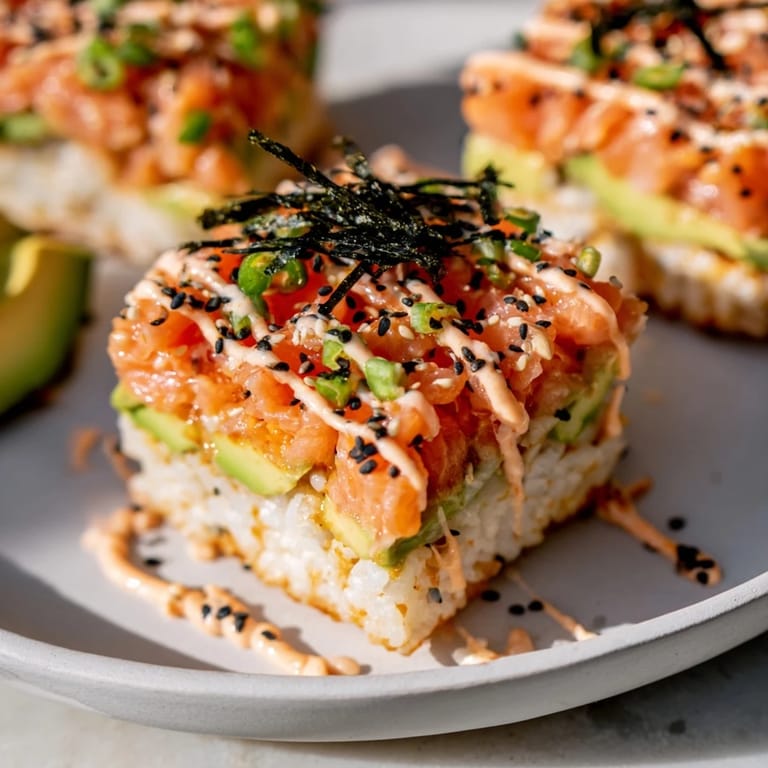
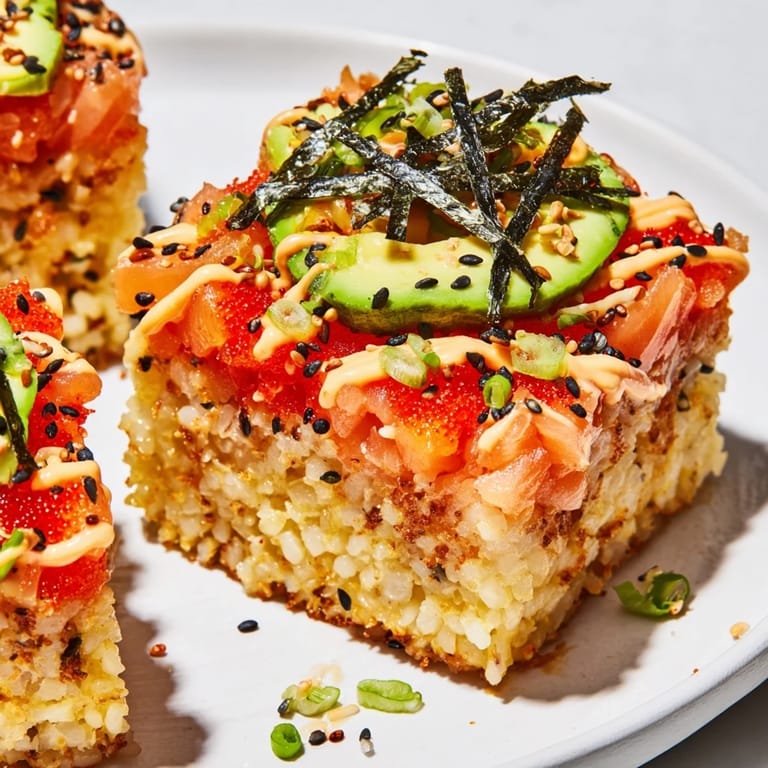
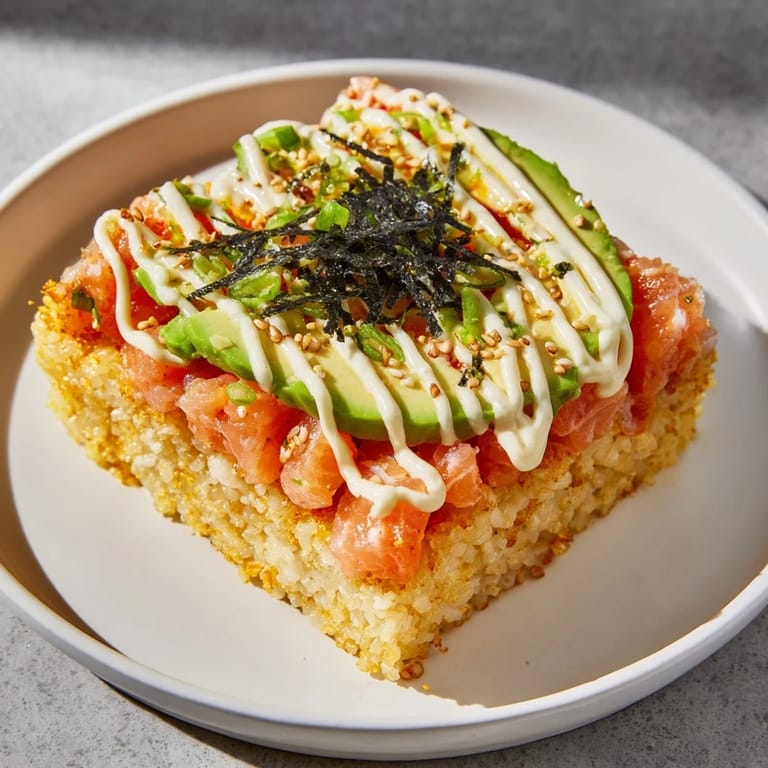
- Working quickly while the rice is still warm, top each crispy square with a slice or spoonful of fresh avocado, then a generous spoonful of the salmon mixture. Drizzle with spicy mayo and finish with sesame seeds, chives, and nori strips if you're using them.
- Serve Right Away:
- The magic of this dish lives in that moment when warm crispy rice meets cool avocado and salmon—serve immediately so every element plays its part.
 Pin this
 I learned the hard way that timing is everything with this dish—I once made all the components separately and then waited an hour before frying the rice, thinking I was being efficient. When I finally fried them, they were dense and chewy instead of crispy, and I realized I'd let the pressed rice dry out in the fridge overnight. Now I've got the rhythm down: everything prepped, rice chilled but not overnight, and frying happens right before serving.
The Art of Crispy Rice
Getting that perfect crispy exterior is all about respecting the oil's temperature and the rice's moisture content. When the pan is properly hot and the rice is at the right density, magic happens—you'll see the edges turn golden almost immediately, and the interior stays tender while the outside shatters between your teeth. It's a texture that's hard to replicate any other way, which is why this dish feels so special.
Making It Your Own
While the classic version with raw sushi-grade salmon is stunning, this dish is flexible enough to work with what you have on hand or what you're comfortable with. Cooked salmon works beautifully if you prefer to skip raw fish, and adding pickled ginger or cucumber slices brings brightness without changing the core identity of the dish. Some nights I've added a thin layer of cream cheese for richness, or swapped the spicy mayo for a yuzu-based sauce depending on what's in my pantry.
Pairing and Serving
I've found that these stacks pair wonderfully with a crisp white wine or chilled sake, especially if you're serving them at a gathering where people can grab them as appetizers. They work just as well as a light lunch with a simple salad on the side, or as part of a larger sushi-inspired spread if you're building a menu around them. The beauty of stacking is that everyone can see exactly what they're eating, which always feels more inviting than a traditional roll.
- Serve on a cool plate so the contrasts in temperature last as long as possible.
- If making ahead, fry the rice and keep it in a warm oven, then assemble just before guests arrive.
- Have all your toppings prepped and within arm's reach so assembly moves fast and feels effortless.
 Pin this
 This dish has become my quiet victory in the kitchen—something that looks more complicated than it is but tastes like you've spent all day thinking about it. Once you've made it a few times, it becomes muscle memory, and that's when it transforms from a recipe into something you pull out whenever you want to feel confident and creative.
Recipe FAQs
- → What type of rice is best for this dish?
Sushi rice is preferred for its sticky texture, which helps the rice squares hold together when fried.
- → Can I use cooked salmon instead of raw?
Yes, canned or cooked salmon works well as a substitute to suit different preferences.
- → How do you achieve the crispy texture on the rice?
The rice squares are pan-fried in vegetable oil until golden and crisp on all sides.
- → What sauces complement this dish?
Spicy mayonnaise made with mayonnaise and sriracha adds a creamy, mildly spicy element that enhances the flavors.
- → Are there any allergens to be aware of?
This dish contains fish, soy, egg, and sesame; checking store-bought sauces for gluten is advised.
- → What are good beverage pairings?
Crisp white wines or chilled sake pair beautifully, balancing the bold and fresh flavors.