 Pin this
 There's something about the smell of butter melting in a pan that instantly transports me back to my grandmother's kitchen on a rainy Sunday afternoon. She was making Alfredo for the first time in years, and I watched as the cream transformed into liquid silk, golden and luxurious. When she tossed in the fresh spinach at the last moment, I realized this wasn't just comfort food—it was her way of saying she cared, all wrapped up in a bowl of pasta. That day, I learned that the simplest dishes often carry the deepest meaning.
I made this for my partner one evening when we were both exhausted from work, and somehow those few ingredients turned into exactly what we needed. The kitchen filled with garlic and cream, and by the time we sat down to eat, everything else seemed manageable again. That's when pasta stopped being dinner and became a small act of love.
Ingredients
- Fettuccine (400g): Fresh or dried both work beautifully, but I've found that slightly thicker strands hold the sauce better than thin ribbons.
- Unsalted butter (60g): This is your foundation—use real butter, not margarine, because the flavor genuinely matters when so few ingredients are at play.
- Garlic cloves (3, minced): The mincing is key; big chunks will overpower everything, while tiny fragments dissolve into golden, fragrant bliss.
- Heavy cream (250ml): Don't skip this or dilute it with milk—the richness is what makes Alfredo feel like a luxury dish.
- Parmesan cheese (120g, grated): Freshly grated is non-negotiable here; pre-shredded versions contain anti-caking agents that prevent the sauce from becoming truly silky.
- Cream cheese (60g, cubed): This ingredient surprised me the first time, but it adds a subtle tang and helps stabilize the sauce so it doesn't break.
- Black pepper (1/2 tsp, freshly ground): Grind it just before cooking so the volatile oils are still alive and peppery.
- Ground nutmeg (pinch, optional): This whisper of warmth is what separates good Alfredo from unforgettable Alfredo.
- Fresh baby spinach (150g): The wilting happens fast, so have it measured and ready before you start the sauce.
- Salt, to taste: The Parmesan is salty, so taste as you go rather than seasoning blindly.
Tired of Takeout? 🥡
Get 10 meals you can make faster than delivery arrives. Seriously.
One email. No spam. Unsubscribe anytime.
Instructions
- Boil the pasta with intention:
- Fill a large pot with salted water—it should taste like the sea—and bring it to a rolling boil. Add the fettuccine and stir it immediately so the strands don't stick to each other. Start tasting at the package time minus one minute; you want al dente, which means tender with a slight resistance when you bite into a strand. Before draining, reserve a coffee mug's worth of that starchy pasta water; it's liquid gold for loosening the sauce later.
- Build the sauce foundation:
- Melt the butter over medium heat in a large skillet, then add your minced garlic. The moment it becomes fragrant—usually around 45 seconds—you'll know it's ready. If it starts browning, it's moving too fast; lower the heat and trust that it will still taste amazing.
- Create the creamy base:
- Turn the heat down to low and pour in the heavy cream, whisking as you go. Add the cubed cream cheese and let it soften into the warm cream, whisking occasionally until there are no visible lumps. This takes patience; rushing heat causes the cream to break and separate.
- Melt in the Parmesan:
- Add the grated Parmesan in a steady stream while whisking constantly, making sure each addition is fully incorporated before adding more. The sauce will thicken as the cheese melts and emulsifies with the cream—it's like watching magic happen. Grind in the black pepper, add a tiny pinch of nutmeg if you're using it, and taste for salt.
- Wilt the spinach gently:
- Pile the fresh spinach into the warm sauce and stir for 2 to 3 minutes, watching as the bright green gradually surrenders into tender ribbons. It happens faster than you'd expect, so don't turn your back on it.
- Bring it all together:
- Add the hot, drained fettuccine to the skillet with the sauce and toss gently with tongs, making sure every strand gets coated. If the sauce seems thick, splash in a little of that reserved pasta water and toss again until it reaches the consistency of liquid silk.
- Serve with joy:
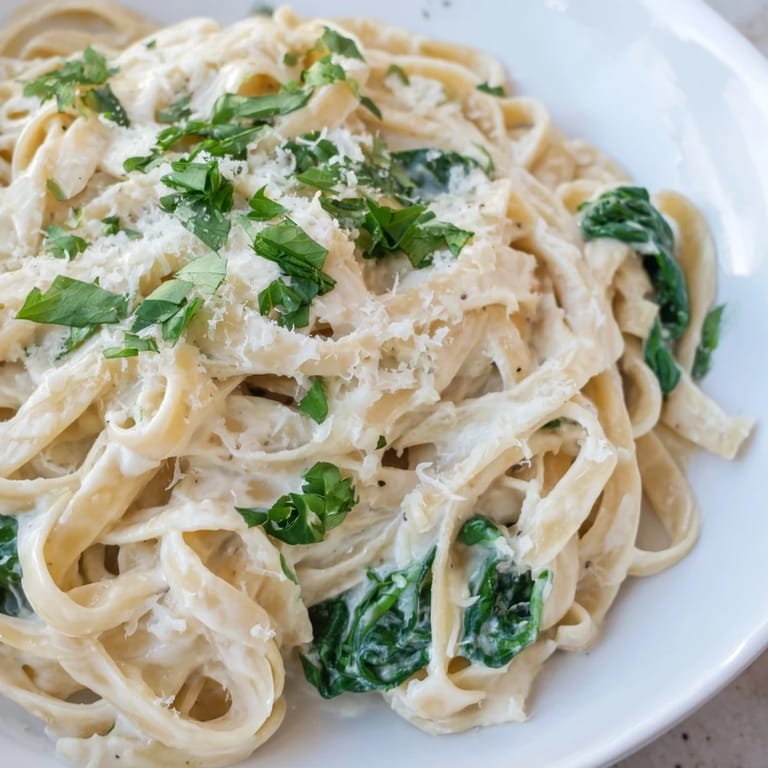
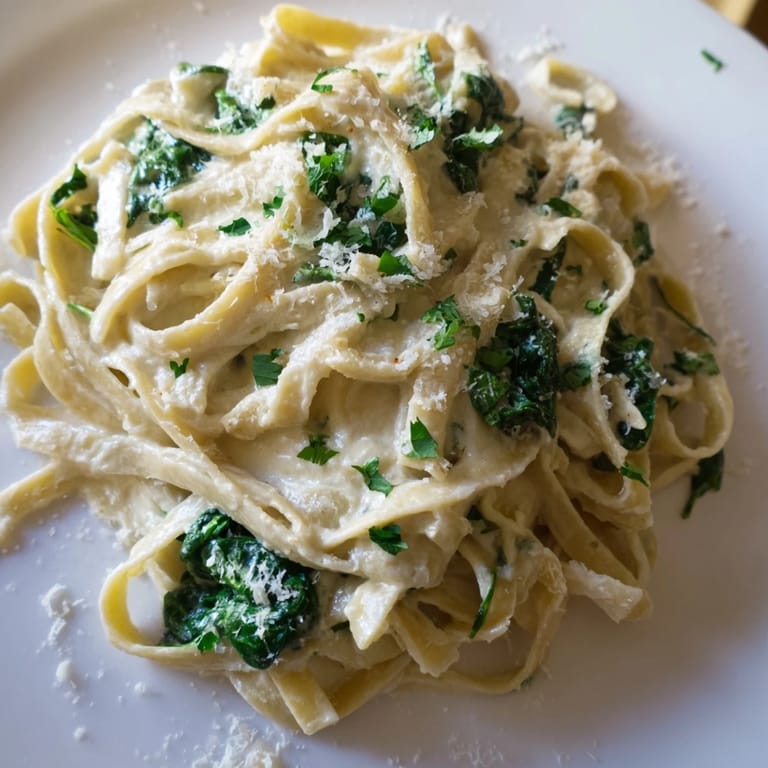
- Transfer to bowls or plates immediately while everything is still steaming, then top with extra Parmesan and a scattered handful of fresh parsley. The heat of the dish will make those final garnishes wake up and shine.
 Pin this
 My daughter asked for seconds before even finishing her first plate, which told me everything. This dish has a quiet elegance that makes people feel cared for, like you spent hours in the kitchen when really you just spent thirty minutes being intentional.
Why Fresh Spinach Matters
Frozen spinach will make your sauce watery because it releases too much liquid as it thaws and cooks. Fresh baby spinach is tender, requires almost no cooking, and adds a subtle vegetal sweetness that plays beautifully against the richness of the cream and cheese. I learned this after one disappointing batch, and I've never looked back.
The Science of Emulsification
What makes this sauce cling to the pasta instead of sliding off is a process called emulsification, where the starch from the pasta water helps the fat (butter and cream) and water bind together. This is why that reserved pasta water is genuinely essential, not just a suggestion. The cream cheese also acts as an emulsifier, keeping everything smooth and preventing the sauce from breaking into greasy puddles.
Variations That Sing
Once you master the base, this dish becomes a canvas. I've stirred in sautéed mushrooms for earthiness, added crispy bacon for salt and smoke, and even experimented with roasted cherry tomatoes for brightness. The foundation is strong enough to support your creativity without falling apart. Use these ideas as a jumping-off point, or invent your own combinations based on what's in your kitchen.
- Sautéed mushrooms add deep umami without overpowering the delicate cheese sauce.
- Grilled or pan-seared chicken breast turns this into a more substantial meal.
- Sun-dried tomatoes or roasted red peppers bring color and a subtle sweetness that complements the nutmeg beautifully.
 Pin this
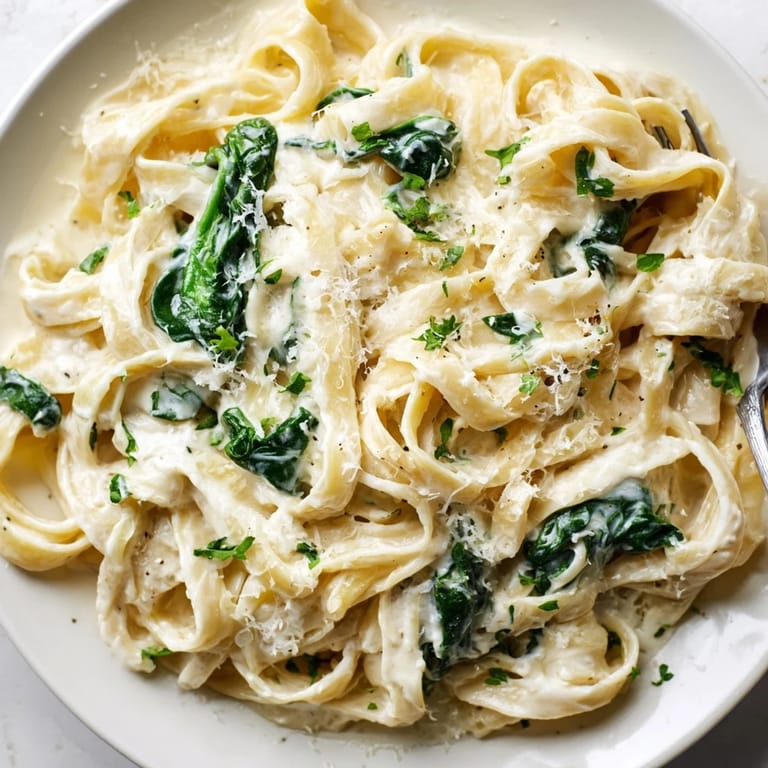
 This is the kind of recipe that quietly becomes a staple, the one you make when you want to feel like you've done something special without the stress. It reminds us that sometimes the most elegant meals are also the most honest ones.
Recipe FAQs
- → What type of pasta works best?
Fettuccine is ideal for holding the creamy sauce, but similar flat noodles like linguine can be used as alternatives.
- → How can I keep the sauce smooth?
Whisk the cream cheese thoroughly into the warm butter and cream mixture to prevent lumps and ensure a smooth texture.
- → Can I adjust the sauce consistency?
Add reserved pasta water gradually to loosen the sauce without losing its richness, allowing it to coat the pasta perfectly.
- → Is fresh spinach necessary?
Fresh baby spinach is preferred for its tenderness and vibrant color, but frozen spinach can be used if well-drained.
- → What garnishes complement this dish?
Extra grated Parmesan and chopped fresh parsley add flavor and a fresh appearance, enhancing the overall experience.