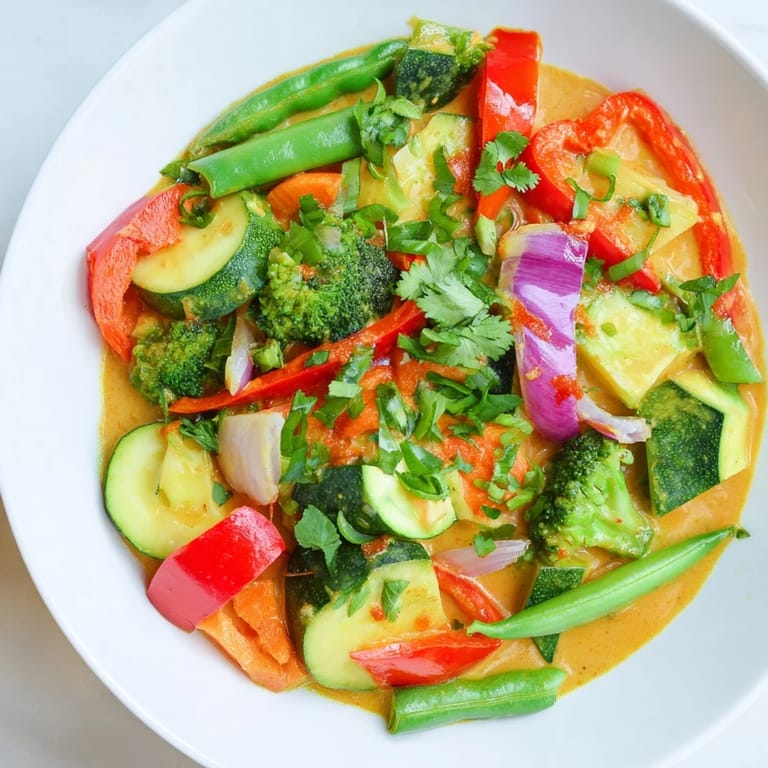
 Pin this
 I was craving something warm and comforting one rainy evening, and all I had were a few lonely vegetables in the crisper drawer. I didnt want takeout, but I also didnt want plain steamed veggies. Thats when I remembered a can of coconut milk hiding in the pantry and a jar of curry paste I had bought on a whim months ago. I threw everything together without a plan, and the kitchen filled with this incredible aroma that made me feel like I was in a cozy little cafe somewhere far away. That night, I realized you dont need a fancy recipe to create something truly delicious.
I remember making this for a friend who swore she didnt like curry. She was skeptical at first, eyeing the bright yellow sauce with suspicion, but after one bite she went quiet in that way people do when theyre genuinely surprised by how good something tastes. She ended up eating two bowls and texted me the next day asking for the recipe. Now she makes it at least once a week, and every time she does, she sends me a photo of her bubbling pot with a little heart emoji.
Ingredients
- Red bell pepper: Adds a subtle sweetness that balances the heat from the curry paste, and it holds its shape beautifully without turning mushy.
- Carrot: Brings an earthy sweetness and a satisfying bite, but make sure to slice it thin so it cooks evenly with the other vegetables.
- Zucchini: Soaks up the coconut sauce like a sponge and adds a tender texture that contrasts nicely with the crunchier vegetables.
- Broccoli: Florets trap pockets of sauce in their little crevices, making every bite extra flavorful and hearty.
- Snap peas: These add a fresh, crisp pop that keeps the dish from feeling too heavy or one note.
- Red onion: Softens into sweet, silky ribbons that melt into the sauce and add depth to the base.
- Coconut oil: Use this instead of regular oil because it reinforces the coconut flavor and can handle the high heat without burning.
- Garlic: Freshly minced garlic is non negotiable here, it blooms in the oil and fills the kitchen with that irresistible savory aroma.
- Fresh ginger: Grating it releases oils that add warmth and brightness, balancing the richness of the coconut milk.
- Red curry paste: This is where the magic happens, providing layers of spice, tang, and complexity in just a couple of tablespoons.
- Ground turmeric: Adds a golden hue and earthy undertone that makes the whole dish feel warm and healing.
- Ground cumin: Brings a smoky, slightly nutty flavor that deepens the curry base.
- Ground coriander: Offers a light citrusy note that brightens the heavier spices and ties everything together.
- Coconut milk: Always use full fat for a creamy, luscious sauce, the low fat version will taste thin and watery.
- Vegetable broth: Thins the sauce just enough so it coats the vegetables without being too thick or cloying.
- Soy sauce or tamari: A splash adds umami and saltiness that makes the flavors pop, use tamari if you need it gluten free.
- Fresh lime juice: Stir this in at the end to wake up all the flavors and add a bright, tangy finish.
- Fresh cilantro: Some people love it, some people hate it, but if you love it, it adds a fresh herbaceous note that completes the dish.
- Lime wedges: Serve these on the side so everyone can squeeze a little extra brightness over their bowl.
Tired of Takeout? 🥡
Get 10 meals you can make faster than delivery arrives. Seriously.
One email. No spam. Unsubscribe anytime.
Instructions
- Start with the aromatics:
- Heat the coconut oil in your largest skillet until it shimmers, then add the red onion and let it soften and turn translucent. The kitchen will start to smell sweet and inviting almost immediately.
- Build the flavor base:
- Toss in the garlic and ginger, stirring constantly so they dont stick to the pan. After about a minute, theyll turn fragrant and golden, and thats your cue to move on.
- Bloom the spices:
- Add the curry paste, turmeric, cumin, and coriander, stirring everything together until the spices coat the aromatics and the oil turns a deep, vibrant orange. This step releases all those essential oils and makes the whole dish come alive.
- Add the heartier vegetables:
- Toss in the bell pepper, carrot, zucchini, and broccoli, stirring them around so they get coated in the spice mixture. Let them sauté for a few minutes until they start to soften and pick up color.
- Pour in the liquid:
- Add the coconut milk and vegetable broth, stirring to combine everything into a smooth, creamy sauce. Bring it to a gentle simmer, not a rolling boil, so the vegetables cook evenly without breaking apart.
- Finish with the tender vegetables:
- Stir in the snap peas and soy sauce, then cover the pan and let everything simmer together for about 10 minutes. The vegetables should be tender but still have a little bite, and the sauce should be thick enough to coat the back of a spoon.
- Add the final touches:
- Remove the pan from the heat and stir in the lime juice, then taste and adjust the salt and pepper. The lime juice brightens everything and ties all the flavors together in a way that feels complete.
- Serve it up:
- Ladle the curry into bowls, sprinkle with fresh cilantro, and serve with lime wedges on the side. Pair it with steamed rice or quinoa if you want something to soak up all that delicious sauce.
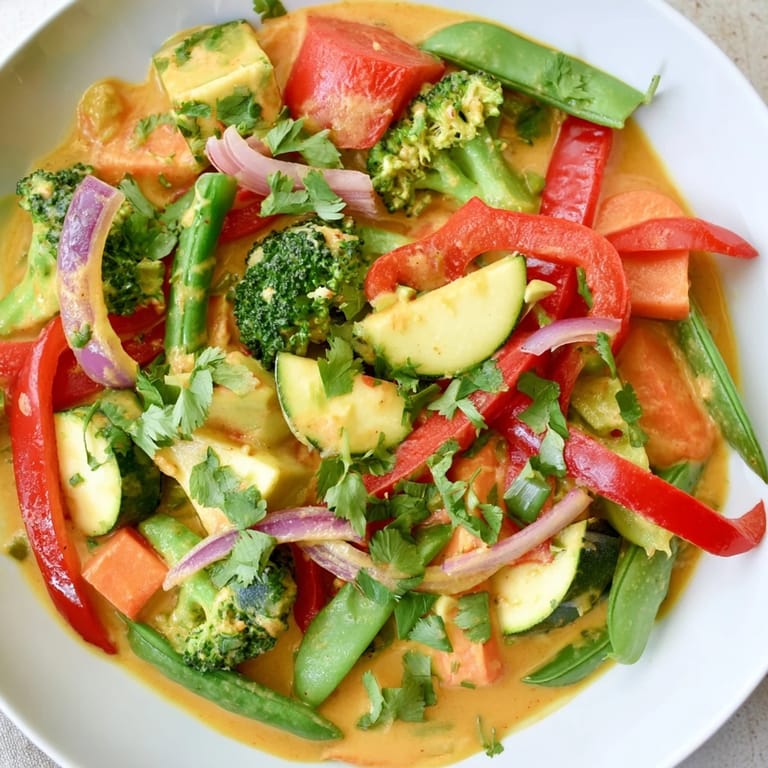 Pin this
 One winter evening, I made a big pot of this curry and invited a few friends over without much fanfare. We sat around the table with mismatched bowls, spooning the curry over rice and talking about nothing in particular. Someone said it felt like a hug in a bowl, and everyone agreed. That night, the recipe became more than just dinner, it became a little tradition we still come back to whenever we need comfort and connection.
Customizing Your Curry
The beauty of this recipe is that you can swap in whatever vegetables you have on hand. Ive used cauliflower, green beans, mushrooms, and even sweet potato with great results. If you want to add protein, chickpeas or cubed tofu work wonderfully, just toss them in during the simmering step so they can soak up the sauce. Dont be afraid to make it your own, this curry is forgiving and adaptable.
Adjusting the Heat Level
If youre sensitive to spice, start with just one tablespoon of curry paste and taste as you go. You can always add more, but you cant take it away once its in there. On the other hand, if you love heat, add a pinch of red pepper flakes or a sliced Thai chili when you bloom the spices. Ive learned that everyone has a different tolerance, so I always keep extra curry paste on the table for people to customize their own bowls.
Storing and Reheating
This curry tastes even better the next day after all the flavors have had time to meld together. Store leftovers in an airtight container in the fridge for up to four days, or freeze individual portions for up to three months. When reheating, add a splash of vegetable broth or water to loosen the sauce, and warm it gently over low heat so the vegetables dont turn to mush.
- If the sauce separates after refrigeration, just stir it well and it will come back together when heated.
- Freeze in single serving containers so you can grab a quick lunch or dinner whenever you need it.
- Garnish with fresh cilantro and a squeeze of lime after reheating to bring back that bright, just made flavor.
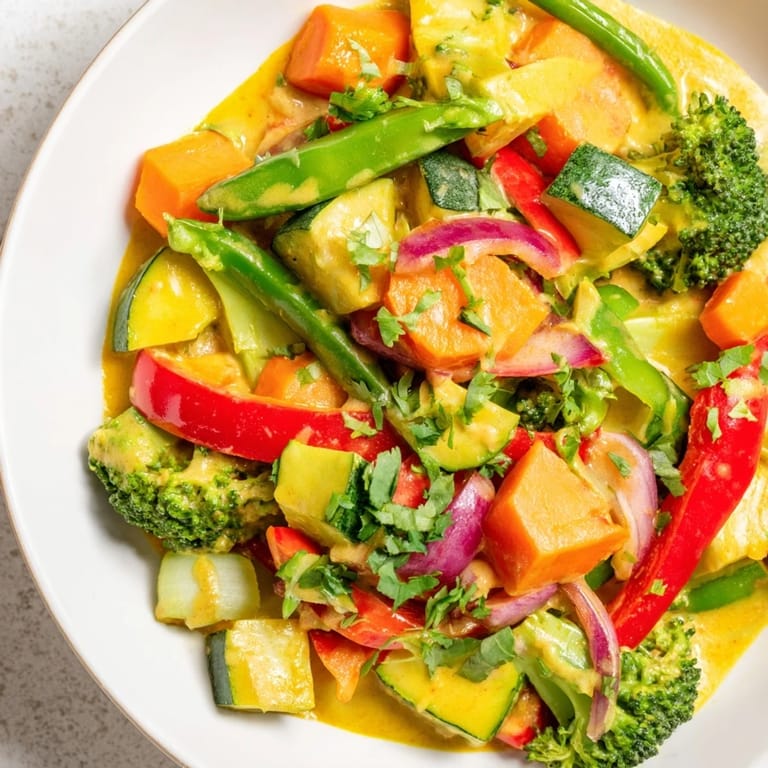 Pin this
 This curry has become my go to whenever I want something that feels special without requiring much effort. It reminds me that the best meals are often the ones we throw together with love, a little intuition, and whatever we have on hand.
Recipe FAQs
- → What vegetables work best in this dish?
Bell peppers, carrots, zucchini, broccoli, snap peas, and red onion create a colorful, flavorful mix, but you can customize with cauliflower, green beans, or mushrooms.
- → How can I adjust the spiciness?
Modify the amount of red curry paste to suit your heat preference or choose a mild curry paste for a gentler flavor.
- → Can I add protein to this meal?
Yes, adding chickpeas or tofu during simmering boosts protein while complementing the vegetable medley.
- → What sides pair well with this dish?
Steamed jasmine rice, quinoa, or warm naan bread balance the creamy curry and absorb the delicious sauce.
- → Are there allergen considerations?
This dish contains soy in the sauce; substitute coconut aminos if needed. Also avoid if allergic to coconut milk or certain curry paste ingredients.