 Pin this
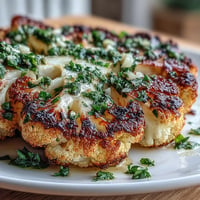
 The first time I made this sauce, I stood in my kitchen absolutely confused about why the squash needed to roast first when I could just boil it faster. But when those caramelized edges came out of the oven and hit the blender with everything else, the difference hit me immediately. That roasting time transforms squash from simple vegetable into something that tastes like it has been simmering for hours. Now it is the only way I make it, even when I am impatient and hungry.
My roommate walked in while I was blending the sauce and asked what smelled so incredible. She stood there watching the steam rise off the blender, asking questions about roasting times and cream ratios. We ended up eating dinner standing at the counter, too hungry to bother setting the table, passing forks back and forth. That impromptu dinner became a monthly tradition once fall weather hits.
Ingredients
- 1 medium butternut squash: The sweetness here is the foundation of the whole dish, so pick one that feels heavy for its size
- 2 cloves garlic, unpeeled: Roasting them in their skins keeps them from burning and makes them squeeze out like soft butter
- 1 small yellow onion: Diced small so it disappears into the sauce while adding that essential savory base
- 1 tablespoon fresh sage: Fresh sage holds up better to roasting than dried, but use half the amount if you only have dried
- 2 tablespoons fresh parsley: This bright garnish cuts through the rich sauce right at the end
- 12 oz dried fettuccine or tagliatelle: The wider noodles hold onto this thick sauce better than spaghetti ever could
- 2 tablespoons olive oil: One for roasting, one for sautéing the aromatics
- 1/2 cup heavy cream: Full fat coconut milk works beautifully if you need it vegan, just expect a slightly nuttier finish
- 1/3 cup grated Parmesan: The saltiness here balances the squashs natural sweetness perfectly
- 3/4 cup vegetable broth: Start with less and add more as you blend to get the consistency exactly how you like it
- Salt and black pepper: The roasted squash needs a generous hand with seasoning to really shine
- Pinch of nutmeg: Optional, but it adds that warm background note people notice but cannot quite place
Tired of Takeout? 🥡
Get 10 meals you can make faster than delivery arrives. Seriously.
One email. No spam. Unsubscribe anytime.
Instructions
- Get the oven going:
- Preheat to 400°F and line a baking sheet with parchment, because this sticky squash will cling to bare metal
- Start the roasting:
- Spread the cubed squash and unpeeled garlic cloves on the sheet, drizzle with 1 tablespoon olive oil, sprinkle generously with salt and pepper, then toss until everything is coated
- Let the oven work:
- Roast for 25 to 30 minutes, flipping halfway through, until the squash is fork tender and those edges are turning golden brown
- Cook the pasta:
- Boil a large pot of salted water and cook the pasta according to the package, but remember to reserve 1/2 cup of that starchy water before draining
- Build flavor while the squash roasts:
- Heat the remaining olive oil in a large skillet over medium heat and sauté the diced onion and sage until the onion is soft and fragrant, about 4 minutes
- Make the magic happen:
- Squeeze the roasted garlic from its skins, then blend it with the squash, sautéed onion and sage, vegetable broth, and cream until completely smooth
- Finish the sauce:
- Pour the sauce back into the skillet over low heat, stir in the Parmesan and nutmeg if using, then season with salt and pepper
- Bring it together:
- Add the cooked pasta to the sauce and toss gently, adding pasta water if the sauce needs loosening, then warm everything through for 2 to 3 minutes
- Serve it up:
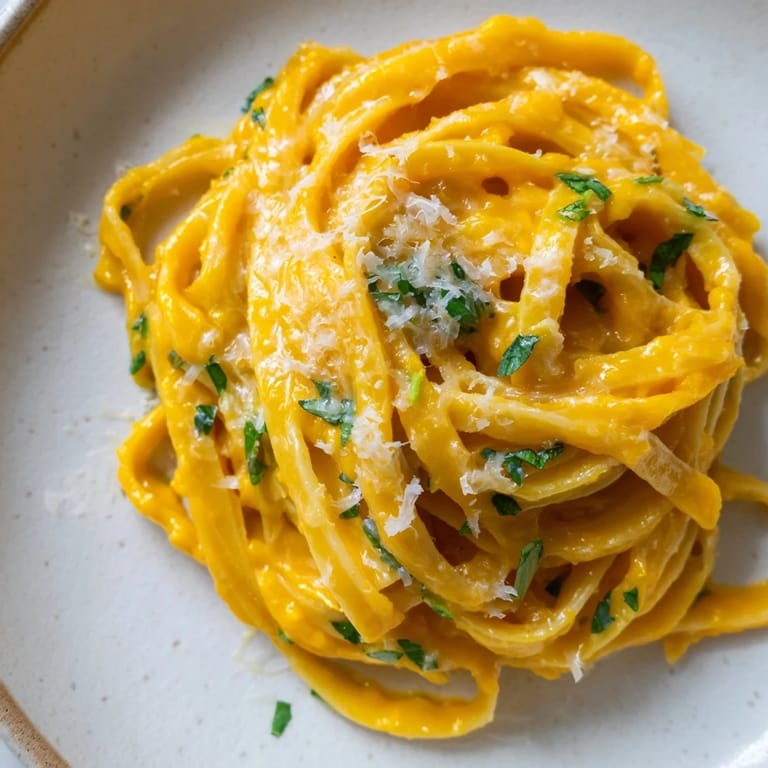
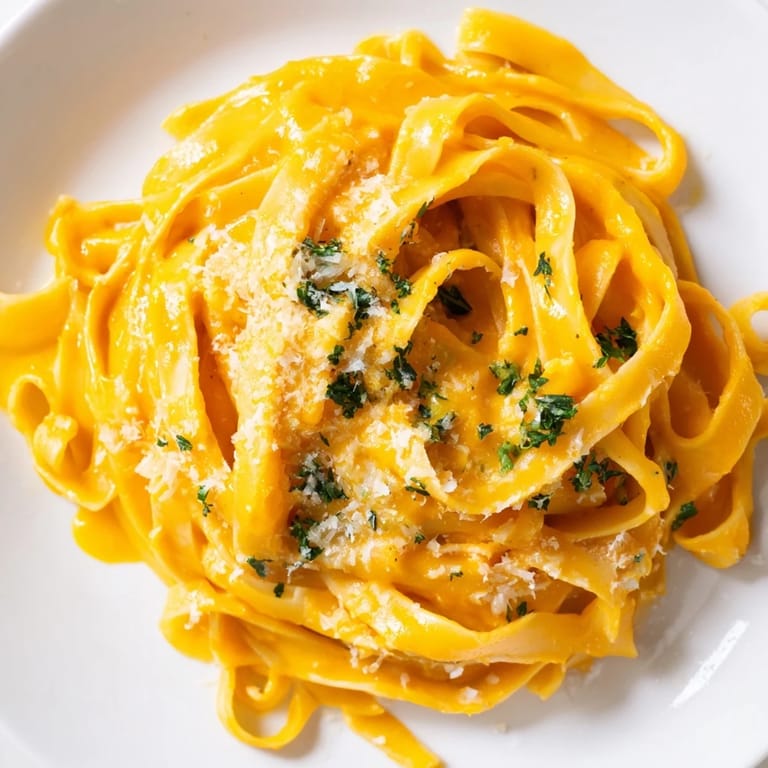
- Plate immediately topped with chopped parsley and extra Parmesan while the steam is still rising
 Pin this
 This pasta turned into what I make when friends need comforting, whether it is a bad breakup or just a rainy Sunday. Something about that sweet, creamy sauce feels like being wrapped in a blanket. Last November I made three batches in one week for different people who just needed a warm meal and someone to listen.
Make It Your Own
I have added sautéed mushrooms to the sauce for earthiness, and toasted walnuts on top bring this incredible crunch that plays off the soft pasta. Fresh spinach stirred in right at the end wilts beautifully and makes the whole thing feel slightly virtuous, though I am not sure adding greens to a cream sauce really counts as healthy.
Perfect Pairings
A crisp white wine like Pinot Grigio cuts through the richness without competing with the squash. On the side, a simple arugula salad dressed with lemon and olive oil brightens the whole plate. I have also served this alongside roasted chicken for non vegetarians, and the combination works surprisingly well.
Storage And Reheating
The sauce actually develops deeper flavor overnight, so do not hesitate to make it a day ahead. Store sauce and pasta separately in the refrigerator for up to 4 days. When reheating, add a splash of water or broth because the sauce thickens in the fridge.
- Freeze the sauce without cream for up to 3 months, then add fresh cream when reheating
- The pasta texture suffers in the freezer, so only freeze the sauce portion
- Reheat gently over low heat, stirring frequently to prevent the cream from separating
 Pin this
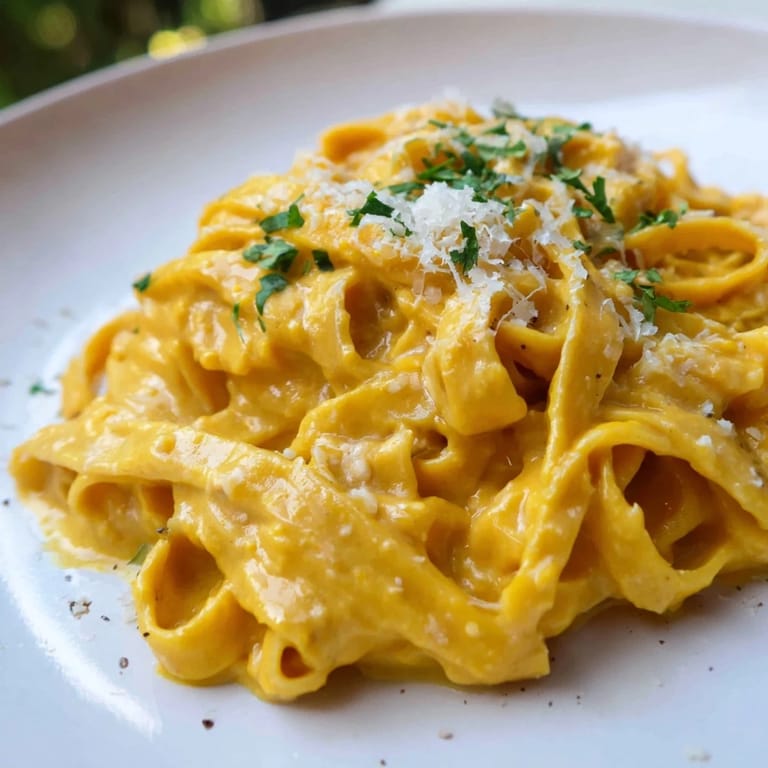
 There is something deeply satisfying about turning a humble winter squash into something this elegant and comforting. This recipe has earned its permanent place in my fall rotation, and I hope it finds a home in yours too.
Recipe FAQs
- → Can I make this dish vegan?
Absolutely. Substitute heavy cream with full-fat coconut milk and use nutritional yeast or vegan Parmesan instead of dairy cheese. The sauce remains creamy and satisfying while being entirely plant-based.
- → What pasta shapes work best?
Wide noodles like fettuccine, tagliatelle, or pappardelle are ideal as they catch the velvety sauce beautifully. Short shapes like penne or rigatoni also work if you prefer something different.
- → Can I prepare the sauce ahead?
Yes. Make the sauce up to 2 days in advance and store refrigerated in an airtight container. Reheat gently with a splash of pasta water or broth before tossing with freshly cooked pasta.
- → How do I prevent the sauce from being too thick?
The roasted squash naturally thickens the sauce. If it becomes too dense, gradually add reserved pasta water or additional vegetable broth until you reach your desired consistency.
- → What herbs enhance this dish?
Fresh sage is the classic pairing, adding earthy notes that complement squash's sweetness. Thyme, rosemary, or a bay leaf during roasting also work wonderfully. Finish with parsley for brightness.
- → Can I freeze the sauce?
The sauce freezes well for up to 3 months. Cool completely, transfer to freezer-safe containers, leaving space for expansion. Thaw overnight in the refrigerator before reheating.