 Pin this
 There's a particular magic to standing outside a fish and chips shop on a Friday night, the smell of vinegar and hot oil hitting you before you even open the door. I learned to make this at home years ago when a rainy evening left me craving that exact experience, and what started as nostalgia turned into something better—control over the crispness, the oil temperature, the exact moment to pull everything golden from the pan. Now when I make it, the kitchen fills with that same anticipation, and somehow it tastes like both comfort and discovery.
I made this for friends who'd just moved into their first flat, and we ate it straight from the paper with our hands while sitting on the kitchen floor because the furniture hadn't arrived yet. The batter crackled when we bit into it, and someone said it tasted exactly like the chip shops near their childhood home—which is the highest compliment fish and chips can receive.
Ingredients
- White fish fillets (cod or haddock): These firm, flaky fish hold their structure during frying and won't dissolve into the oil like softer varieties might; look for fillets that are roughly the same thickness so they cook evenly.
- All-purpose flour and cornstarch: The combination of flour and cornstarch is what creates that signature ultra-crisp, delicate coating—the cornstarch browns faster and gets impossibly crunchy.
- Baking powder: This is the secret to an airy batter that stays light and shatteringly crisp rather than dense and heavy.
- Cold sparkling water: The carbonation creates tiny bubbles that fry into crispy pockets; cold temperature keeps the batter from absorbing too much oil, which I learned only after making soggy batches with warm water.
- Russet or Maris Piper potatoes: Starchy potatoes create chips with that fluffy interior; waxy potatoes will give you dense, gluey results instead.
- Sunflower or vegetable oil: High heat-tolerance oils are non-negotiable here, as the temperature gets hot enough that olive oil would burn and taste acrid.
- Malt vinegar: The acidity cuts through the richness of the fried food in a way that feels essential, almost like it's part of the dish itself.
Tired of Takeout? 🥡
Get 10 meals you can make faster than delivery arrives. Seriously.
One email. No spam. Unsubscribe anytime.
Instructions
- Soak the cut potatoes:
- Place your thick-cut chips into cold water and let them sit for at least 15 minutes—this removes surface starch that would cause sticking and uneven browning. Pat them completely dry with a clean towel before frying, as any moisture will cause the oil to spit.
- First fry the chips gently:
- Heat your oil to 150°C and fry the potatoes in batches for 4–5 minutes until they're tender but still pale; they'll finish cooking in the second fry. This two-stage process is what separates crispy-outside, fluffy-inside chips from dense potato sticks.
- Whisk the batter smooth:
- Combine flour, cornstarch, baking powder, salt, and pepper, then add cold sparkling water gradually while whisking, stopping when the batter coats the back of a spoon with a thick, even layer. Lumpy batter is fine; overmixing creates tough, rubbery results.
- Crank the heat for the second fry:
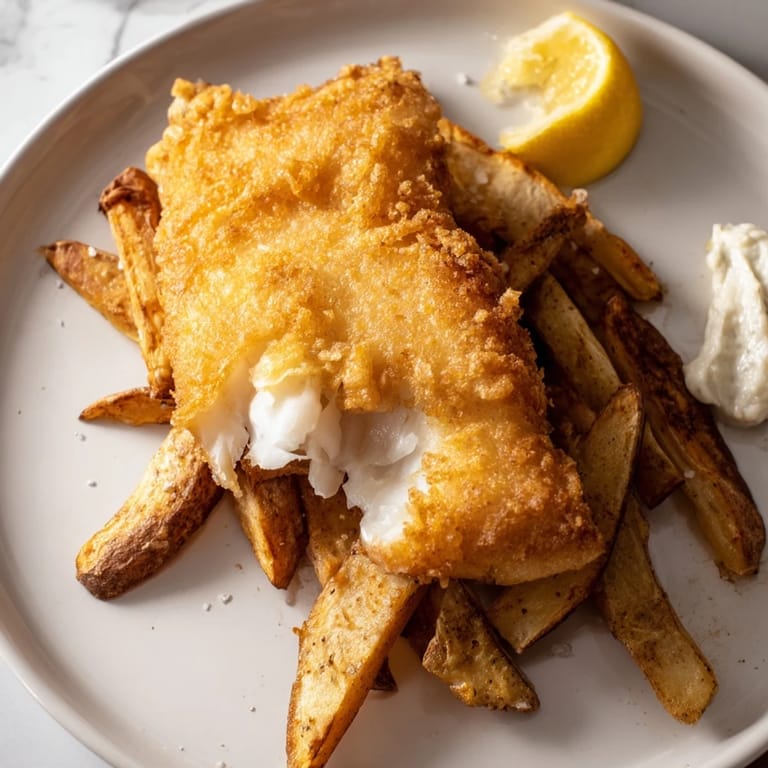
- Increase your oil temperature to 190°C and fry the parcooked chips again in batches for 2–3 minutes until they're golden, crackling, and impossible to resist straight from the paper towels. Sprinkle with sea salt immediately while they're still steaming.
- Coat and fry the fish:
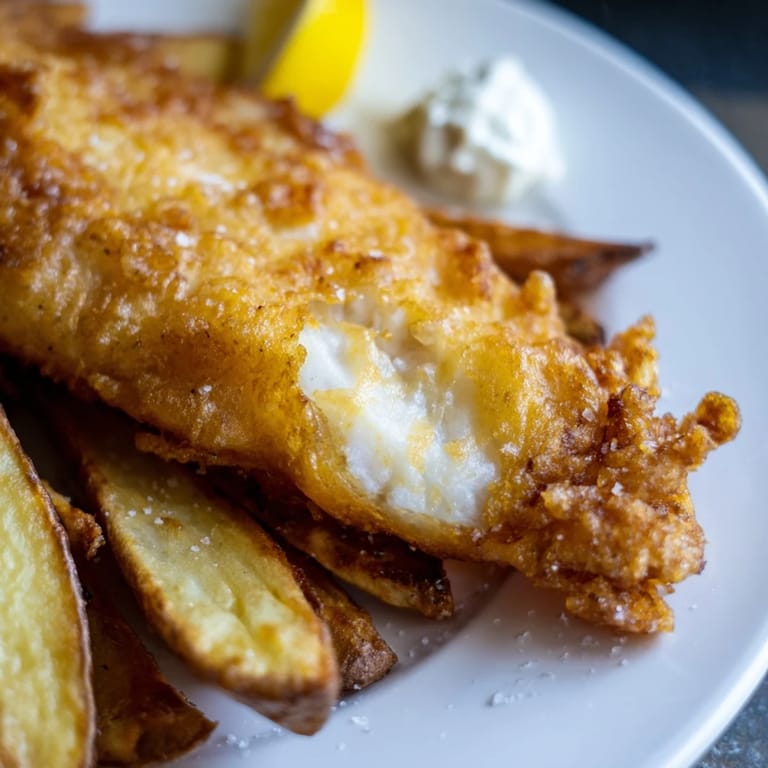
- Pat your fish fillets completely dry, dust lightly with flour (this helps the batter stick), then dip each one into the batter, letting excess drip off for a moment before sliding it into the hot oil. Fry for 5–7 minutes, turning once, until the exterior is deep golden brown and the batter sounds crisp when you tap it with a fork.
 Pin this
 This dish became my comfort food during a period when I needed something that felt both ordinary and special, something that could turn an ordinary Tuesday into an event just by existing on the plate. The combination of salt, vinegar, and golden crispness does something to the soul that fancy food sometimes misses entirely.
The Double-Fry Secret
The reason British fish and chips taste nothing like the soggy take-away version you might expect is that two-stage frying process—the first gentle fry cooks the potato through and begins the browning, while the second hot fry creates an almost impossible crispness that stays crispy even after it cools. I spent months wondering why my homemade chips never matched the shop version before I realized I was frying them once and calling it done. The double fry is not a suggestion or a professional flourish; it's the entire technique.
Why Cold Water and Carbonation Matter
The batter relies on cold liquid for two reasons that seem small but change everything: cold temperature slows gluten development, which keeps the coating tender rather than tough, and carbonation creates tiny bubbles that fry into crispy pockets instead of dense gluten strands. Beer batter works beautifully for this reason, which is why pub-style versions often taste slightly different—the fermentation and alcohol add a subtle flavor depth that plain sparkling water can't quite match. Neither version is wrong; they're just different expressions of the same excellent idea.
Serving and Timing
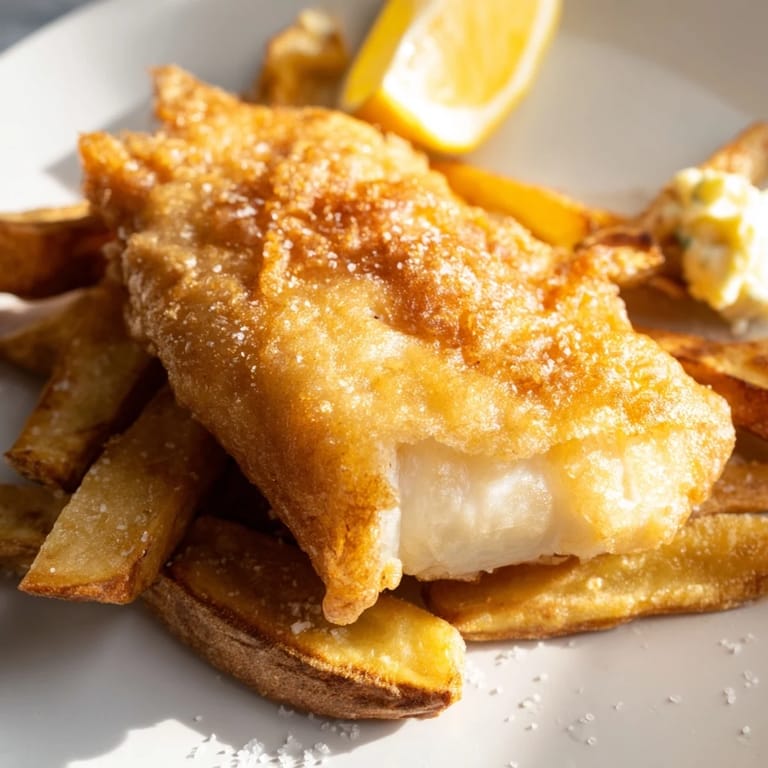
This dish exists in a narrow window of perfection—everything must be eaten within minutes of finishing the frying, while the batter is still crackling and the chips are still steaming inside. Set the table before you start the final frying, prep your vinegar and sauces, and get people ready to eat, because the moment they come out of the oil is the moment to serve. The beauty of fish and chips is that simplicity—good oil, good fish, good potatoes, and immediate consumption create something that doesn't need anything else, though malt vinegar and lemon wedges are traditional for a reason.
- Mushy peas or regular peas add a bright, slightly sweet contrast that feels like the meal is actually complete.
- A crisp white wine or chilled English ale pairs with the richness in a way that feels almost traditional, though this works just as well with a cold glass of anything you like.
- Tartar sauce is optional but transforms the dish for people who grew up eating it this way.
 Pin this
 Making fish and chips at home is the kind of cooking that reminds you why certain dishes never go out of style—they work, they're deeply satisfying, and they taste like someone cared enough to get the details right. Once you've pulled golden, crackling fish from hot oil, you'll understand why people have been making this the same way for over a century.
Recipe FAQs
- → What type of fish works best for this dish?
White fish such as cod or haddock are ideal; they have a mild flavor and firm texture that holds well during frying.
- → Why is the batter made with sparkling water or beer?
Carbonation helps create a light and crispy coating by adding air bubbles to the batter.
- → How do you achieve crispy and fluffy chips?
Double-frying the thick-cut potatoes—first at a lower temperature, then at a higher one—ensures a crisp outside and soft inside.
- → Can the dish be prepared ahead of time?
For best texture, fry fish and chips just before serving, as they lose crispness when cooled.
- → What are some traditional accompaniments?
Malt vinegar, lemon wedges, tartar sauce, and mushy peas complement the flavors and add variety to each bite.