 Pin this
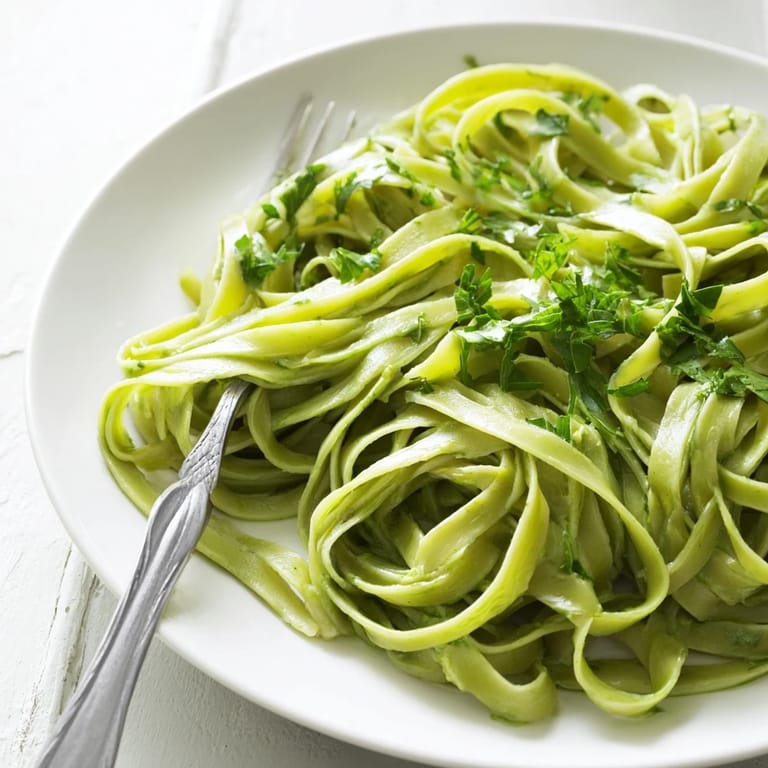
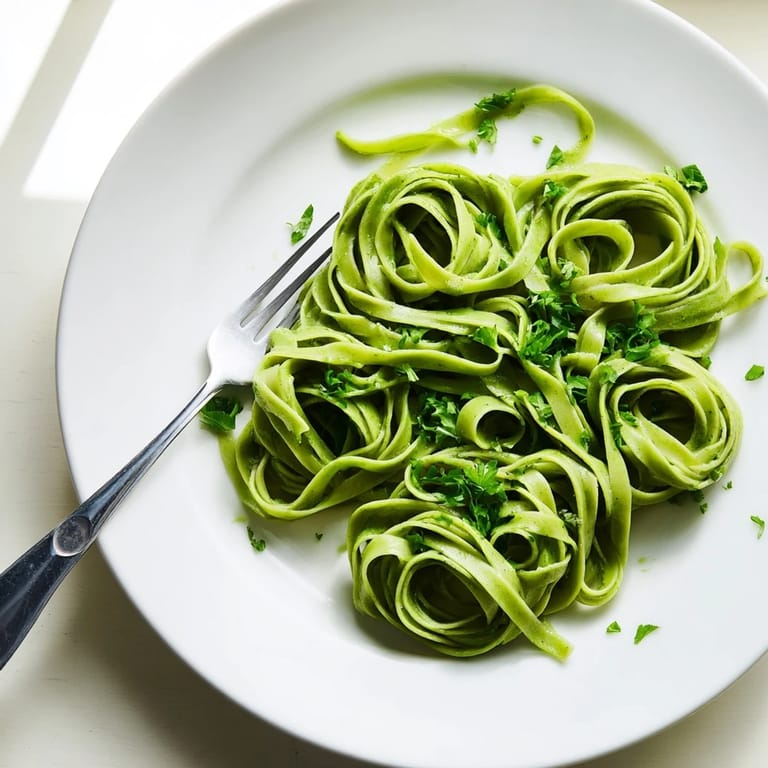
 The first time I made spinach pasta, my kitchen counter looked like a crime scene with green everywhere. But when those emerald fettuccine hit the boiling water and emerged like ribbons of silk, I completely forgot about the mess. My daughter asked if we were having noodles from a fairy tale, and honestly, she wasn't wrong. There's something magical about pasta that actually tastes like the garden it came from.
Last spring, I made a double batch for a dinner party and served it with nothing but brown butter and parmesan. My friend Sarah, who claims she doesn't even like spinach, went back for thirds. Sometimes the simplest preparations reveal the best ingredients. Now it's become our go-to when we want to make a regular Tuesday night feel like a celebration.
Ingredients
- Fresh baby spinach leaves: The tender baby leaves blend into a silky smooth puree without any fibrous texture, and they create that stunning bright green color that cooked mature spinach just can't achieve.
- Large eggs: Room temperature eggs incorporate more easily into the flour, creating a dough that's smoother to work with and less likely to tear as you roll it thin.
- Italian 00 flour: This finely ground flour creates the most tender pasta with just the right amount of chew, though all-purpose flour works in a pinch if you can't find it.
- Semolina flour: Optional but adds a lovely texture and helps the pasta hold its shape better, especially if you're making filled pasta like ravioli.
- Fine sea salt: Enhances the natural flavor of the spinach without making the dough taste salty, bringing everything together beautifully.
Tired of Takeout? 🥡
Get 10 meals you can make faster than delivery arrives. Seriously.
One email. No spam. Unsubscribe anytime.
Instructions
- Prepare the spinach:
- Blanch those fresh leaves in boiling water for just 30 seconds until they collapse like a spent balloon, then plunge them into ice water to stop the cooking and preserve that gorgeous green color before squeezing out every drop of moisture you possibly can.
- Make a smooth puree:
- Either chop the spinach finely with a knife or buzz it in your food processor until it becomes a silky paste without any visible leaf bits, which will ensure your pasta dough has an even color throughout.
- Build the well:
- Mound your flours and salt on a clean counter like a little volcano, then use your fingers to create a deep well in the center where you'll add the eggs and spinach puree.
- Mix the dough:
- Start whisking the eggs and spinach together with a fork, gradually pulling in bits of flour from the inner walls of your well until a shaggy, sticky dough begins to form.
- Knead with patience:
- Use the heel of your hand to push the dough forward and away from you, fold it back over itself, and repeat for 8 to 10 minutes until the dough transforms from rough and tacky to smooth and silky, like a baby's cheek.
- Let it rest:
- Wrap your dough tightly in plastic and let it relax on the counter for 30 minutes, which allows the gluten strands to settle and makes rolling infinitely easier.
- Roll and shape:
- Pass the dough through your pasta machine or roll it thin with a rolling pin until you can see your hand through it, then cut it into your desired shape with a knife or pasta cutter.
- Cook quickly:
- Fresh pasta cooks in just 1 to 2 minutes in vigorously boiling salted water, so stay right by the pot and fish it out the moment it floats to the surface and feels tender when you bite into a piece.
 Pin this
 My grandmother would stand at the stove testing piece after piece, declaring it perfect when the pasta floated just so. Now I find myself doing the exact same thing, carrying her forward in every batch I roll out. Food has this way of holding onto memories long after the people are gone.
Choosing Your Pasta Shape
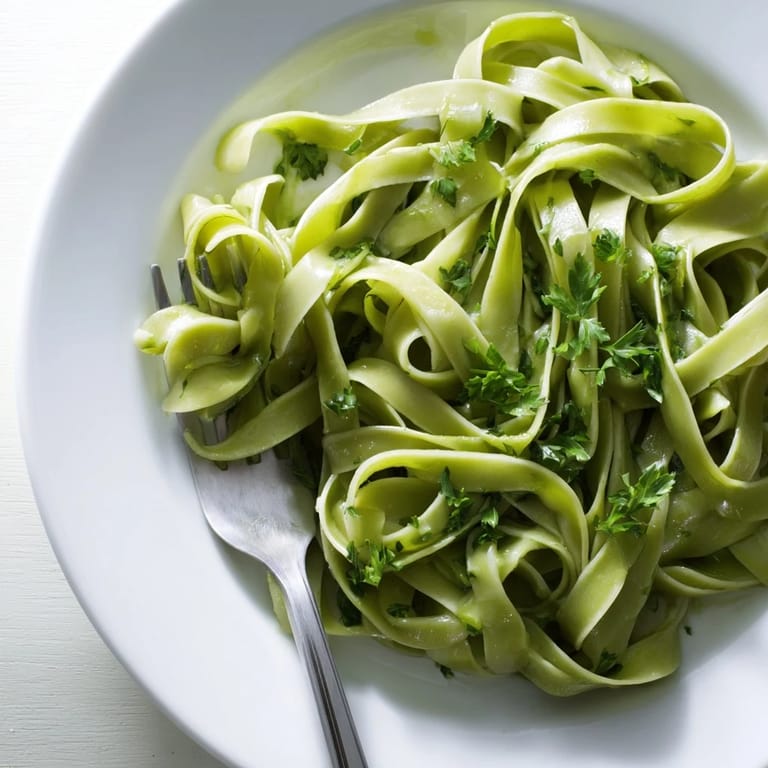
Spinach dough works beautifully for almost any pasta shape, but some really showcase that gorgeous green better than others. Long noodles like fettuccine or tagliatelle let the color shine, while filled pastas like ravioli create that beautiful contrast between the green wrapper and the creamy filling inside.
Storage and Make Ahead Tips
You can make the dough up to 24 hours ahead and keep it wrapped tight in the refrigerator, which actually makes it even easier to work with. Once cut, lay fresh pasta on a baking sheet dusted with semolina and freeze it flat, then transfer to a bag for storage up to a month.
Sauce Pairings That Shine
The earthiness of spinach pasta pairs beautifully with rich cream sauces or brown butter with sage. Keep it simple and let that stunning color be the star of the show.
- Brown butter with fresh sage leaves and a shower of parmesan
- Light cream sauce with peas and fresh mint
- Simple olive oil, garlic, and red pepper flakes
 Pin this
 There's something deeply satisfying about eating pasta you made with your own hands, especially when it's this stunningly beautiful. I hope this recipe brings as much joy to your table as it has to mine.
Recipe FAQs
- → Can I make spinach pasta dough without a food processor?
Yes, you can finely chop the blanched spinach with a knife until very fine, then mash it with a fork or pass it through a sieve before incorporating into the dough. A food processor just makes the puree smoother and faster.
- → How long does fresh spinach pasta dough last in the refrigerator?
Wrapped tightly in plastic wrap, the dough will keep in the refrigerator for up to 24 hours. Bring it to room temperature for about 15-20 minutes before rolling out, as cold dough can be stiffer to work with.
- → Can I freeze spinach pasta dough?
Yes, wrap the dough tightly in plastic wrap and place in a freezer bag. Freeze for up to 1 month. Thaw overnight in the refrigerator before using. You can also freeze cut pasta shapes on a baking sheet, then transfer to bags.
- → Why is my spinach pasta dough sticky?
The dough may be sticky if the spinach retained too much moisture after blanching, or if humidity is high. Simply sprinkle a small amount of flour and continue kneading until smooth. Add flour gradually to avoid drying out the dough.
- → What's the difference between 00 flour and all-purpose flour for pasta?
Italian 00 flour is finely ground with lower protein content, creating silkier, more tender pasta. All-purpose flour works but may produce slightly chewier results. For best texture, use 00 flour or a mix of 00 and semolina.
- → Can I use frozen spinach instead of fresh?
Frozen spinach can work but must be thoroughly thawed and squeezed extremely dry to remove excess water. The color may be less vibrant, and flavor slightly more muted than fresh baby spinach.