 Pin this
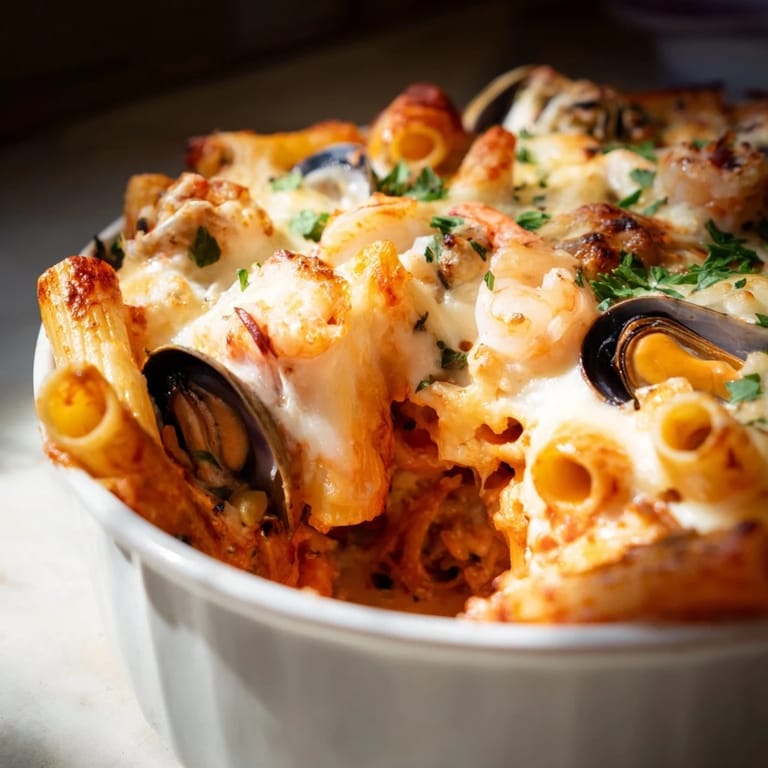
 There's something magical about the moment when a casserole dish comes out of the oven, steam rising and cheese bubbling at the edges. I discovered this seafood pasta bake on a rainy Thursday when I had a handful of thawed shrimp and mussels in the fridge and absolutely no desire to overthink dinner. What started as an improvisation became the dish I now make whenever I want to feel like I've done something special without spending hours in the kitchen.
I made this for my sister when she came to visit last spring, and she sat at the kitchen counter watching the cheese turn golden while we caught up properly for the first time in months. That comfortable silence when everyone's too busy eating to talk much—that's when I knew this recipe was a keeper.
Ingredients
- Penne or rigatoni, 300 g: Tubular shapes hold sauce better than delicate strands, and they soften just enough during baking without turning mushy if you undercook them slightly.
- Mixed seafood (shrimp, mussels, squid, scallops), 300 g: Buy what looks fresh and what you actually like eating; frozen thawed seafood works beautifully here and costs less.
- Olive oil, 2 tbsp: Use something you'd actually taste if it were on bread—good oil makes a real difference in the sauce base.
- Small onion, finely chopped: The sweetness mellows the tomato tang, so don't skip it even if you're in a rush.
- Garlic cloves, 2 minced: Fresh garlic blooms when it hits hot oil, and that aroma filling your kitchen is half the reward.
- Canned chopped tomatoes, 400 g: Canned is better than fresh here because the liquid and acidity are consistent; San Marzano varieties taste noticeably richer.
- Heavy cream, 150 ml: This softens the tomato's sharpness and makes the sauce coat everything like a hug.
- Tomato paste, 2 tbsp: A small amount concentrates flavor without making the sauce heavy or bitter.
- Dried oregano, 1 tsp: Mediterranean herb that whispers rather than shouts; dried works better here than fresh because the heat activates it.
- Chili flakes, 1/2 tsp: Optional, but a pinch adds warmth that makes people wonder what they're tasting.
- Salt and black pepper: Taste as you go because seafood and cream need different seasoning than tomato alone.
- Mozzarella, grated, 100 g: The melting workhorse that gets bubbly and golden; part skim works fine.
- Parmesan, grated, 40 g: The sharp partner that stops the cheese topping from tasting one-dimensional.
- Fresh parsley, chopped, 2 tbsp: A bright finish that makes the whole dish feel less heavy and more intentional.
Tired of Takeout? 🥡
Get 10 meals you can make faster than delivery arrives. Seriously.
One email. No spam. Unsubscribe anytime.
Instructions
- Heat the oven and prepare:
- Set your oven to 200°C and grease your baking dish so nothing sticks. This two-minute setup prevents the frustration of a beautiful dinner glued to ceramic.
- Cook pasta just shy of tender:
- Boil salted water and cook your pasta two minutes less than the box suggests. It'll continue softening in the oven, and you want it creamy, not blown apart.
- Build the sauce base:
- Warm olive oil in a large skillet, then sauté your chopped onion until it turns translucent and smells sweet. Add garlic for just one minute—any longer and it burns and turns bitter.
- Simmer the tomato foundation:
- Stir in your tomatoes, tomato paste, oregano, and chili flakes if using. Let this bubble gently for ten minutes, stirring now and then, until it thickens slightly and the raw tomato flavor softens.
- Cream and taste:
- Pour in your heavy cream and let it simmer for two minutes just to warm through. Taste now and adjust salt and pepper—this is your last chance before the seafood goes in.
- Add seafood gently:
- Fold in your mixed seafood carefully and cook for only two to three minutes until it turns opaque. Overcooked seafood becomes rubbery, so watch it closely and trust your instincts more than the timer.
- Combine everything:
- Toss your drained pasta with the sauce and seafood, then pour it all into your prepared baking dish. Spread it in an even layer so every bite has sauce and seafood.
- Top with cheese:
- Scatter your grated mozzarella and Parmesan evenly across the top. This is where the magic happens, so don't skip it or under-portion the cheese.
- Bake until golden:
- Slide it into the oven for eighteen to twenty minutes. You'll know it's ready when the cheese is golden and the sauce bubbles at the edges—that's the signal everything inside is hot through.
- Rest and finish:
- Let it sit for five minutes out of the oven so the layers set slightly and won't spill across the plate. Scatter fresh parsley on top just before serving for color and a bright herb note.
 Pin this
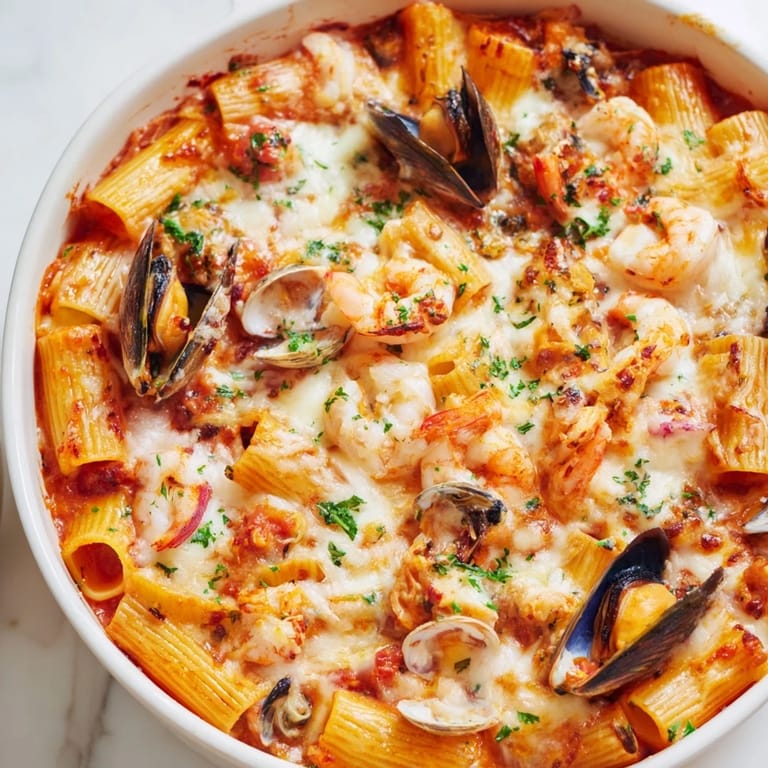
 What strikes me most about this dish is how it transforms simple ingredients into something that feels luxurious without pretense. My neighbor tasted it once and asked for the recipe, and now she makes it for her own dinners—that's the highest compliment a cook can get.
Seafood Selection Matters
The beauty of this recipe is its flexibility with seafood, but quality makes a real difference. I've made it with just shrimp on nights when that was all I had, and with a decadent mix of scallops and mussels when I felt splurging. Buy what smells fresh and appeals to you; frozen seafood thawed properly tastes almost identical to fresh and costs considerably less. The sauce is forgiving enough that you could swap out any component based on what's available or what you love.
Timing and Temperature
The entire dish comes together in under an hour, which makes it perfect for nights when you want something that tastes like you spent all afternoon cooking. The oven does most of the heavy lifting in those final twenty minutes, giving you time to set the table or pour wine. I've learned that every oven runs slightly differently, so check at eighteen minutes—if the cheese isn't golden and bubbling yet, give it two more and peek again.
Variations and Pairings
This recipe welcomes improvisation in ways that rigid instructions never allow. A splash of white wine added to the sauce before simmering deepens everything without tasting boozy, or you can substitute crème fraîche for heavy cream if you want something lighter and more tangy. Pair it with a crisp white wine like Pinot Grigio, or serve alongside a simple green salad to cut through the richness and cleanse your palate between bites.
- A handful of fresh basil stirred in at the very end tastes like you remembered an Italian grandmother's trick.
- Don't skip the five-minute rest after baking—it lets everything settle and makes plating cleaner.
- Leftovers reheat beautifully in a low oven, though honestly this rarely lasts long enough to find out.
 Pin this
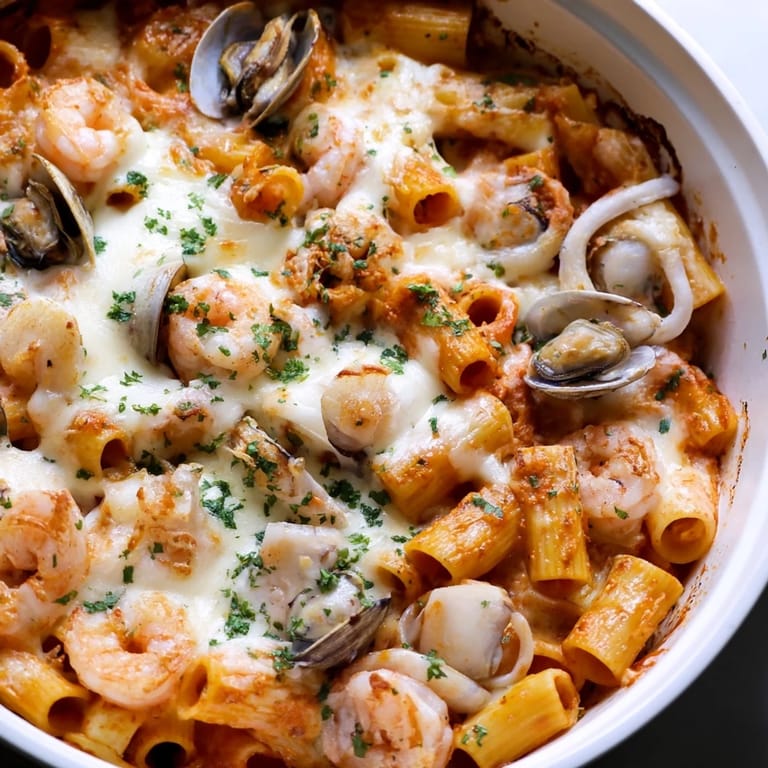
 This seafood pasta bake has become my answer to the question "what should I cook tonight?" when I want to feel accomplished without exhaustion. Every time I make it, someone asks for the recipe, and I'm always happy to share.
Recipe FAQs
- → What types of seafood work best for this bake?
A mix of shrimp, mussels, squid, and scallops works best, but feel free to adjust based on availability or preferences.
- → Can I use other pasta shapes besides penne or rigatoni?
Yes, sturdy pasta shapes like rigatoni, penne, or shell pasta hold up well in baking and absorb the sauce nicely.
- → How do I prevent the seafood from overcooking?
Gently fold in the seafood and cook only until just opaque before baking to keep it tender and avoid toughness.
- → Is it possible to add white wine to the sauce?
Yes, a splash of white wine before simmering enhances the sauce's flavor without overpowering the dish.
- → What can I substitute for heavy cream?
Crème fraîche or light cream can be used for a lighter version while maintaining a creamy texture.
- → How long should the bake rest after cooking?
Let the dish rest for about 5 minutes after baking to allow flavors to meld and the topping to settle.