 Pin this
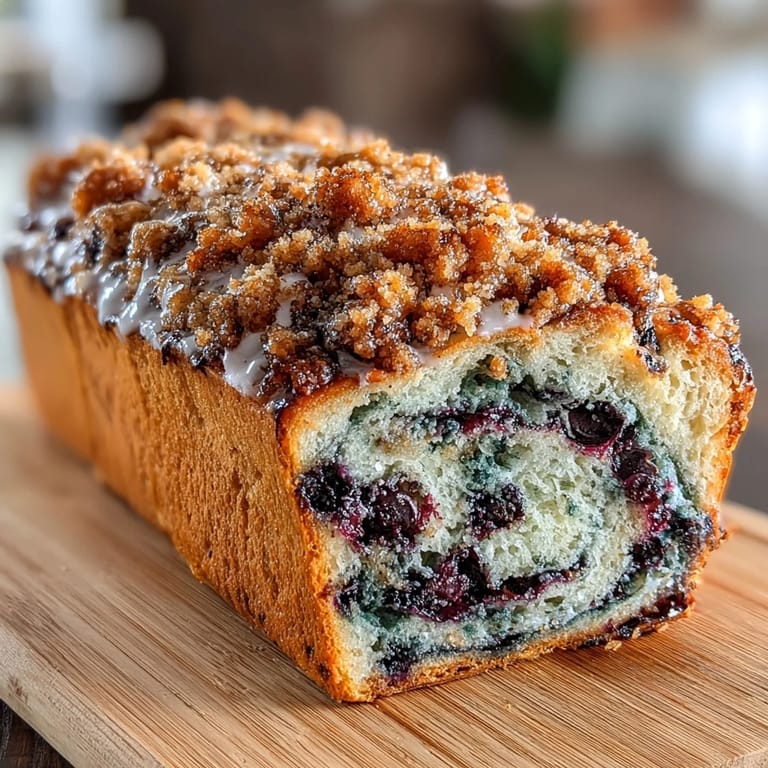
 My kitchen smelled like a bakery the morning I decided to use up a batch of overripe blueberries before they turned to mush. Rather than toss them, I wondered what would happen if I swirled them into my sourdough starter routine with a hit of lemon zest. That happy accident became this loaf, and now I make it whenever I want to prove to myself that the best recipes aren't planned—they're discovered when you refuse to waste something beautiful.
I baked this for my neighbor during a rough week, and she called me three days later asking if I could make it again because her teenage son had discovered it in the kitchen and treated the last two slices like they were going out of style. That's when I knew this recipe had staying power beyond just tasting good—it had that pull-you-in quality that makes people remember a meal.
Ingredients
- Bread flour: Don't swap this out for all-purpose; it gives the dough structure and that satisfying chew you want in a sourdough loaf.
- Active sourdough starter: Make sure yours is fed and bubbly a few hours before using, or the dough won't rise with the confidence it should.
- Granulated sugar: Just enough to feed the yeast and add subtle sweetness without tipping into dessert territory.
- Large egg: This binds everything together and creates richness that plain water never could.
- Whole milk, lukewarm: Warmth matters here; cold milk will slow your rise and make timing a guessing game.
- Unsalted butter, softened: Add it in small pieces so it incorporates smoothly; cold chunks will fight you every step of the way.
- Fine sea salt: Strengthens the dough and balances the sweetness that sneaks in from the sugar and fruit.
- Lemon zest: Use a microplane for the finest, most fragrant zest; it makes all the difference between muted and bright.
- Fresh or frozen blueberries: Fresh berries burst more elegantly, but frozen work just fine if you don't thaw them first.
- Lemon juice: Cuts through the berry sweetness and keeps things from becoming one-note.
- Cornstarch: Thickens the blueberry filling so your loaf slices cleanly instead of leaking jam everywhere.
- All-purpose flour for crumble: Different from the bread flour; it's softer and creates that delicate, tender crumb texture on top.
- Cold butter, cubed: Chill it beforehand so the crumble stays flaky instead of turning into paste.
- Light brown sugar: Adds a subtle molasses note that makes the crumble taste homemade in the best way.
Tired of Takeout? 🥡
Get 10 meals you can make faster than delivery arrives. Seriously.
One email. No spam. Unsubscribe anytime.
Instructions
- Combine your dry ingredients:
- In your mixer bowl, whisk together bread flour, sugar, salt, and lemon zest so the zest disperses evenly through the flour. This prevents zest clumps and distributes that lemon brightness throughout every crumb.
- Build the dough:
- Add starter, egg, and lukewarm milk to your dry mixture. Mix on low until everything's shaggy and rough—don't worry about smoothness yet, you're just bringing the ingredients together. The warmth of the milk matters; it wakes up your starter and gets the yeast excited about what's coming.
- Develop the dough:
- Switch to medium-low and add softened butter in small pieces, letting each piece disappear before adding the next. This takes about 8–10 minutes, and you'll feel the dough transform under the mixer's work from rough to glossy and elastic.
- First rise:
- Move your dough to a lightly greased bowl, cover with a damp cloth, and find a warm spot to proof. Watch for it to roughly double, which usually takes about 2 hours—but trust your eyes, not the clock, because kitchen temperature changes everything.
- Prepare the blueberry swirl:
- While dough rises, combine blueberries, sugar, and lemon juice in a saucepan over medium heat. Let the berries burst and release their juice—you'll hear little pops and smell that gorgeous tangy-sweet aroma—then stir in cornstarch and let it simmer until thickened, about 2–3 minutes. The mixture should look glossy and jam-like, not runny; spread it on the dough and it should hold its shape.
- Make the crumble topping:
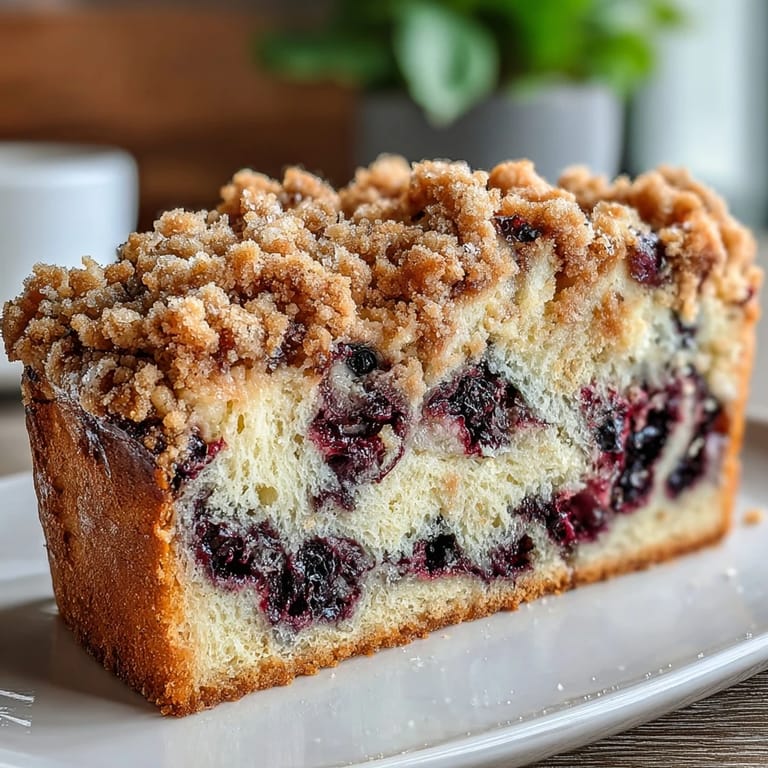
- Mix flour, brown sugar, and salt in a bowl, then scatter cold butter cubes over top and use your fingertips to rub everything together until it looks like coarse breadcrumbs. Pop it in the fridge so the butter stays cold and the crumble bakes up flaky instead of dense.
- Shape and fill:
- Once risen, turn dough onto a lightly floured surface and gently roll it into a 10x14-inch rectangle. Don't use too much force; you want to keep the air bubbles alive.
- Spread the filling:
- Pour that cooled blueberry mixture over the dough, leaving a 1-inch border so it doesn't squeeze out the sides when you roll. The filling should be completely cool or it'll make your dough sticky and harder to handle.
- Roll and pan:
- Roll up tightly from the short side, seal the seam by pinching it shut, and nestle the log seam-side down into your greased loaf pan. A tight roll prevents gaps; a gentle roll preserves the airiness.
- Second rise:
- Cover and let it rise until puffy and nearly doubled, about 1 hour. You're aiming for it to peek just above the rim of the pan—not so high it overflows, but tall enough that it'll have great oven spring.
- Top and bake:
- Preheat your oven to 350°F. Brush the loaf with milk or beaten egg if you want a shiny finish, then scatter that cold crumble topping evenly over the surface. Slide it into the oven and bake for 50–55 minutes, tenting with foil after 30 minutes if the top's browning faster than the sides.
- Cool properly:
- Let the loaf rest in the pan for 15 minutes so it sets enough to turn out cleanly, then transfer to a wire rack and cool completely before slicing. Cutting into a warm loaf will compress it and turn it gummy; patience here pays off in clean slices and better texture.
 Pin this
 What got me about making this loaf regularly was realizing my kids could recognize the smell from upstairs before they even saw it. There's something about the combination of sourdough tang, buttery crumble, and lemon brightness that announces itself and makes people want to be in the kitchen.
Understanding Sourdough in Sweet Applications
Sourdough starter brings a subtle tang that sounds risky in a sweet loaf, but it actually works because that sourness highlights and deepens the lemon flavor instead of competing with it. The acid in the starter also keeps the crumb tender and extends shelf life naturally. Think of it as a flavor anchor rather than a contradictory note.
Why Temperature Matters More Than You'd Think
I learned this the hard way when I tried making this on a cold January morning and watched the dough barely move for three hours. The milk needs to be warm enough that it feels pleasant on your inner wrist, not hot enough to shock your starter into dormancy. Your kitchen's ambient temperature affects everything too; a chilly kitchen means longer rise times, a warm kitchen means you're watching the clock like a hawk.
Troubleshooting and Variations
If your crumble topping browns too fast, it means your oven runs hot or you're baking in a dark pan that conducts heat aggressively. Tent with foil earlier next time, or use a lighter-colored loaf pan if you have one. The blueberry filling can absolutely be made with frozen berries; they release juice just as readily and don't need thawing first. Want to shift the flavor profile?
- Try raspberries and white chocolate shavings sprinkled over the crumble for a different spin.
- A light lemon glaze drizzled after cooling adds another layer of brightness if you're feeling fancy.
- If you can't find or don't have fresh lemon zest, use 1/2 teaspoon of lemon extract mixed into the dough instead.
 Pin this
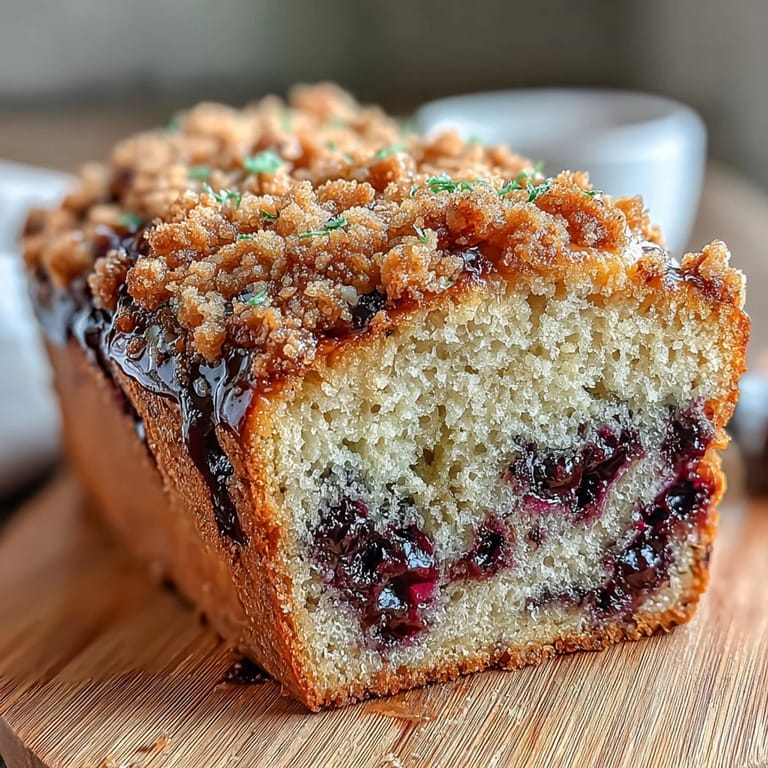
 This loaf proves that sourdough doesn't have to be a crusty, chewy sandwich bread to be worth your time and flour. It's breakfast, it's a snack, it's proof that you trusted a wild starter to do something sweet and delicious.
Recipe FAQs
- → How do I make the blueberry swirl for the loaf?
Cook fresh or frozen blueberries with sugar and lemon juice until the berries burst, then thicken with cornstarch. Cool completely before spreading over the dough.
- → What is the best way to achieve a tender crumb in this loaf?
Incorporate softened butter gradually into the dough and knead until smooth and elastic. Proper proofing and gentle handling help maintain tenderness.
- → Can I use frozen blueberries without thawing?
Yes, frozen blueberries can be added directly when making the swirl, preserving the vibrant color and flavor.
- → How should I store the loaf after baking?
Once cooled completely, wrap the loaf tightly and store at room temperature for up to two days, or refrigerate to extend freshness.
- → Is it possible to add a glaze for extra lemon flavor?
Yes, drizzle a simple lemon glaze over the cooled loaf to enhance the citrus notes and add a glossy finish.