 Pin this
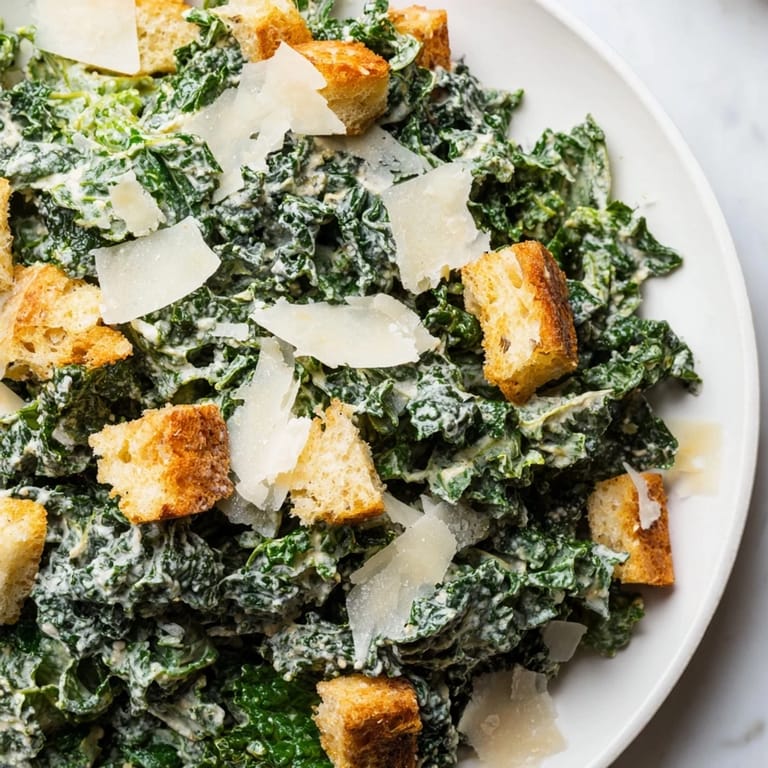
 There's something about kale that people either get immediately or they don't. I was firmly in the "don't" camp until my neighbor brought over a Caesar salad one evening that completely changed my mind—it wasn't the sad, chewy green situation I'd been imagining. She'd massaged the leaves with oil until they softened, made a proper dressing from scratch, and the whole thing came together in under thirty minutes. That dinner taught me that kale isn't the problem; it's just been waiting for the right treatment the whole time.
I make this salad now whenever friends are coming over for lunch because it's become my signature move—something that feels effortless to me but somehow impresses everyone at the table. The turning point came when I realized I didn't need to be intimidated by making Caesar dressing from an egg yolk; it's actually just whisking with patience, and the emulsification is pure kitchen magic.
Ingredients
- Kale, stems removed and chopped (about 200 g): The stems are tough and bitter, so removing them isn't optional—it's the difference between enjoyable and chewy. One large bunch works perfectly for four people.
- Olive oil for massaging: Use a standard olive oil here, not your fancy expensive one; save the extra-virgin for the dressing where it actually matters and you can taste the difference.
- Egg yolk: This is what makes the dressing creamy and luxurious; use a fresh, high-quality egg since it's raw and you want it to be something you feel good about.
- Dijon mustard: This acts as an emulsifier and gives the dressing that subtle tang that makes people ask what's in it.
- Anchovy fillets, minced: I know this sounds intimidating, but they dissolve into the dressing and just add depth—you won't taste "fishy," just richer. If you can't do anchovies, use capers for that briny note.
- Garlic clove, minced: Fresh garlic is non-negotiable here; garlic powder will make the dressing taste dusty and one-dimensional.
- Fresh lemon juice: Bottled lemon juice has a weird metallic quality; if you have access to a fresh lemon, use it.
- Worcestershire sauce: This adds umami and complexity; it's a small amount but it matters.
- Extra-virgin olive oil: This is where the good oil goes; this is what you taste, so get something you actually enjoy.
- Freshly grated Parmesan cheese: Block Parmesan that you grate yourself tastes infinitely better than pre-grated; the pre-grated stuff has anti-caking agents that change the texture.
- Rustic bread for croutons: Day-old bread works beautifully here and actually crisps better than fresh; you want some structure to stand up to the dressing.
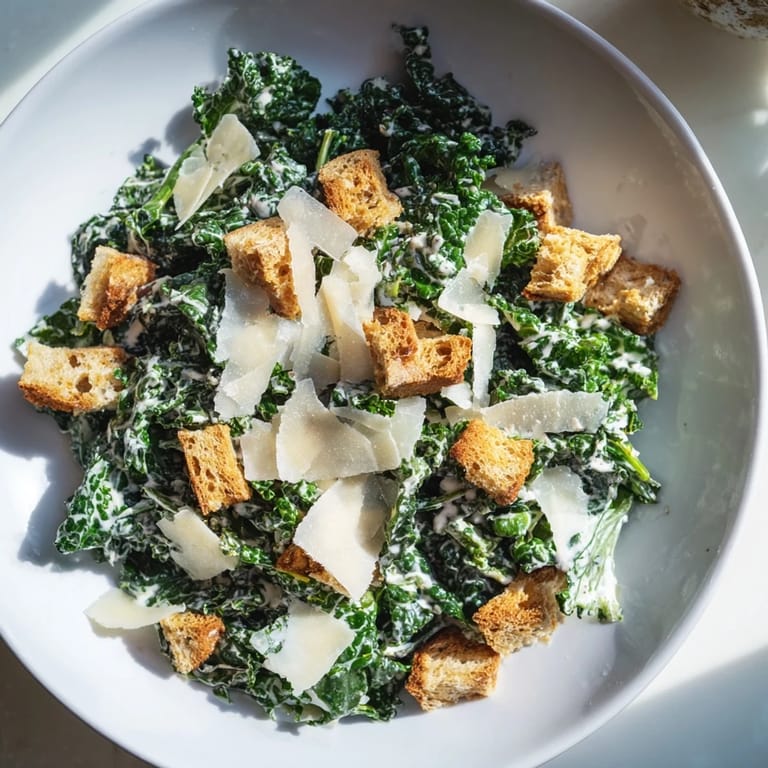
- Shaved Parmesan for topping: Use a vegetable peeler on a block of Parmesan and watch how these thin, delicate shavings add elegance to the final plate.
Tired of Takeout? 🥡
Get 10 meals you can make faster than delivery arrives. Seriously.
One email. No spam. Unsubscribe anytime.
Instructions
- Toast your croutons first:
- Heat the oven to 375°F and toss bread cubes with olive oil and sea salt, spreading them on a baking sheet. Bake for 8 to 10 minutes, stirring halfway through, until they're golden and crispy—this takes less time than the other components, so getting them done early means they stay crunchy when you serve.
- Massage the kale with intention:
- In a large bowl, drizzle the chopped kale with olive oil and use your hands to massage it for 2 to 3 minutes, really working the oil into the leaves. You'll feel them soften and darken slightly—this is the transformation that makes kale actually pleasant to eat.
- Build your dressing with patience:
- In a separate bowl, whisk together the egg yolk, mustard, anchovies, garlic, lemon juice, and Worcestershire sauce. Slowly—and this matters—drizzle in the extra-virgin olive oil while whisking constantly, which creates the emulsion that makes it creamy rather than separated.
- Finish the dressing:
- Once the oil is incorporated and the dressing is thick, stir in the grated Parmesan and taste it, adjusting salt and pepper. This is your moment to make sure it's exactly how you like it.
- Bring it all together:
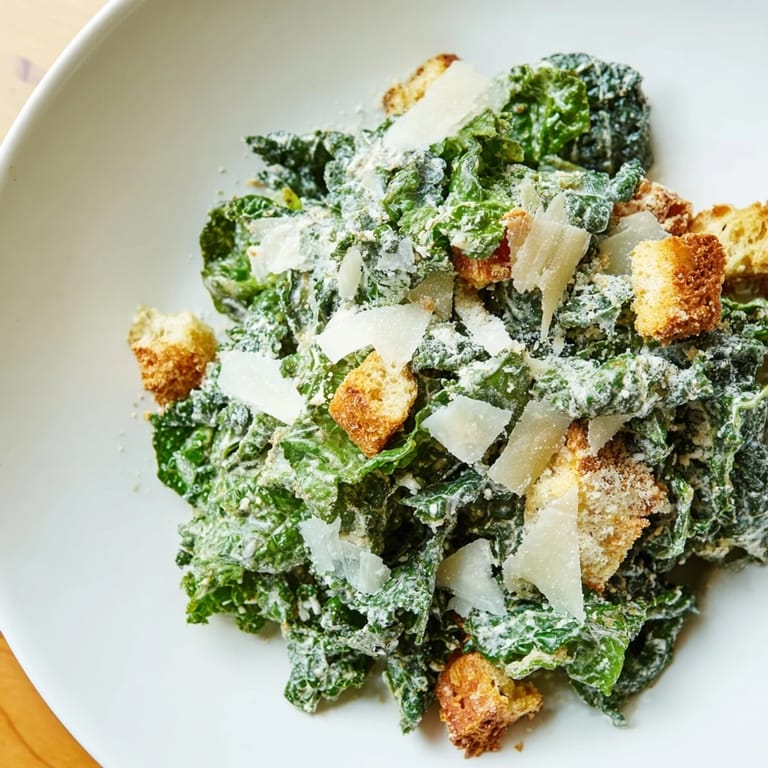
- Pour the dressing over the kale and toss everything thoroughly so every leaf gets coated. Add the croutons gently—you want them to stay crispy, not break apart.
- Plate and serve:
- Transfer to a serving platter or individual bowls and top with shaved Parmesan. Serve immediately so the croutons don't have time to soften.
 Pin this
 The moment that made me really understand this salad was when my skeptical partner tried it and asked for seconds, then asked me to teach them how to make the dressing. That's when I knew it wasn't just about having good ingredients; it was about understanding how they work together and respecting the technique just enough to let them shine.
The Art of Kale Preparation
Kale has a reputation as the difficult vegetable, the one that requires convincing. The truth is that raw kale is tough and can taste slightly bitter, but the massage technique is genuinely transformative—it breaks down the fibers and mellows the flavor in minutes. I learned this isn't just a step to rush through; it's an actual cooking technique that matters as much as the dressing itself. Once you feel the leaves change texture under your hands, you understand why people suddenly became kale converts.
Building Emulsions Like You Mean It
Making Caesar dressing from scratch intimidated me for years because I thought emulsification was some advanced culinary secret. It's actually just chemistry that you can control with patience: an egg yolk naturally wants to hold oil and water together, but you have to add the oil slowly so it can absorb it gradually. If you dump all the oil in at once, the emulsion breaks and you end up with something separated and greasy. The first time I made it successfully, I was astonished at how simple it actually was—and how much better it tasted than anything bottled.
Variations and Personal Touches
This salad is flexible in exactly the right ways, meaning you can adapt it to your tastes and dietary needs without losing what makes it special. I've made vegetarian versions by replacing anchovies with capers, added grilled chicken when I wanted something more substantial, and even tried it with baby kale when I was feeling fancy. The core—massaged greens, proper dressing, crispy croutons, good cheese—stays the same, which is what makes it reliable.
- Try adding grilled chicken, roasted chickpeas, or hard-boiled eggs if you want more protein on the plate.
- If anchovy is truly not happening for you, capers give that briny flavor without the fish element.
- Baby kale works beautifully and requires even less massage time, though it has a milder, slightly sweeter flavor than mature kale.
 Pin this
 This salad has become the thing I make when I want to feel like I actually know how to cook, and the beautiful part is that it's accessible enough that anyone can learn to make it well. The ingredients are simple, the technique is straightforward, and the results taste like you spent way more time than you actually did.
Recipe FAQs
- → How do I soften the kale leaves?
Masse the kale with olive oil and your hands for 2-3 minutes until tender and slightly darker to reduce bitterness and soften its texture.
- → Can I omit anchovies in the dressing?
Yes, for a vegetarian version, omit anchovies or substitute them with capers to maintain a briny flavor.
- → What is the best way to make crispy croutons?
Toss bread cubes with olive oil and sea salt, then bake at 375°F (190°C) for 8-10 minutes until golden and crunchy.
- → How should I store leftovers?
Keep any leftovers refrigerated in an airtight container. Add croutons fresh when serving to maintain their crunch.
- → Can I add protein to this dish?
Yes, grilled chicken or roasted chickpeas make excellent additions for extra protein and texture.