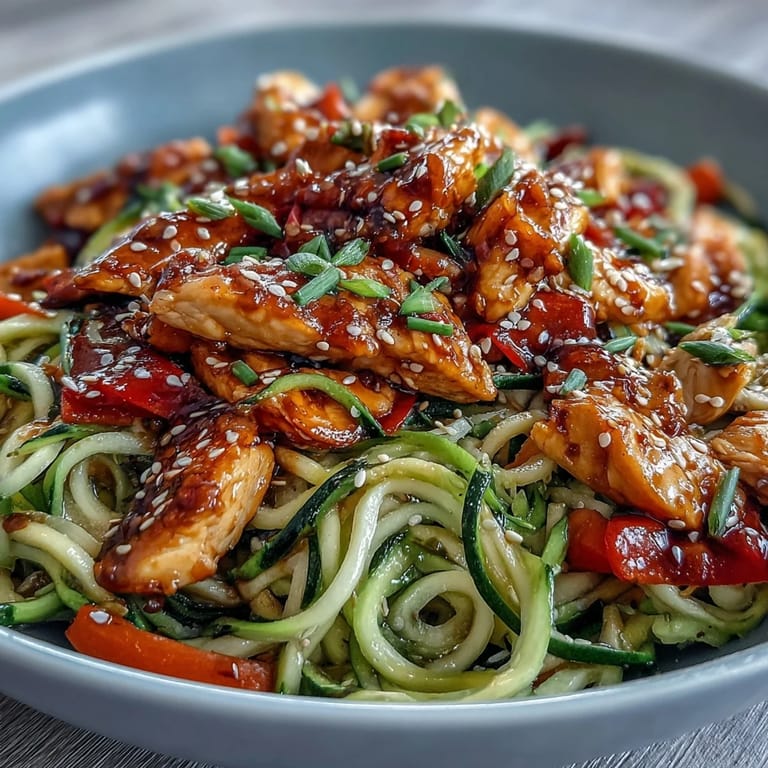
 Pin this
 There's a Tuesday evening that keeps coming back to me, when I was standing in the kitchen staring at a bag of zucchini I'd promised myself I'd actually use instead of letting wilt in the crisper drawer. My roommate wandered in asking what smelled so good, and suddenly we were building this stir fry together, laughing because neither of us had ever spiralized anything before. That night taught me that the simplest dishes, made with care and a little bit of curiosity, become the ones you crave most often.
I made this for my sister after she mentioned wanting to eat healthier, and she called me three days later asking for the recipe because she'd already made it twice. That moment when someone takes what you've shared and makes it their own feels like a small victory in the kitchen.
Ingredients
- Boneless, skinless chicken breast, thinly sliced (500 g): Slice it against the grain for tender pieces that cook quickly without drying out, and don't skip the slicing step even if you're tired.
- Medium zucchini, spiralized (3): Fresh zucchini matters more than you'd think; older ones release too much water and turn your dish into soup.
- Large red bell pepper, thinly sliced (1): The brightness matters both for flavor and for making the plate look alive.
- Medium carrots, julienned (2): Cut them thinner than you think you need to so they soften in the time it takes to cook everything else.
- Small red onion, thinly sliced (1): The slight sharpness cuts through the richness of the sesame oil beautifully.
- Garlic, minced (2 cloves) and fresh ginger, grated (1 tablespoon): These two create the aromatic foundation that makes your kitchen smell like a restaurant.
- Green onions, sliced (2): Save these for garnish at the very end so they keep their crunch and fresh bite.
- Low-sodium soy sauce or tamari (3 tablespoons): Tamari is your friend if gluten sensitivity matters to anyone eating this.
- Sesame oil (1 tablespoon): A little goes a long way; it's the secret whisper in this dish that makes people ask what you did differently.
- Rice vinegar (1 tablespoon): This keeps the sauce from tasting one-dimensional and heavy.
- Honey or maple syrup (1 tablespoon): The sweetness balances everything and helps the sauce coat the noodles properly.
- Cornstarch, optional (1 teaspoon): Use this only if your sauce seems too thin; it makes the difference between a glaze and a puddle.
- Chili flakes, optional (1/2 teaspoon): Add only if you like the warmth of heat, or skip it if you're cooking for people who don't.
- Olive oil or neutral cooking oil (1 tablespoon): This should be hot enough to make the chicken sizzle the moment it hits the pan.
- Salt and freshly ground black pepper, to taste: Season the chicken lightly before cooking since the soy sauce will add saltiness later.
Tired of Takeout? 🥡
Get 10 meals you can make faster than delivery arrives. Seriously.
One email. No spam. Unsubscribe anytime.
Instructions
- Mix your sauce first, before any heat happens:
- In a small bowl, whisk together the soy sauce, sesame oil, rice vinegar, honey, cornstarch if using, and chili flakes until the honey dissolves completely. Setting this aside now means you won't be fumbling with it later when things are moving fast.
- Get your pan screaming hot and cook the chicken:
- Heat the olive oil in a large skillet or wok over medium-high heat until you see the first wisps of smoke, then add the chicken slices in a single layer. Let them sear for about 2 minutes on each side without stirring constantly, which is how you get those golden, caramelized edges that taste like restaurant food. Once the chicken is cooked through, transfer it to a clean plate.
- Build the aromatics gently:
- Add the minced garlic, grated ginger, and sliced red onion to the same pan and let them perfume the oil for exactly one minute, stirring occasionally. You want to smell that moment when everything blooms; don't rush past it.
- Add the heartier vegetables next:
- Toss in the julienned carrots and sliced red bell pepper and stir-fry for 2 to 3 minutes, until the edges start to soften but they still have some resistance. You're looking for that moment right before they'd be tender, not past it.
- Treat the zucchini noodles with respect:
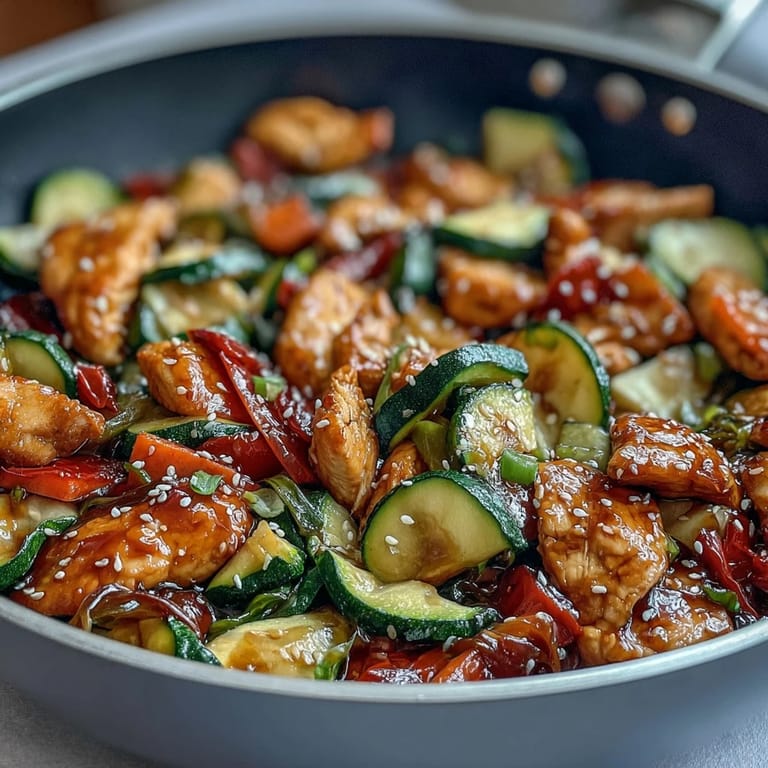
- Add the spiralized zucchini and toss gently for only 1 to 2 minutes, just until they start to turn translucent at the edges. This is the moment where patience matters; overcooked zucchini noodles are the enemy, and you're so close to perfect.
- Bring everything back together with the sauce:
- Return the cooked chicken to the skillet, pour in your sauce, and toss everything gently for 1 to 2 minutes, making sure the sauce coats everything evenly. If the sauce seems too thin, you'll notice it starting to thicken; if it seems right, remove from heat immediately before the zucchini overcooks.
- Taste and adjust one last time:
- Before serving, take a taste and decide if it needs more soy sauce for depth, more rice vinegar for brightness, or more chili flakes for heat. This moment is yours to make it exactly what you want.
- Serve it while everything is still warm:
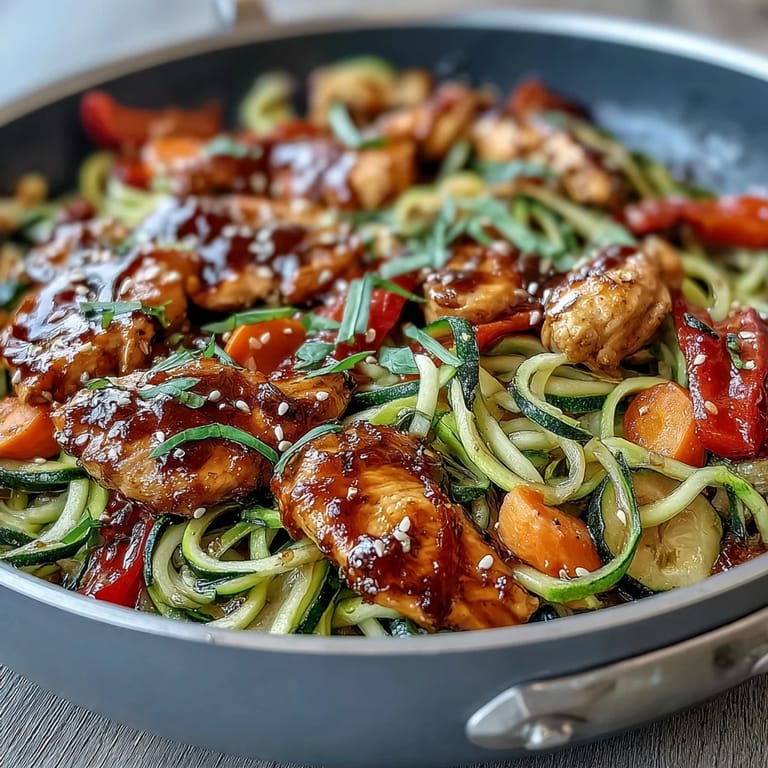
- Divide between bowls immediately and garnish with the sliced green onions so they stay crisp and fresh against the warm stir fry. Eat it right now, not in five minutes.
 Pin this
 I remember my mom tasting this for the first time and saying it didn't taste like "diet food," which made me realize that eating well doesn't mean eating things that feel like punishment. That distinction changed how I thought about cooking for health.
The Magic of Spiralized Vegetables
The first time I used a spiralizer, I felt like I'd discovered a secret kitchen hack that made eating vegetables feel like a choice instead of an obligation. Zucchini noodles work because they're delicate and cook in moments, taking on the flavor of whatever sauce surrounds them without being dense or heavy.
Building Layers of Flavor
Asian-inspired cooking teaches you that a great dish isn't about one dominant flavor but about how different tastes balance each other. The salty soy sauce, the slight tang from rice vinegar, the warmth of sesame oil, and the gentle sweetness from honey create a conversation in your mouth instead of a monologue, and that's when you know you've made something worth eating again.
Customizing Without Losing the Spirit
One of the things I love about this recipe is how flexible it is without becoming something completely different. You can swap chicken for tofu or shrimp, add cashews for crunch, or trade red onion for something milder if that's what you prefer. The structure stays the same even when you make it your own, which is the mark of a recipe that truly works.
- Tofu benefits from pressing it first, then marinating it briefly in a bit of the sauce while you prep everything else.
- If you add other vegetables like snap peas or baby bok choy, remember that denser vegetables go in earlier and delicate ones go in last.
- Sesame seeds scattered on top right before serving add a textural sophistication that makes people think you spent more time than you actually did.
 Pin this
 This stir fry has become my answer to the question what should we make for dinner when we want something that feels good to eat and doesn't require an hour of planning. It's the kind of recipe that sits with you, ready whenever you need it.
Recipe FAQs
- → Can I substitute chicken with another protein?
Yes, tofu or shrimp work well as alternatives and adapt nicely to the stir-fry flavors.
- → How do I prevent zucchini noodles from getting soggy?
Stir-fry zucchini noodles briefly just until softened to maintain their firmness and avoid excess moisture.
- → What sauce ingredients create the savory flavor?
A combination of soy sauce or tamari, sesame oil, rice vinegar, and a touch of honey or maple syrup forms the savory sauce base.
- → Can this dish be made gluten-free?
Yes, by using tamari instead of regular soy sauce, the dish can be prepared gluten-free without sacrificing flavor.
- → What sides pair well with this stir-fry?
A crisp, dry white wine like Sauvignon Blanc complements the dish, or serve alongside steamed rice or a light salad.